Major Issues of Livestock Sector and Historic Movement at PM Office – National Dialogue on Livestock Sector
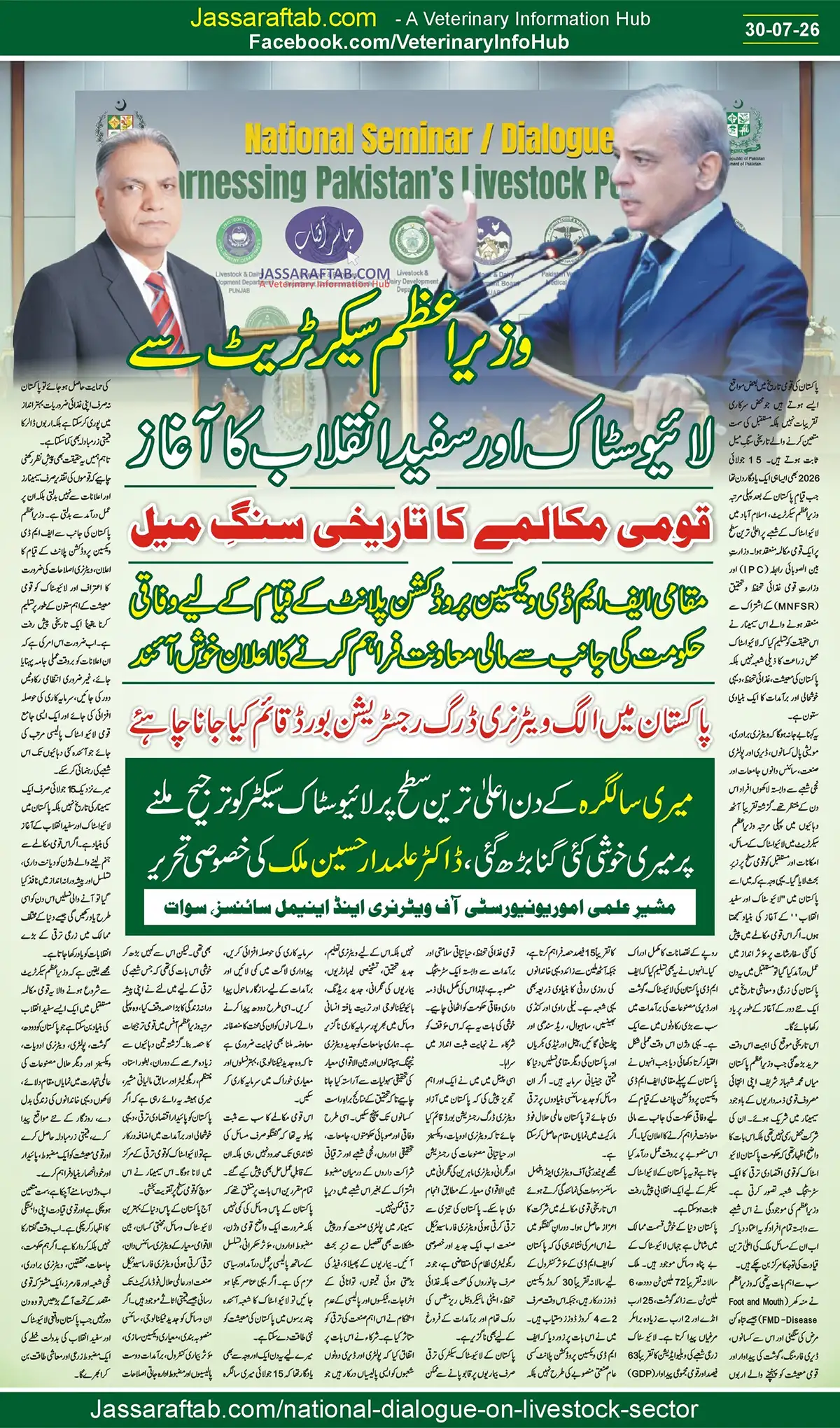
On 15 July 2026, Pakistan’s livestock sector reached a historic milestone when the Prime Minister’s Office hosted a national seminar titled “Harnessing the Livestock Potential of Pakistan.” Organized by the Ministry of Inter-Provincial Coordination (IPC) in collaboration with the Ministry of National Food Security and Research (MNFSR), the national dialogue on livestock sector discussed major issues of livestock sector in the center of national policymaking for the first time. This review is written by Dr. Alamdar Hussain Malik, Advisor to University of Veterinary and Animal Sciences Swat.


A New National Vision for Livestock at National Dialogue on Livestock Sector
The seminar brought together federal and provincial ministers, parliamentarians, senior government officials, veterinarians, scientists, university vice chancellors, researchers, livestock and poultry industry leaders, dairy farmers, private sector representatives, and development partners. The dialogue reflected a shared commitment to recognizing livestock as a strategic pillar of Pakistan’s economy rather than merely a sub-sector of agriculture.
وزیر اعظم پاکستان کی لائیوسٹاک پوٹینشل پر منعقدہ نیشنل سیمینار میں شرکت ۔۔ تفصیلی رپورٹ
Livestock: Pakistan’s Economic Strength
Pakistan is among the world’s leading livestock-producing countries, generating around 72 million tonnes of milk, over 6 million tonnes of meat, 25 billion eggs, and more than 2 billion broiler birds annually. The livestock sector contributes nearly 63% of agricultural value addition and around 15% of the national GDP, while supporting the livelihoods of over eight million rural families.
The country is also home to valuable indigenous breeds, including Nili-Ravi and Kundi buffaloes, Sahiwal, Red Sindhi, and Cholistani cattle, Kajli and Lohi sheep, Beetal and Teddy goats, and one of Asia’s largest camel populations, offering tremendous opportunities for exports and genetic improvement.
Poultry, Dairy and Livestock Data 2026
Majore Issues of Livestock Sector
Despite its enormous potential, Pakistan’s livestock sector faces significant challenges. Limited investment in veterinary infrastructure, disease control, vaccine production, breeding programs, diagnostic laboratories, and value-added processing has restricted the sector’s growth.
Participants agreed that Foot and Mouth Disease (FMD) remains the biggest obstacle to livestock productivity and international trade. Pakistan requires approximately 300 million doses of FMD vaccine annually, but currently has access to only 20–40 million doses, leaving a major gap in disease prevention.
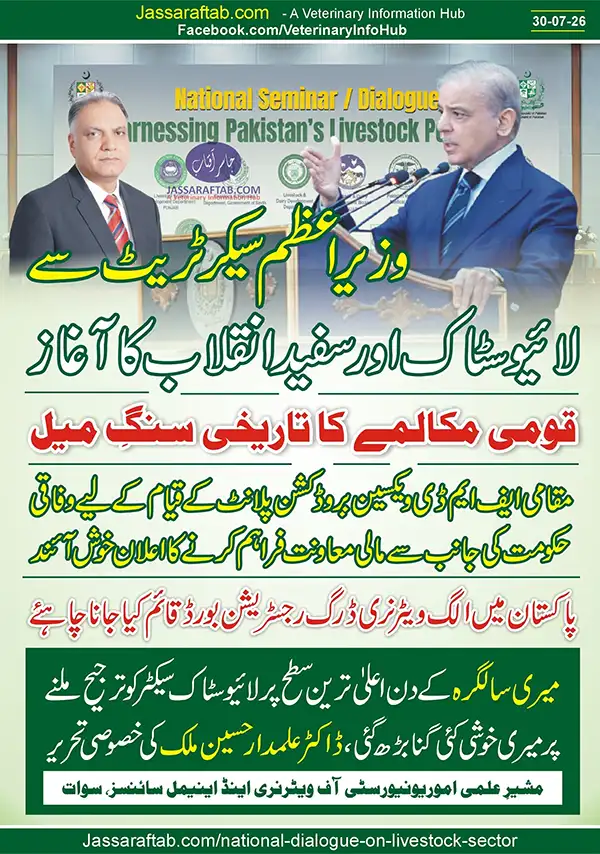
Announcement on FMD Vaccine Production at National Dialogue on Livestock Sector
One of the seminar’s most significant outcomes was Prime Minister Shehbaz Sharif’s announcement that the Federal Government would finance Pakistan’s first indigenous Foot and Mouth Disease Vaccine Production Plant. The Prime Minister also directed the concerned ministries to prepare the project’s feasibility study without delay.
The initiative is expected to strengthen national biosecurity, reduce dependence on imported vaccines, improve livestock productivity, lower farmers’ losses, and support Pakistan’s ambitions of becoming a major exporter of livestock and animal products.
منہ کھر اور دیگر بیماریوں پر کنٹرول کیلئے وفاقی اور صوبائی سطح پر اشتراک مزید مئوثر بنانے پر اتفاق
Poultry Industry and National Dialogue on Livestock Sector
The seminar also addressed the challenges facing Pakistan’s poultry industry, including disease outbreaks, rising feed and energy costs, taxation, and market uncertainty. Participants emphasized the need for supportive policies to protect one of the country’s most organized and important livestock industries.
Poultry Companies in Pakistan; Poultry Farming and Poultry Industry
Veterinary Regulatory Reforms and Issues of Livestock Sector
During the discussions, Dr. Alamdar Hussain Malik proposed the establishment of an Independent Veterinary Drug Registration Board. He argued that Pakistan’s growing veterinary pharmaceutical industry requires a specialized regulatory system with veterinary experts to ensure the quality, safety, and effective regulation of veterinary medicines and biological products.
The proposal received strong support from scientists, policymakers, and industry representatives.
A Roadmap for the Future – National Dialogue on Livestock Sector
The seminar concluded that Pakistan possesses all the ingredients needed to become a global livestock powerhouse, including abundant animal resources, skilled veterinarians, experienced farmers, an expanding private sector, and access to rapidly growing halal markets.
Participants recommended stronger investment in veterinary education, disease surveillance, research, laboratory infrastructure, public-private partnerships, and export-oriented policies. They stressed that coordinated action by federal and provincial governments, academia, industry, and development partners is essential for sustainable growth.
A Historic Beginning to Resolve the Issues of Livestock Sector
According to Dr. Alamdar Hussain Malik, the seminar marked the beginning of a new national vision for Pakistan’s livestock sector. While meaningful reforms will require sustained political commitment and effective implementation, the event demonstrated that livestock is finally receiving the attention it deserves at the highest level of government.
If the commitments announced on 15 July 2026 are translated into action, the day may be remembered as the turning point that transformed Pakistan’s livestock sector into a modern, disease-controlled, export-oriented, and globally competitive industry.