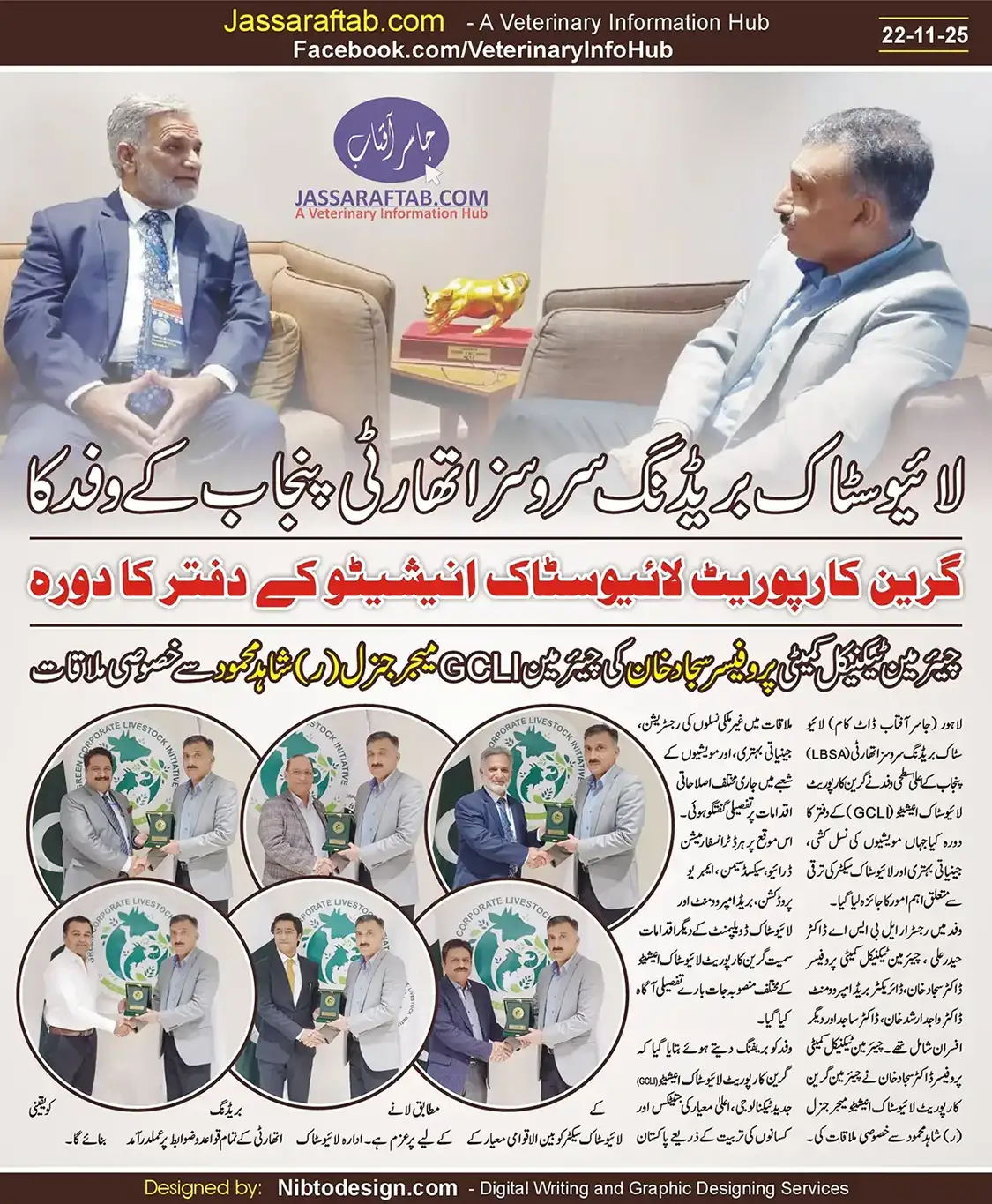
Delegation from LBSA Punjab visited GCLI Office
A high-level delegation from Livestock Breeding Services Authority (LBSA Punjab) visited the office of Green Corporate Livestock Initiative (GCLI Office). Important issues related to livestock breeding, genetic improvement and development of the livestock sector were discussed.

The delegation included Registrar LBSA Dr. Haider Ali, Chairman Technical Committee Prof. Dr. Sajjad Khan, Director Breed Improvement Dr. Wajid Arshad Khan, Dr. Sajid, and other officers. Chairman Technical Committee Prof. Dr. Sajjad Khan had a special meeting with Chairman Green Corporate Livestock Initiative Maj General (R) Shahid Mahmood. In the meeting, detailed discussions were held on the registration of foreign breeds, genetic improvement, and various reform initiatives underway in the livestock sector.
About Livestock Breeding Services Authority

On this occasion, various projects of GCLI, including herd transformation drive, sexed semen, embryo production, breed improvement, and other livestock development initiatives, were given in detail.
The delegation was briefed that the GCLI is committed to bringing Pakistan’s livestock sector in line with international standards through modern technology, high-quality genetics and training of farmers.
About Green Corporate Livestock Initiative