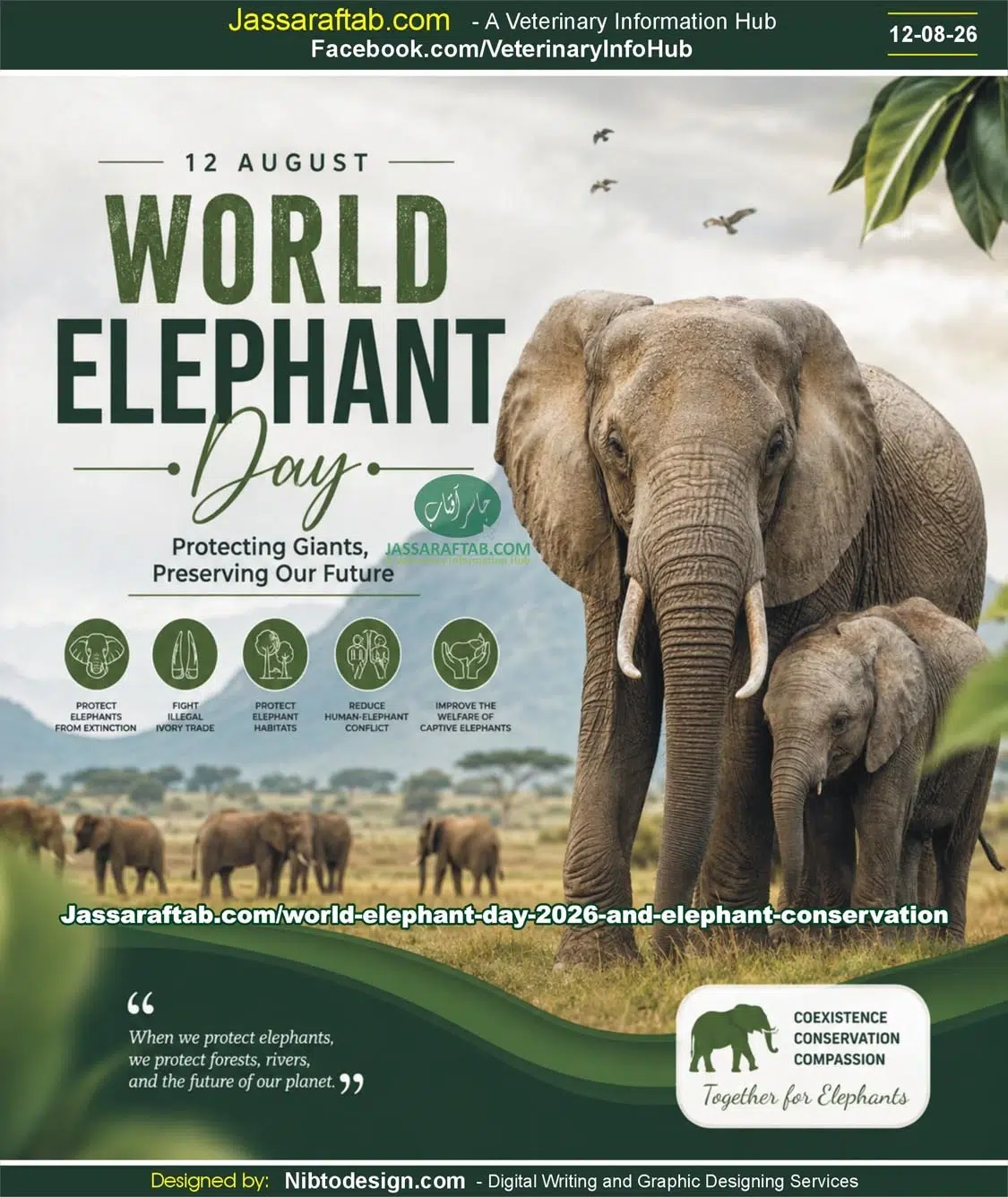
What is World Elephant Day?
World Elephant Day 2026 is being observed on August 12. It is observed every year on August 12. The day focuses on both African and Asian elephants. This international day raises awareness about threats to elephants and promotes elephant conservation. Moreover, it allows the world to recognize the importance of elephants and the urgent need to protect them. Elephants are among the largest land mammals on Earth. They also play a major role in maintaining healthy ecosystems.

However, these magnificent animals face serious threats. Habitat loss, habitat fragmentation, poaching, illegal ivory trade, human-elephant conflict, and climate change continue to affect elephant populations. Therefore, conservation needs strong action from governments, communities, scientists, conservation organizations, and the public.
World Elephant Day brings these concerns into public focus. It also encourages people to support practical solutions for elephant protection.

History of World Elephant Day
World Elephant Day began in 2011. Canadian filmmaker Patricia Sims and filmmaker Michael Clark joined hands with Thailand’s Elephant Reintroduction Foundation. Together, they developed an international campaign to protect elephants.
The campaign aimed to raise global awareness of the threats facing elephants, particularly African and Asian elephants. Therefore, it encouraged people and organizations to take action on elephant conservation.
World Elephant Day / ہاتھیوں کا عالمی دن اور اس کی ہسٹری، ہاتھی کی خصوصیات اور سونڈ کی ساخت
The initiative officially launched on August 12, 2012. Since then, people around the world have observed World Elephant Day every year on August 12.
Since then, August 12 has become a significant date for elephant conservation. Patricia Sims has continued to lead the World Elephant Day initiative. The campaign has also created a neutral platform where conservation organizations, governments, communities, and individuals can work together.
The choice of a global awareness day was important. Elephant conservation involves many countries and regions. Therefore, no single government or organization can solve the problem alone.
Why Was World Elephant Day Created?
World Elephant Day was created to highlight the growing threats to elephants around the world. The founders wanted to give greater attention to elephant conservation. They also wanted to bring people and organizations together to protect elephants. These goals helped shape the creation of World Elephant Day. The following are the main goals of the day’s creation.
Protect Elephants from Extinction
All three living elephant species face serious conservation challenges. The African forest elephant is Critically Endangered. The African savanna elephant and the Asian elephant are both Endangered. Therefore, conservation efforts must continue to protect their populations and prevent further decline.
Fight the Illegal Ivory Trade
Poachers have hunted elephants for their ivory tusks for many years. They kill elephants to sell the ivory in illegal markets. As a result, poaching reduces elephant populations and can remove important breeding animals from herds. Therefore, governments and conservation organizations must continue to fight illegal ivory trade and wildlife crime.
Protect Elephant Habitats
Elephants need large areas to find food, water and shelter. However, people continue to convert forests and grasslands for farming, roads, settlements and other development. As a result, elephants lose their natural habitats and movement routes. Habitat loss also makes it harder for elephant herds to find food, water and safe breeding areas. Therefore, protecting and connecting elephant habitats remains essential.
Reduce Human-Elephant Conflict
Elephants increasingly come into contact with people as they lose their natural habitats. They may enter farms while searching for food and water. Consequently, farmers can lose crops and face financial losses. At the same time, elephants can suffer injuries or even die. Therefore, conservation programmes should help people and elephants live together safely. Communities can use practical methods to protect their crops while keeping elephants safe.
Improve the Welfare of Captive Elephants
World Elephant Day also highlights the welfare of elephants kept in captivity. Some captive elephants have faced abuse, poor care and exploitation. Therefore, conservation organizations work to rescue these elephants and provide them with proper care.
کمبوڈیا پہنچنے پر کاون کا شاندار استقبال، نئے ساتھی ہاتھیوں میں دلچسپی
For example, Wildlife SOS runs elephant rescue and rehabilitation programmes in India. The organization provides veterinary treatment, rehabilitation and long-term care for elephants that have suffered abuse or exploitation. In this way, these programmes give rescued elephants a safer and better life.
Why Are Elephants Important?
Elephants are not simply large animals. They are important ecosystem engineers. Their activities can change landscapes. They break branches, open pathways, dig for water and disperse seeds.
In forests, elephants can carry seeds over long distances. Some tree species depend heavily on elephants for seed dispersal. WWF notes that at least one-third of tree species in some Central African forests rely on elephants for this process.
Elephants can also create pathways through dense vegetation. These pathways can benefit other wildlife.
Furthermore, their movement can influence vegetation patterns. Their feeding activities can create openings in forests and help maintain habitat diversity.
Therefore, protecting elephants also means protecting wider ecosystems.
Major Threats to Elephants
Habitat loss remains one of the biggest threats to elephants. Agriculture, settlements, roads, railways, mining and other infrastructure can destroy natural habitats. As habitat disappears, elephants have fewer places to feed and reproduce. Therefore, World Elephant Day 2026 is being celebrated to raise global awareness to combat these threats.
Habitat Fragmentation
Habitat fragmentation creates another serious problem. A forest may remain on a map, but roads and development can divide it into isolated sections. Elephants need connected landscapes. Fragmentation can therefore restrict their movement and isolate populations.
Recent research also highlights the genetic risks associated with isolated African elephant populations. When populations become separated, reduced movement and breeding can increase genetic isolation.
Poaching
Poaching also remains a major threat, particularly in Africa. Elephants are killed for their ivory tusks. This illegal trade can also weaken elephant populations by removing mature individuals.
International cooperation is therefore essential. CITES regulates international trade in species and includes African elephants under its appendices with different provisions for certain populations.
Human-Elephant Conflict
Human-elephant conflict occurs when people and elephants compete for the same land and resources. Elephants may damage crops. They may also enter villages or cross roads and railways. People can suffer economic losses. Elephants can suffer injuries or death. Consequently, conservation programmes increasingly use early-warning systems, community engagement, habitat corridors and other measures to reduce conflict.
Climate Change
Climate change can alter water availability, vegetation and habitat conditions. Asian elephants are particularly vulnerable because fragmented populations have fewer opportunities to move into suitable areas as conditions change. WWF identifies declining populations, habitat fragmentation, changing food resources and other climate-related pressures as important concerns.
Elephant Conservation and the Role of World Elephant Day 2026
Elephant conservation focuses on protecting elephants, their habitats and their natural movement routes. Conservation organizations, governments and local communities work together to fight poaching, stop the illegal ivory trade and reduce human-elephant conflict. They also rescue injured or abused elephants and support research, habitat protection and community-based conservation.
World Elephant Day plays an important role by raising global awareness about these challenges. It brings conservation organizations and people together and encourages them to take action. Many organizations work to protect elephants around the world. They focus on habitat protection, anti-poaching efforts, research, rescue, wildlife welfare, and reducing human-elephant conflict. Important organizations include World Elephant Day, Elephant Reintroduction Foundation, IUCN (International Union for Conservation of Nature), WWF (World Wide Fund for Nature), and Save the Elephants.
World Elephant Day 2026 reminds us that protecting elephants also means protecting biodiversity and healthy ecosystems for future generations.