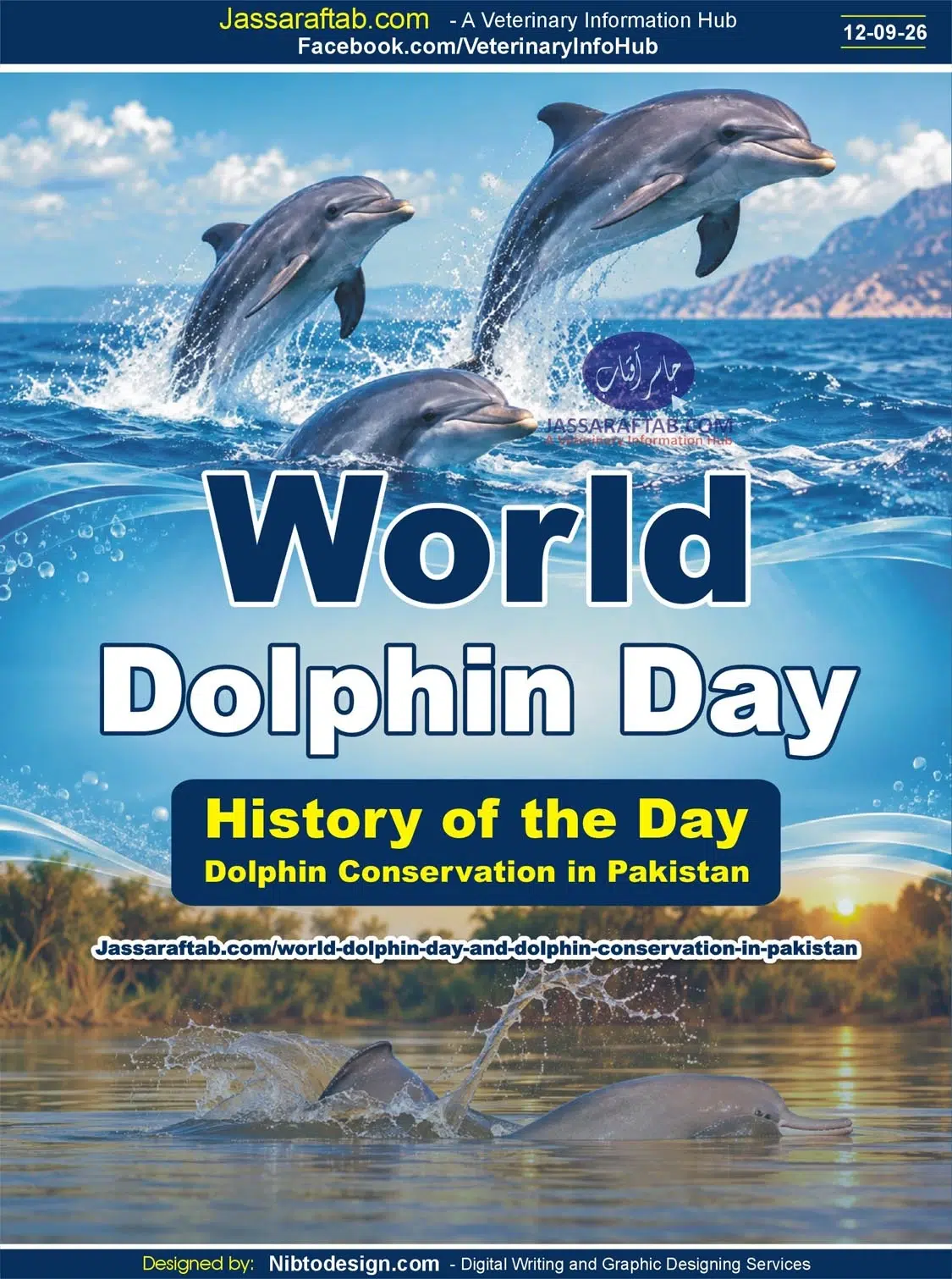
World Dolphin Day: History, Purpose and Dolphin Conservation in Pakistan | The Indus River Dolphin
World Dolphin Day is observed every year on 12 September. The day raises awareness about dolphins and the threats they face. It also highlights the importance of dolphin conservation, marine conservation, and protection of aquatic ecosystems. In addition, World Dolphin Day plays an important role for dolphin conservation in Pakistan, where the endangered Indus River dolphin depends on the Indus River system for their survival. Sea Shepherd established World Dolphin Day to draw global attention to dolphin killings and the need for stronger conservation action.

Dolphins are among the most intelligent and social animals on Earth. They live in oceans, seas, coastal waters, and rivers. Moreover, dolphins communicate through sounds and body movements. They also live in complex social groups.
However, dolphins face many threats. Pollution, fishing nets, habitat destruction, hunting, underwater noise, and climate change can affect their survival. Therefore, World Dolphin Day provides an opportunity to understand these threats and support practical conservation measures.

History of World Dolphin Day
Sea Shepherd Global established World Dolphin Day in 2022. The organization selected 12 September because of a major dolphin-killing event that occurred one year earlier.
On 12 September 2021, 1,428 Atlantic white-sided dolphins were killed in the Faroe Islands. The incident attracted international attention.
As a result, Sea Shepherd used the anniversary to highlight the need for stronger protection of dolphins and other marine mammals.
Therefore, World Dolphin Day combines remembrance with conservation. It remembers the dolphins that were killed. At the same time, it encourages people to prevent similar events and protect dolphin populations worldwide.
What is Sea Shepherd Global?
Sea Shepherd Global is an international non-profit marine conservation organization that works to defend, conserve, and protect marine wildlife and ocean ecosystems. It uses direct-action campaigns to confront illegal fishing, poaching, habitat destruction, and other activities that threaten marine life.
Sea Shepherd began its conservation movement in 1977, while Sea Shepherd Global was established in Amsterdam in 2013 to coordinate communications and logistics for Sea Shepherd campaigns outside the United States. Today, independent Sea Shepherd groups operate in more than 20 countries
Purpose of World Dolphin Day
World Dolphin Day has several important purposes.
First, the day increases public awareness about dolphins.
Dolphins are intelligent and social animals. They communicate with each other. They form strong social bonds. They also demonstrate complex behaviours.
However, many people do not understand the pressures that human activities place on dolphins.
Therefore, education plays an important role in dolphin conservation. When people understand the threats, they can make better choices.
Threats to Dolphins
Second, World Dolphin Day highlights the major threats facing dolphins.
These threats include fishing-net entanglement, pollution, habitat destruction, hunting, vessel strikes, underwater noise, and declining fish populations.
Fishing bycatch remains a serious problem in many areas. Dolphins can become trapped in fishing nets. They may then drown because they cannot reach the surface.
Consequently, safer fishing practices form an important part of dolphin conservation.
Promote Dolphin Conservation
Third, the day encourages practical conservation.
Dolphin conservation requires more than public sympathy. It requires scientific research, effective laws, habitat protection, responsible fishing, pollution control, and population monitoring.
Therefore, World Dolphin Day helps turn awareness into action.
Support Marine Conservation
Dolphins depend on healthy aquatic ecosystems.
When pollution enters the water, it can affect fish and other aquatic organisms. Likewise, overfishing can reduce the food available to dolphins.
As a result, dolphin conservation and marine conservation are closely connected.
Protecting dolphins means protecting the wider ecosystem.
Why Are Dolphins Important?
Dolphins play an important role in aquatic ecosystems.
They are also valuable indicators of environmental conditions. Changes in dolphin populations can provide useful information about changes in their habitats.
Furthermore, dolphins have cultural and educational importance. People around the world admire their intelligence, social behaviour, and communication abilities.
However, their value goes beyond their popularity.
Dolphins need clean water, healthy prey populations, safe habitats, and functioning ecosystems. Therefore, protecting dolphins can also help protect wider aquatic biodiversity.
Dolphin Conservation in Pakistan and World Dolphin Day
Pakistan has a special connection with dolphin conservation.
The country is home to the Indus River dolphin, one of the world’s important freshwater dolphin species. They live in the Indus River system and depend on healthy river habitats for survival.
Locally, these dolphins are known as the bhulan. Dolphins have adapted to the muddy waters of the Indus River.
However, human activities along the Indus River are increasingly threatening the survival of the Indus River dolphin and the health of its habitat. Illegal fishing is a major threat because dolphins can become trapped in fishing nets and die as a result. Therefore, dolphin conservation in Pakistan requires stronger action against illegal fishing and long-term cooperation among government agencies, scientists, conservation organisations, fishermen, and local communities.
World Whale and Dolphin Day 2026
The Indus River Dolphin
The Indus River dolphin is one of Pakistan’s most important aquatic species.
It has a restricted distribution. It depends on the Indus River and connected waterways.
The species also has cultural and ecological importance. Its survival reflects the health of the river ecosystem.
Therefore, protecting the Indus River dolphin also means protecting the Indus River.
وائلڈلائف حکام نے ریسکیوکی گئی بے بی انڈس ڈولفن کو واپس دریا میں چھوڑدیا
Threats to the Indus River Dolphin
The Indus River dolphin faces several threats.
Changes in River Flow
First, dams, barrages, and irrigation systems have altered the natural flow of the Indus River. These structures divide the river into separate sections and can restrict the movement of dolphins between different parts of their habitat. As a result, the Indus River dolphin may have less access to food, breeding areas, and suitable habitats. Therefore, river management should balance human water needs with the protection of this endangered species and its natural habitat.
Fishing Activities and World Dolphin Day
Fishing also creates risks. Dolphins can become trapped in fishing nets. They may drown before fishermen can release them.
Consequently, safer fishing practices can make an important contribution to dolphin conservation in Pakistan.
World Dolphin Day plays an important role in raising awareness about safer fishing activities.
Water Pollution
Pollution presents another challenge. Agricultural runoff, sewage, industrial waste, and other pollutants can affect river health. When water quality declines, the entire aquatic ecosystem can suffer.
Therefore, Pakistan must improve wastewater management and protect river water quality.
Declining Fish Populations
Dolphins depend on fish and other aquatic organisms for food. Overfishing and habitat changes can reduce available prey.
As a result, protecting fish populations also supports Indus River dolphin conservation.
Conservation Efforts in Pakistan
Pakistan has taken several steps to protect the Indus River dolphin. Government departments and conservation organisations monitor dolphin populations. They also conduct rescue operations when dolphins become trapped in irrigation canals.
Furthermore, Dolphin conservation teams work with local communities and raise awareness to protect them.
They educate fishermen about dolphins. They also promote safer fishing practices and encourage people to report stranded or trapped dolphins. Protected areas also provide important habitats for the species.
World Dolphin Day and Marine Conservation
World Dolphin Day is closely connected with marine conservation.
Dolphins cannot survive in unhealthy oceans and rivers. They need clean water and sufficient food. They need safe habitats.
Therefore, protecting dolphins requires wider ecosystem protection.
Marine conservation can reduce pollution. It can protect habitats and improve fisheries management. However, it also reduces human disturbance.
At the same time, river conservation is essential for freshwater dolphins such as the Indus River dolphin.
Thus, dolphin protection should form part of a broader approach to aquatic conservation.