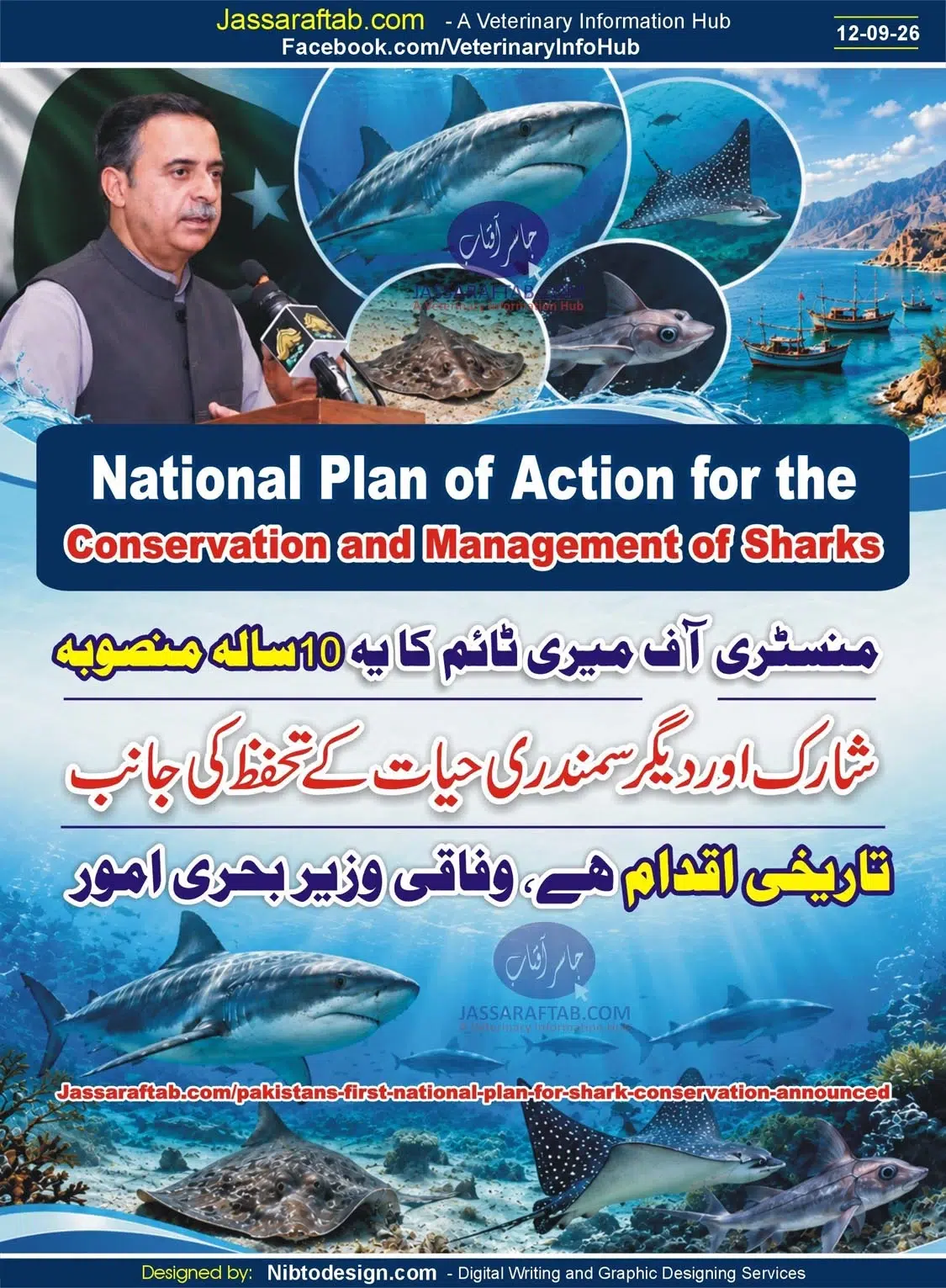
Pakistan’s First National Plan for Shark Conservation Announced
Pakistan’s first national plan for shark conservation marks a major milestone for shark conservation in Pakistan and for sharks more broadly. Federal Minister for Maritime Affairs Muhammad Junaid Anwar Chaudhry announced the National Plan of Action for the Conservation and Management of Sharks (NPOA-Sharks Pakistan 2025–2035). The National Plan of Action for Sharks sets a clear 10-year framework to strengthen shark protection, promote sustainable fisheries, and advance marine conservation. It also aims to restore declining shark populations and protect marine biodiversity, including rays, skates, and chimaeras. Furthermore, the plan supports long-term ocean conservation and marine life conservation. WWF Pakistan has also welcomed the plan as an important step toward protecting marine species and building a more sustainable future for Pakistan’s oceans.

However, the 10-year plan aims to protect declining shark populations. It also seeks to improve fisheries management, reduce illegal shark finning and bycatch, and protect important marine habitats.
Pakistan’s First National Plan for Shark Conservation
The new plan covers the period up to 2035. It provides a long-term framework for the conservation of sharks in Pakistan.

Moreover, the plan focuses on sustainable use of marine resources. It also aims to balance conservation needs with fishing communities’ interests.
The Marine Fisheries Department will lead the implementation. A multi-stakeholder National Advisory Committee will also oversee the plan.
Three-Phase Conservation Plan
The shark conservation plan will be implemented in three phases over the next 10 years.
The first five years are expected to require between $3.8 million and $5 million. Funding may come from government resources, international partners and the private sector.
Each phase will focus on improving protection, research, monitoring and fisheries management.
Restoring Declining Shark Populations
A key objective is to rebuild Pakistan’s declining shark populations.
Sharks play an important role in maintaining healthy marine ecosystems. However, their populations face pressure from fishing activities and accidental capture.
Therefore, the plan will promote better fisheries management and stronger protection for vulnerable species.
Pakistan’s First Wildlife Hospital Safari Zoo Completed in Punjab
Action Against Illegal Shark Finning
The plan also targets illegal shark ginning.
Shark fins have significant commercial value. However, removing fins can seriously threaten shark populations.
Pakistan plans to strengthen controls and introduce measures that support responsible handling of sharks. These steps will help improve shark protection and reduce illegal practices.
Reducing Shark Bycatch
Bycatch is another major concern.
Sharks can become trapped in fishing gear while fishermen target other species. As a result, many animals may die before they can be released.
The new plan will promote measures to reduce bycatch mortality. It will also encourage better fishing practices and improved monitoring.
Protecting Marine Habitats
The marine conservation plan goes beyond individual shark species.
It includes measures to protect important marine habitats. These measures may include shark sanctuaries and mangrove restoration.
Healthy habitats provide food, shelter and breeding areas for marine species. Consequently, habitat protection can support wider marine biodiversity.
Sharks, Rays, Skates and Chimaeras
The plan takes a broad approach to marine life.
It covers sharks as well as rays, skates and chimaeras, which are collectively known as chondrichthyans.
This wider approach is important because these species share marine ecosystems and face many similar threats.
Support for Coastal Fishing Communities
Conservation efforts also need the support of people who depend on the sea.
Therefore, the plan includes support for coastal fishing communities. Alternative livelihood opportunities and sustainable fishing practices can help reduce pressure on marine resources.
This approach can make shark conservation in Pakistan more practical and sustainable.
Better Research and Monitoring
Pakistan also plans to improve scientific research and monitoring.
The programme will use tools such as landing-site monitoring, stock assessments and vessel monitoring systems. These measures can provide better information about shark populations and fishing activities.
In addition, progress will be measured through annual performance indicators. The plan will also undergo formal reviews every three years.
WWF Pakistan Welcomes
Pakistan’s First National Plan for Shark Conservation
WWF Pakistan has welcomed the National Plan of Action as an important development for marine wildlife protection.
According to a WWF assessment published in 2021, shark landings in Pakistan had fallen by more than 85 percent over five decades.
WWF has stressed that implementation will be critical. Strong enforcement, scientific monitoring and protection of threatened species will be necessary for the plan to succeed.
Furthermore, WWF has supported programmes that train fishing crews in species identification, data collection and safe release practices.
Why Shark Conservation Matters
Sharks are important predators in marine ecosystems. They help maintain ecological balance and support healthy ocean food webs.
However, many shark species grow slowly and reproduce at a low rate. Their populations therefore take a long time to recover from heavy fishing pressure.
For this reason, effective conservation of sharks is essential for Pakistan’s marine environment.
Pakistan’s First National Plan for Shark Conservation is a Major Step for Marine Conservation in Pakistan
Pakistan’s new action plan marks an important development in marine conservation.
However, the success of the plan will depend on practical implementation. Strong enforcement, reliable scientific data and cooperation with fishing communities will all be important.
With consistent action, Pakistan can improve shark protection while also supporting sustainable fisheries and healthier marine ecosystems.