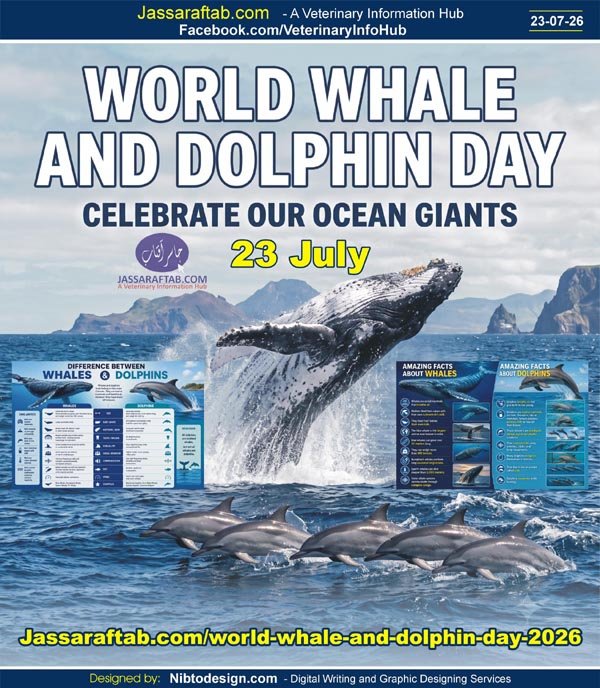
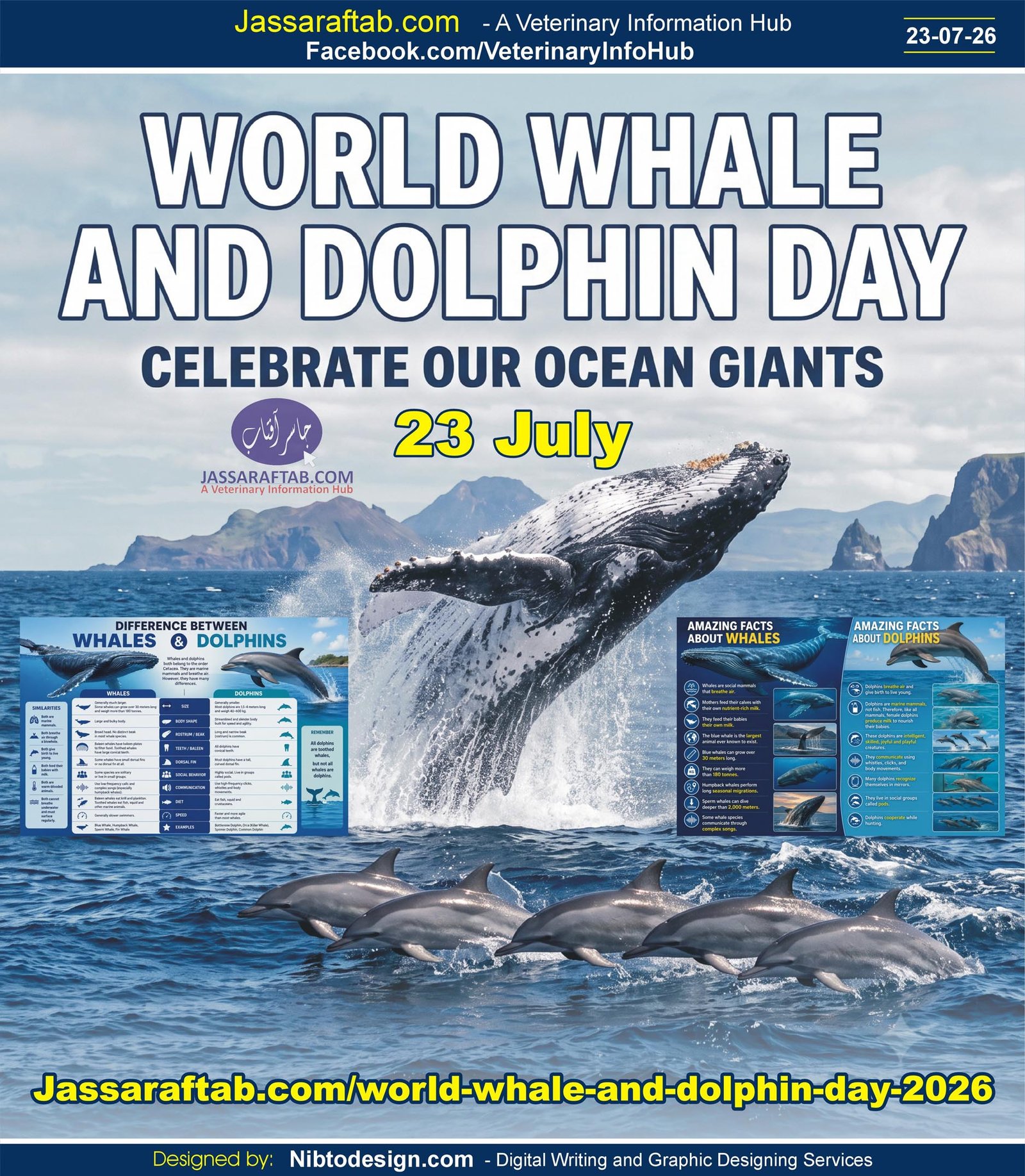
World Whale and Dolphin Day 2026|Conservation of Whales and Dolphins |Difference between Whales & Dolphins | Facts About Whales | Facts about Dolphins
World Whale and Dolphin Day is celebrated every year on 23 July. The day raises awareness about the conservation of whales and dolphins and conservation of marine mammals. Furthermore, this day spotlights the threats to whales & dolphins they face in the ocean. However, these threats to Whales and Dolphins include ocean pollution, climate change, and illegal hunting. The day also focuses on the marine conservation. It also reminds people that healthy oceans depend on healthy marine life. The International Whaling Commission (IWC) created this day to raise awareness about these marine mammals. This article focused on history of world whale and dolphin day, difference between Whales and Dolphins, Facts about Whales, Facts about Dolphins and Marine Conservation.

Every year, conservation groups, scientists, governments, and marine organizations organize awareness campaigns. They educate people about the importance of whales and dolphins. They also encourage actions that protect these magnificent marine mammals.
History of World Whale and Dolphin Day
World Whale and Dolphin Day was created by the International Whaling Commission (IWC) in 1986. The day honors one of the most important achievements in marine conservation. Its history began on 23 July 1982. On that day, the International Whaling Commission (IWC) voted to ban commercial whaling. The commission made this decision after decades of excessive whale hunting. As a result, many whale species received a chance to recover from the brink of extinction. The global moratorium officially came into effect during the 1985–1986 whaling season.

وہیلزکا عالمی دن اسکی تاریخ اور دیگر معلومات
Later, in 1986, conservation organizations started observing World Whale and Dolphin Day to commemorate this historic decision. Initially, the day focused on protecting whales from commercial hunting. However, its purpose gradually expanded. Today, the day also promotes the conservation of dolphins and other cetaceans. In addition, it encourages people to protect marine ecosystems for the conservation of marine mammals. It also raises awareness about major threats to whales and dolpins such as plastic pollution, climate change, ship strikes, underwater noise, illegal hunting and habitat loss. Therefore, World Whale and Dolphin Day inspires governments, organizations, and individuals to work together for the long-term protection of whales, dolphins, and the world’s oceans.
Why is World Whale and Dolphin Day Celebrated?
The main purpose of World Whale and Dolphin Day is to increase public awareness about conservation of marine mammals. The day also encourages governments, industries, and individuals to protect marine ecosystems.
Its key objectives include:
- Protect whales and dolphins from extinction.
- End illegal hunting and commercial whaling.
- Reduce ocean pollution.
- Promote sustainable fishing practices.
- Prevent accidental capture in fishing gear.
- Support marine protected areas.
- Encourage scientific research.
- Inspire people to conserve ocean biodiversity.
Therefore, the day is not only about celebration. It is also about responsibility.
Why Whales and Dolphins Are Important?
Whales and dolphins play a vital role in marine ecosystems. They help maintain the balance of ocean life. Whales recycle nutrients through their waste. These nutrients support the growth of phytoplankton. Phytoplankton produce a large share of the Earth’s oxygen and absorb carbon dioxide.
Therefore, whales indirectly help regulate the global climate.
Dolphins and whales are important predators. They help maintain healthy fish populations. Consequently, they keep marine food chains balanced.
Taiji Dolphin Drive Hunt and Japan Dolphin Day/ جاپان ڈولفن ڈے
Large whales store significant amounts of carbon in their bodies. When they die naturally, their bodies sink to the ocean floor. This process locks carbon away for centuries.
As a result, whales contribute to natural carbon storage.
Many countries earn income through whale and dolphin watching. Responsible marine tourism creates jobs while encouraging wildlife conservation.
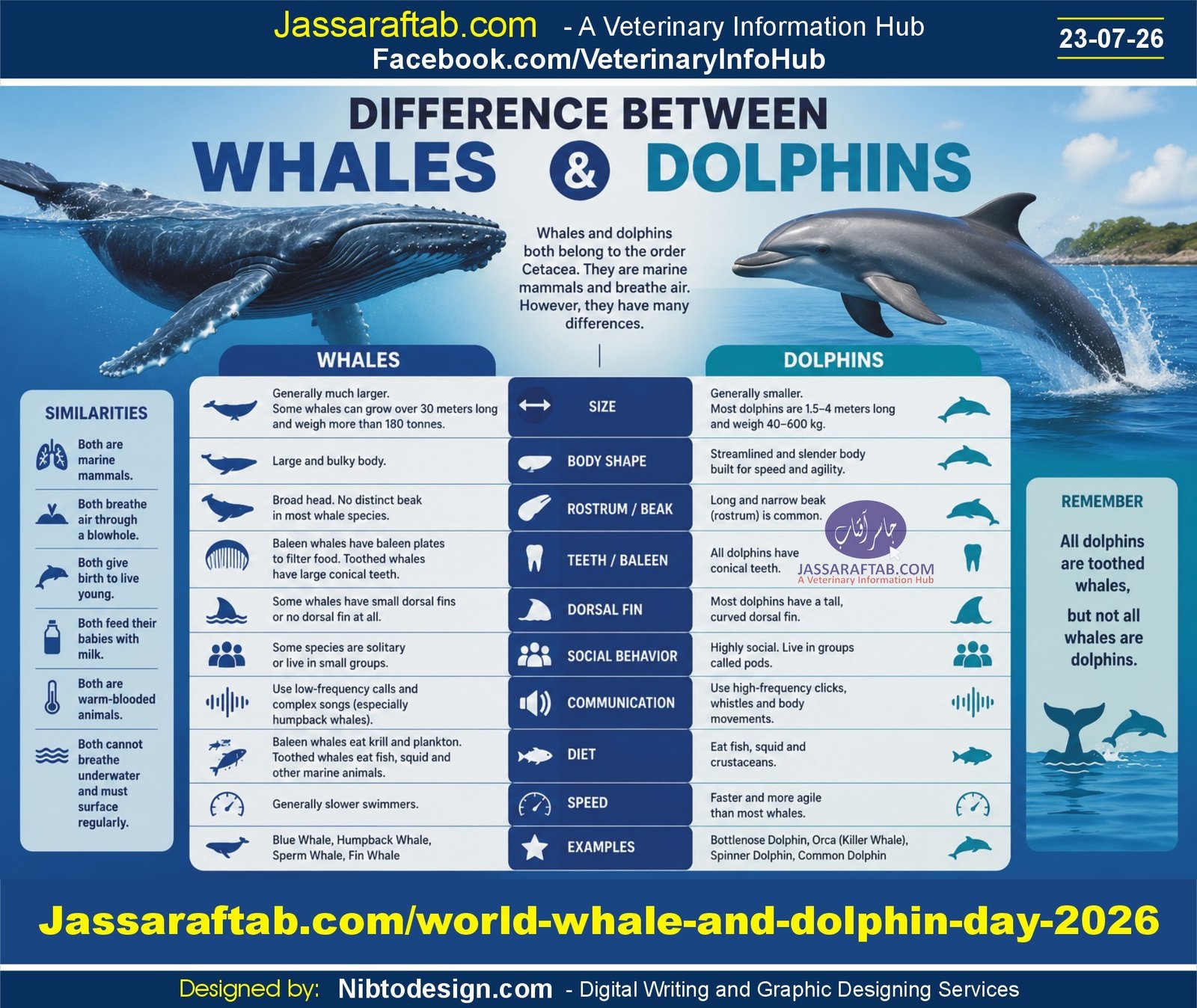
Difference Between Whales and Dolphins
Whales and dolphins belong to the same group of marine mammals called Cetacea, but they differ in several ways. Whales are generally much larger and heavier than dolphins. For example, the blue whale is the largest animal ever known to exist. In contrast, dolphins are smaller, faster, and more agile. Moreover, most dolphins have a long, pointed beak, while most whales have a broader head without a distinct beak. Whales include both baleen whales, which filter-feed on krill and plankton, and toothed whales, which hunt fish and squid.
However, all dolphins have cone-shaped teeth and actively hunt fish and other small marine animals. Furthermore, many whale species live alone or in small groups, whereas dolphins are highly social and usually live in pods. Whales communicate through low-frequency calls and, in some species, complex songs. Dolphins, on the other hand, use whistles, clicks, body movements, and echolocation to communicate and navigate. Despite these differences, both whales and dolphins are intelligent, air-breathing marine mammals that give birth to live young and feed their calves with milk.
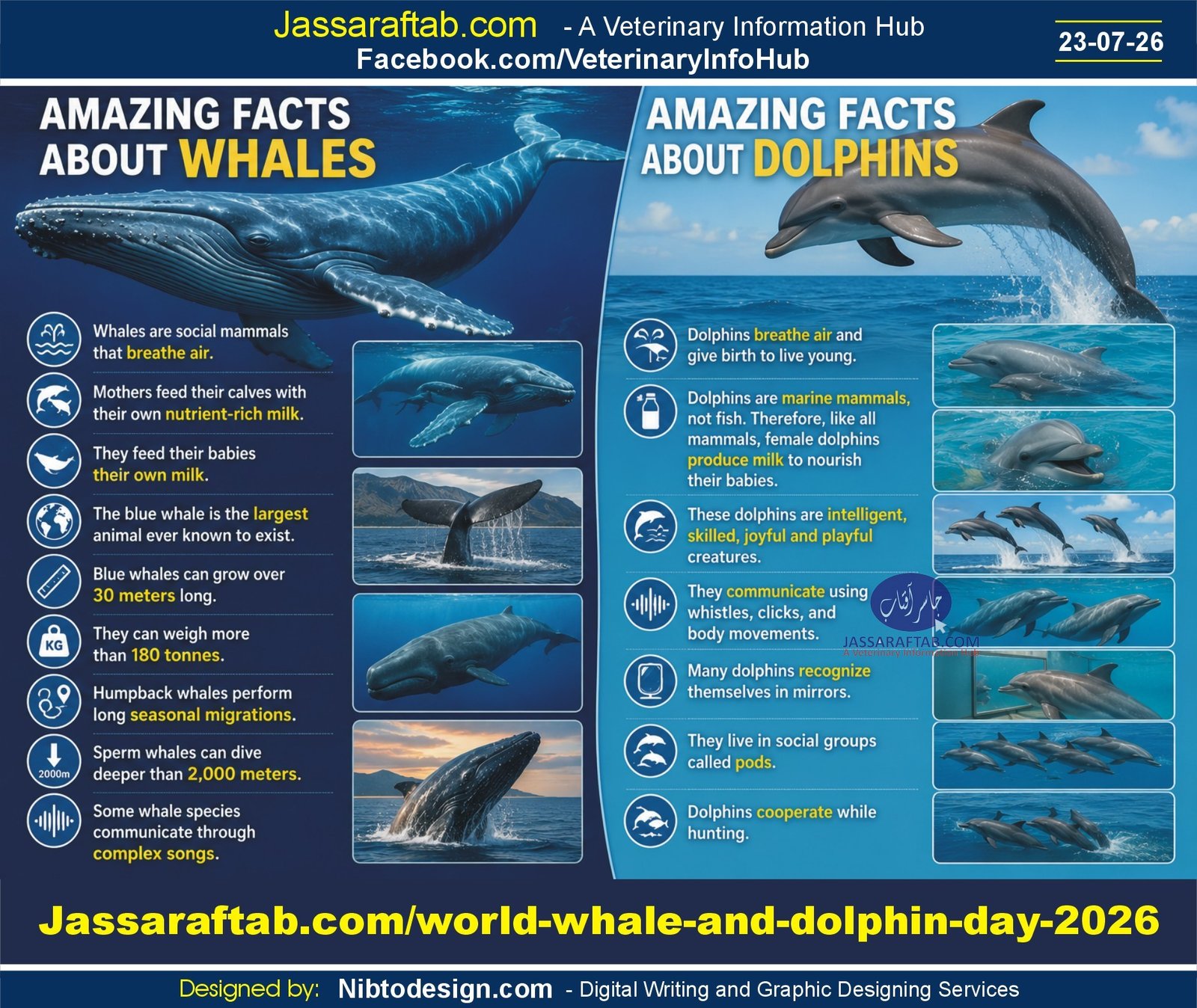
Amazing Facts About Whales
- Whales are social mammals that breathe air.
- Mothers feed their calves with their own nutrient-rich milk.
- They feed their babies their own milk
- The blue whale is the largest animal ever known to exist.
- Blue whales can grow over 30 meters long.
- They can weigh more than 180 tonnes.
- Humpback whales perform long seasonal migrations.
- Sperm whales can dive deeper than 2,000 meters.
- Some whale species communicate through complex songs.
Amazing Facts About Dolphins
- Dolphins breathe air and give birth to live young.
- Dolphins are marine mammals, not fish. Therefore, like all mammals, female dolphins produce milk to nourish their babies.
- These dolphins are intelligent, skilled, joyful and playful creatures.
- They communicate using whistles, clicks, and body movements.
- Many dolphins recognize themselves in mirrors.
- They live in social groups called pods.
- Dolphins cooperate while hunting.
- Some dolphins use simple tools to find food.
Major Threats to Whales and Dolphins
Despite conservation efforts, whales and dolphins still face many threats.
Ocean Pollution
Plastic waste, chemicals, and oil spills contaminate marine habitats. Many marine mammals swallow plastic or become trapped in marine debris.
Climate Change
Rising ocean temperatures affect food availability. Climate change also alters migration routes and breeding grounds.
Commercial Fishing
Fishing nets accidentally trap thousands of whales and dolphins every year. This problem is known as bycatch.
Ship Collisions
Large ships frequently collide with whales in busy shipping routes. These accidents often cause severe injuries or death.
Underwater Noise
Shipping, sonar, and industrial activities create underwater noise pollution. This noise interferes with communication, navigation, and feeding.
Illegal Hunting
Although commercial whaling has declined, some countries still hunt whales under special permits or objections to international agreements.
Conservation of Whales and Dolphins
The conservation of whales and dolphins requires global cooperation and continuous effort. Governments, scientists, conservation organizations, and local communities all play an important role in protecting these marine mammals. The International Whaling Commission (IWC) regulates whaling, supports scientific research, and promotes international cooperation to conserve whale populations. Moreover, many countries have established Marine Protected Areas (MPAs) to provide safe habitats where whales and dolphins can feed, breed, and migrate with less human disturbance.
In addition, wildlife organizations rescue stranded and injured animals, provide medical care, and release them back into the ocean whenever possible. Scientists also monitor whale and dolphin populations through satellite tracking, drones, underwater microphones, and genetic research. These studies help develop effective conservation strategies. Furthermore, every individual can contribute to marine conservation by reducing plastic use, recycling waste, choosing sustainable seafood, lowering carbon emissions, supporting conservation organizations, and respecting marine wildlife. Therefore, even small actions can help protect whales and dolphins and ensure their survival for future generations.
Conclusion of World Whale and Dolphin Day
World Whale and Dolphin Day, observed every year on 23 July, reminds us that whales and dolphins are essential for healthy oceans. The day also commemorates the historic 1982 International Whaling Commission decision that led to the global ban on commercial whaling. It also focuses on conservation of marine mammals.
Although many species have recovered, numerous threats still remain. Plastic pollution, climate change, underwater noise, accidental fishing, and habitat loss continue to endanger marine mammals.
Therefore, governments, organizations, and individuals must work together. Through conservation, education, and responsible environmental practices, we can protect whales and dolphins for future generations.
Every action matters. Together, we can ensure that these remarkable marine mammals continue to thrive in our oceans.
Frequently Asked Questions (FAQs)
Are whales and dolphins mammals?
Whales and dolphins are marine mammals. They breathe air with lungs, give birth to live young, produce milk to feed their babies, and maintain a constant body temperature.
Why is World Whale and Dolphin Day celebrated on 23 July?
It is celebrated on 23 July to mark the 1982 decision of the International Whaling Commission to end commercial whaling, a landmark event in marine conservation.
What is the purpose of World Whale and Dolphin Day?
The day raises awareness about whale and dolphin conservation, promotes ocean protection, and encourages sustainable human activities.
Why are whales important to the environment?
Whales recycle nutrients, support marine ecosystems, help store carbon, and contribute to climate regulation.
What are the biggest threats to dolphins and whales?
The main threats include plastic pollution, climate change, fishing gear entanglement, ship strikes, underwater noise, habitat degradation, and illegal hunting.
How can people help protect whales and dolphins?
People can reduce plastic waste, support sustainable fishing, lower carbon emissions, participate in beach cleanups, and promote marine conservation awareness.