

World Civet Day | History of World Civet Day | World Civet Day 2026 Theme Healthy Civets, Healthy Planet! |What is Civet Coffee? | Civets Conservation | Role of The Civet Project
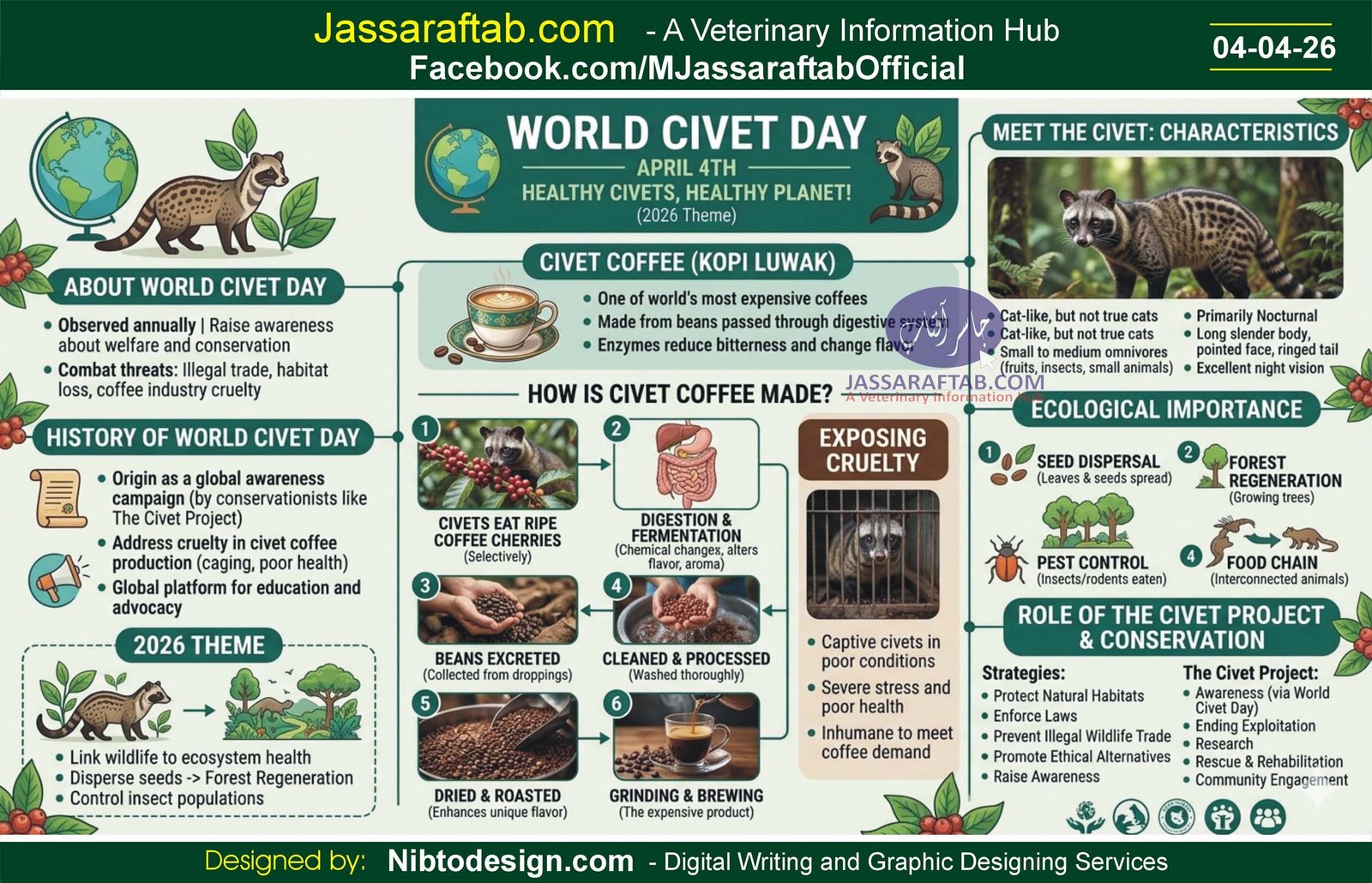
World Civet Day is observed every year on April 4. It raises awareness about civets and their welfare. Moreover, it highlights the urgent need for civets conservation. The civet project established this day to combat various threats like Civet Coffee or kopi luwak Industry, illegal trade and habitat loss. Civets are small but ecologically important mammals. Therefore, protecting them supports biodiversity and environmental balance. World Civets Day 2026 theme is Healthy Civets, Healthy Planet!



History of World Civet Day
It began as a global awareness campaign in 2025. Conservationists and animal welfare groups like The Civet Project launched World Civet Day to address cruelty linked to civet coffee production.
In many regions, civets were captured and kept in cages. They were used to produce kopi luwak, a luxury coffee called civet coffee. However, these conditions caused severe stress and poor health.
As a result, organizations started campaigns to expose this issue. Gradually, awareness increased. Consequently, World Civet Day became a global platform for education and civet conservation advocacy.
World Civet Day Theme: Healthy Civets, Healthy Planet
The theme “Healthy Civets, Healthy Planet” highlights the link between wildlife and ecosystem health. Civets play a direct role in maintaining natural systems.
For instance, they disperse seeds through their droppings. Therefore, they support forest regeneration. Moreover, they help control insect populations.
On the other hand, declining civet populations indicate environmental imbalance. Thus, protecting civets contributes to a healthier planet. It also focuses on the ban of civet coffee or Kopi Luwak to save them from suffering.
Purpose of World Civet Day
It serves several important purposes.
- Raises awareness about civet exploitation and cruelty, particularly highlighting the inhumane practices involved in the production of civet coffee.
- Promotes ethical and wildlife-friendly practices.
- Encourages conservation of natural habitats.
- Educates people about the ecological role of civets.
- Creates awareness about civets conservation
Furthermore, the day inspires individuals and organizations to take action. For example, people can avoid products linked to animal cruelty and support conservation initiatives.
What is Civet Coffee?
The Civet coffee, also known as kopi luwak, is one of the world’s most expensive coffees. It is made using coffee beans that have passed through the digestive system of civets.
Civets eat ripe coffee cherries. However, they only digest the pulp. The beans inside remain mostly intact. As a result, these beans are later collected, cleaned, and processed into coffee.
Moreover, during digestion, enzymes alter the beans. Therefore, this process changes the flavor and reduces bitterness.
How is Civet Coffee Made?
Civet coffee or Kopi Luwak is produced through a unique natural process that begins when civets select and eat the ripest and highest-quality coffee cherries. This natural selection plays an important role in improving the overall quality of the final product. After consumption, the civets digest the outer pulp of the cherries, while the beans pass through their digestive system. During this process, fermentation occurs inside the digestive tract, which leads to chemical changes in the beans. As a result, the flavor, aroma, and texture of the coffee are significantly altered, often making it smoother and less bitter.
After digestion, the civets excrete the coffee beans in their droppings. Although this may seem unusual, the beans remain intact and undamaged. Farmers then collect these beans and wash them thoroughly to remove impurities and ensure hygiene. Once cleaned, the beans are dried properly and then roasted using standard coffee roasting methods. Roasting further enhances their unique flavor and aroma. Finally, the roasted beans are ground and brewed, producing the distinctive and highly valued civet coffee or Kopi Luwak.
What Are Civets?
Civets are small to medium-sized mammals belonging to the family Viverridae. They resemble a mix of cats and raccoons. However, they are not true cats.
They are mainly found in Asia and Africa. Moreover, they adapt to forests, grasslands, and even urban environments. Civets are nocturnal animals. Therefore, they are active at night and rest during the day.
They are omnivores. For example, they eat fruits, insects, birds, and small animals. As a result, they play a key role in seed dispersal and ecosystem balance.
اود بلاؤ کا عالمی دن — اوٹر کی خصوصیات، مسکن اور تحفظ
Characteristics of Civets
They have long, slender bodies and pointed faces. In addition, they possess long tails, which are often marked with rings or bands. Their fur varies among species and may display spots or stripes. Therefore, these physical features help them blend into their natural habitats and move efficiently through trees and dense vegetation.
They are primarily nocturnal animals. They remain active during the night and rest during the day. Moreover, they have excellent night vision, which allow them to navigate and hunt in low-light conditions. As a result, they are highly effective nighttime foragers.
Furthermore, Civets are omnivores and have a diverse diet. They consume fruits, insects, and small vertebrates. Therefore, they play a dual role in ecosystems by dispersing seeds and controlling pest populations. In addition, their feeding habits contribute to maintain ecological balance.
In terms of behavior, civets are mostly solitary animals. They prefer to live and hunt alone. Moreover, they mark their territory using scent glands. They also communicate through sounds and scent signals. As a result, they avoid direct conflicts with other civets.
Civets also produce a strong-smelling substance known as musk. This musk is used for communication and territorial marking. However, humans have exploited it for use in perfumes and civet coffee production. Therefore, this has raised serious concerns regarding animal welfare and conservation.
Civets Conservation and World Civet Day
Initiatives like civets conservation focuses on protecting civets, their habitats, and their welfare. It aims to ensure their survival in the wild. Conservation organizations like the civet project has started world civet day to raise awareness every year.
They face several threats. Firstly, deforestation destroys their natural habitats. Secondly, illegal hunting and wildlife trade reduce their populations.
Further, civet coffee farming process cause significant suffering to civets. Many civets are kept in cages under poor conditions. Therefore, conservation efforts are essential.
Key Strategies for Civets Conservation
- Protect natural habitats such as forests
- Enforce wildlife protection laws
- Prevent illegal wildlife trade
- Promote ethical alternatives to civet coffee
- Raise public awareness
In addition, rescue and rehabilitation programs help return civets to the wild.
Role of the Civet Project and World Civet Day
Civet Project plays a vital role in global civets conservation. It combines awareness, research, and practical action. Specially, they educate people through world civet day.
Awareness and Education through World Civet Day
Projects like the civet project educates people about civets and their importance through World Civet Day. Moreover, it highlights cruelty in the coffee industry. As a result, consumers make more ethical choices.
Ending Exploitation
The Civet Project campaigns against the use of captive civets. It promotes cruelty-free alternatives. Therefore, it reduces demand for unethical practices.
Research and Monitoring
The project studies civet species, their behavior, and threats. Moreover, it collects data to support conservation planning.
Rescue and Rehabilitation
It supports rescue centers that care for injured and captive civets. After recovery, many civets are released into the wild.
Community Engagement
Civet project works with local communities. It promotes sustainable practices and habitat protection. As a result, communities become active partners in conservation.
Ecological Importance of Civets
Civets play a vital role in ecosystems. Firstly, they help regenerate forests through seed dispersal.
Secondly, they control insect and rodent populations. Moreover, they are part of the food chain. Therefore, they help maintain ecological balance.
Conclusion
This day reminds us of our responsibility to protect wildlife. Civets face serious threats, but conservation efforts can make a difference.
Moreover, initiatives like The Civet Project provide hope. They promote awareness, support research, and protect civets globally.
Therefore, we must act responsibly. By protecting civets, we also protect our planet. After all, healthy civets truly mean a healthy planet.


