

FAO Global Webinar on CCHF: Strengthening One Health Preparedness Ahead of Eid-ul-Adha
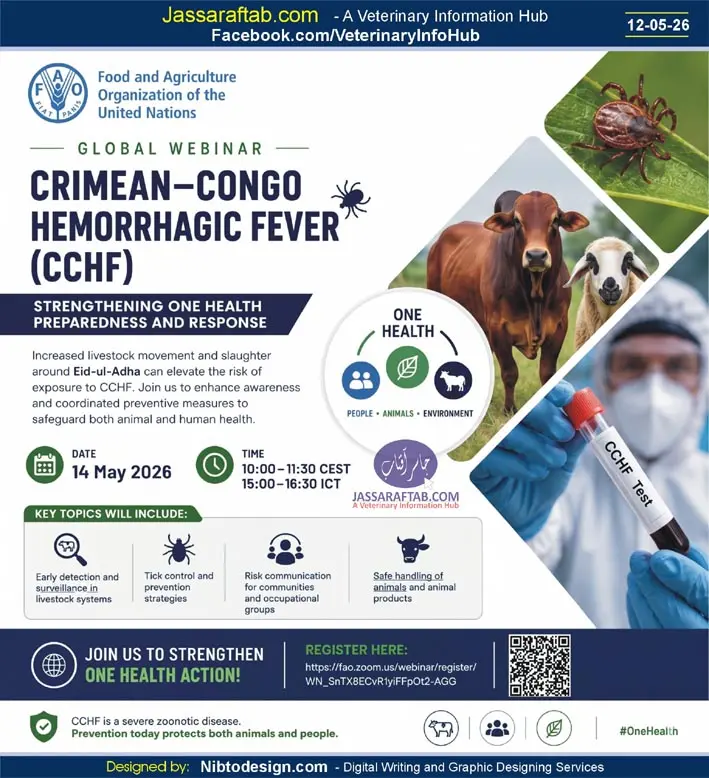
As livestock movement increases ahead of Eid-ul-Adha, the risk of zoonotic disease transmission also rises. One important disease of concern is Crimean-Congo Hemorrhagic Fever (CCHF). It is a serious viral disease that affects both animals and humans. To strengthen preparedness and improve coordinated response efforts, the Food and Agriculture Organization (FAO) is organizing an important global webinar on CCHF awareness and prevention.


Why This Webinar Matters
CCHF is a severe tick-borne zoonotic disease with significant public health importance. Livestock such as cattle, sheep, and goats can carry the virus without showing visible clinical signs, making disease detection challenging. Increased animal trading, transport, and slaughter activities during eid season can elevate exposure risks for farmers, butchers, veterinarians, and others working closely with animals.
What is Congo Fever? Congo Virus Symptoms, Causes | Diagnosis | Prevention
This webinar aims to promote the One Health approach, encouraging collaboration between animal health, public health, environmental, and food safety sectors.
Webinar Details
Title: CCHF Webinar – Strengthening One Health Preparedness and Emergency Response
Date: 14 May 2026
Time: 3:00 PM – 4:30 PM (Pakistan Standard Time)
Organizer: Food and Agriculture Organization (FAO)
Key Topics to be Covered
- Early detection and surveillance in livestock systems
- Tick control and prevention strategies
- Risk communication for communities and occupational groups
- Safe handling of animals and animal products
- Emergency preparedness and coordinated response planning
Who Should Attend?
This webinar on CCHF awareness and prevention will be valuable for:
- Veterinarians
- Livestock farmers and dairy producers
- Public health professionals
- Veterinary students and researchers
- Meat industry workers
- Food safety experts
- Government livestock officials
- One Health stakeholders
Importance of CCHF Awareness in Pakistan
Pakistan remains at risk for CCHF outbreaks, especially during periods of increased livestock movement. Awareness, prevention, and rapid response are essential to reduce transmission risks and protect both animal and human populations.
The upcoming Eid season makes this on CCHF awareness and prevention particularly timely for veterinary professionals and livestock stakeholders.


