


International Pallas’s Cat Day | Pallas’s Cat Conservation | International Pallas Cat Day | What is Pallas’s Cat? | Pallas’s Cat in Pakistan
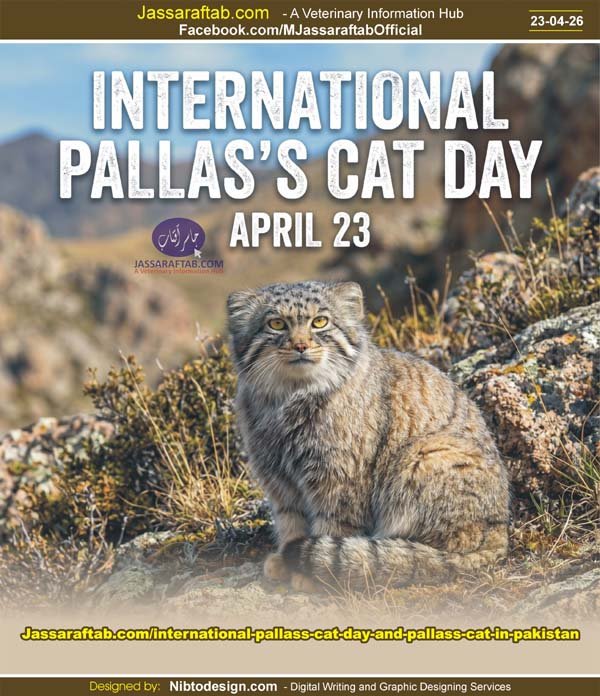
International Pallas’s Cat Day is celebrated annually on April 23. It was initiated by the Pallas’s Cat International Conservation Alliance (PICA) to highlight the urgent need for Pallas’s Cat Conservation. International Pallas Cat Day, Pallas’s Cat Conservation, What is Pallas’s Cat?, and Pallas’s Cat in Pakistan are key topics that highlight the importance of protecting one of the world’s most elusive wild felines the Pallas Cat.

Although this small feline survives in extreme environments, it faces growing threats. Therefore, conservation, research, and awareness remain critical.
Initially, conservationists noticed that this species received far less attention than other wild cats. Consequently, they introduced a dedicated awareness day. Over time, International Pallas’s Cat Day gained global recognition. Today, organizations, researchers, and wildlife enthusiasts actively participate. Furthermore, they organize campaigns, research activities, and educational programs. As a result, awareness about Pallas’s Cat Conservation continues to grow.

Purpose of International Pallas’s Cat Day or International Pallas Cat Day
The purpose of International Pallas’s Cat Day is clear and impactful. First, it raises awareness about the conservation status of the species. Second, it promotes research and scientific understanding. In addition, it encourages habitat protection and community involvement.
Moreover, International Pallas’s Cat Day motivates individuals to actively support Pallas’s Cat Conservation. Therefore, it plays a crucial role in protecting biodiversity and fragile ecosystems.
What is Pallas’s Cat?
Understanding What is Pallas’s Cat? is essential for effective conservation. The Pallas’s cat (Otocolobus manul), also known as the manul, is a small wild feline native to Central Asia.
Interestingly, the species has unique adaptations. It has dense fur that protects it from freezing temperatures. In addition, its flat face and small ears help it blend into rocky landscapes. Although it appears large due to its thick coat, it is only slightly bigger than a domestic cat.
Therefore, when discussing What is Pallas’s Cat?, it is important to highlight its specialized adaptations and ecological role.
Discovery and Historical Distribution of Pallas Cat
The Pallas cat was first described in 1776 by Peter Simon Pallas. He observed the species near Lake Baikal and named it Felis manul.
Subsequently, researchers recorded its presence across a wide region. It occurs in Central Asia, the Himalayas, the Tibetan Plateau, and grasslands of Mongolia, China, and Iran. As research expanded, scientists confirmed that the species thrives in cold, arid, and high-altitude environments.
Therefore, understanding its historical distribution strengthens Pallas’s Cat Conservation strategies.
Habitat and Global Distribution of Pallas’s Cat
The Pallas’s cat inhabits cold deserts, rocky grasslands, and high-altitude steppes. However, its distribution remains fragmented. Consequently, estimating its population is challenging.
Moreover, its dependence on specific habitats makes it vulnerable. Therefore, habitat protection remains a key component of Pallas’s Cat Conservation.
Pallas’s Cat in Pakistan
Pallas’s Cat in Pakistan represents the southern edge of its global range. The species is mainly found in Chitral and surrounding regions within the Hindu Kush and Hindu Raj mountains.
Furthermore, areas of Gilgit-Baltistan and other northern regions may serve as potential habitats. However, the distribution of Pallas’s Cat in Pakistan is not fully documented. Therefore, further surveys and research are essential.
Importantly, protecting Pallas’s Cat in Pakistan contributes to global conservation efforts.
پلاس بلی کا عالمی دن/ International Pallas Cat Day
Pallas’s Cat Conservation Status and Threats
Currently, the Pallas’s cat is classified as Near Threatened. However, its population continues to decline.
Major Threats to Pallas’s Cat
First, habitat degradation reduces suitable living areas. Second, the decline of prey species such as pikas affects survival. Moreover, illegal hunting and trapping pose serious risks.
In addition, climate change alters fragile ecosystems. Because the species exists in low densities, recovery becomes difficult. Therefore, Pallas’s Cat Conservation requires urgent action.
Pallas’s Cat Conservation in Pakistan
Pallas’s Cat Conservation in Pakistan plays a vital role in protecting this species.
Research and Monitoring
Researchers use camera traps, snow tracking, and community surveys. These methods help confirm the presence of Pallas’s Cat in Pakistan and identify habitats.
Role of Organizations and International Pallas’s Cat Day
In Pakistan, Pallas’s cat conservation is still emerging, and only a few organizations are directly focused on it. However, a strong combination of:
- Global organizations (PICA, Manul Working Group)
- Local NGOs (Snow Leopard Foundation)
- Academic institutions (University of Chitral, University of Haripur)
is gradually improving research and conservation efforts.
The Snow Leopard Foundation supports ecosystem conservation. Although it focuses on snow leopards, it indirectly contributes to Pallas’s Cat Conservation in Pakistan.
Community-Based Conservation
Local communities actively participate in conservation programs. Consequently, awareness increases and conflicts decrease.
Key Challenges
Despite efforts, challenges remain. Free-ranging dogs threaten the species. Additionally, poisoning reduces prey availability. Moreover, limited data restricts effective planning. Therefore, strengthening Pallas’s Cat Conservation in Pakistan is essential.
Why International Pallas’s Cat Day Matters
International Pallas Cat Day plays a significant role in wildlife conservation. First, it raises global awareness. Second, it promotes research and funding. Third, it encourages collaboration.
Most importantly, Pallas’s Cat Conservation helps protect entire ecosystems. Therefore, the impact extends beyond a single species.
Conclusion of International Pallas’s Cat Day
International Pallas’s Cat Day is more than an awareness event. It is a powerful call for Pallas’s Cat Conservation. By understanding What is Pallas’s Cat? and focusing on Pallas’s Cat in Pakistan, we can take meaningful action.
Although the species survives in extreme environments, it faces serious threats. Therefore, continued research, awareness, and community engagement are essential. Ultimately, protecting the Pallas’s cat ensures biodiversity conservation and ecological balance for future generations.


