What is International Microorganism Day?
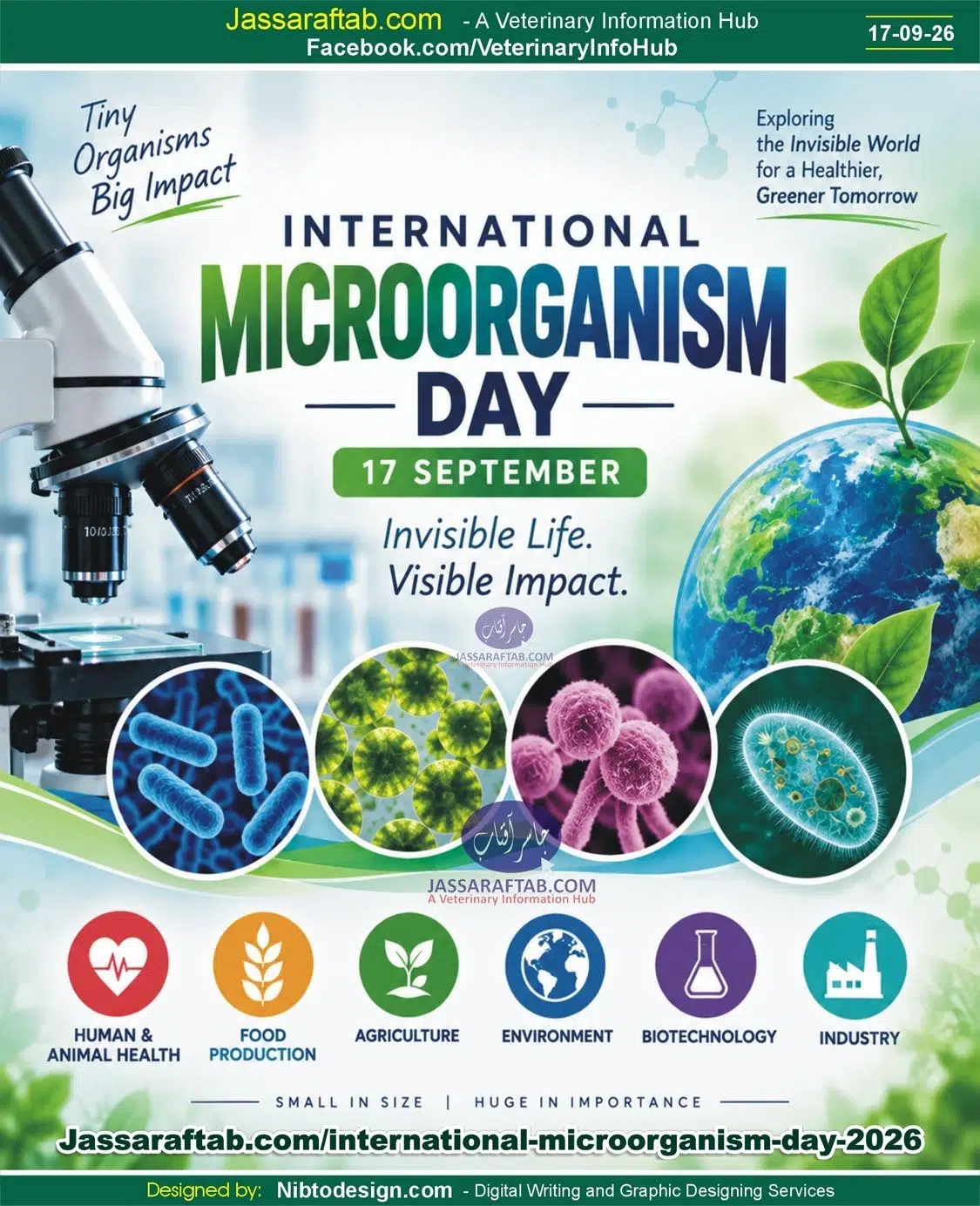
International Microorganism Day (IMD) is celebrated every year on 17 September. IMD is an international awareness day that celebrates microorganisms and highlights their importance in our daily lives. It aims to increase public understanding of the microbial world and shows how microorganisms contribute to human and animal health, food production, agriculture, the environment, biotechnology and industry.

Microorganisms are microscopic living organisms that people cannot normally see with the naked eye. They include bacteria, fungi, protozoa, algae and other microscopic organisms. While some microorganisms can cause diseases, many others provide essential benefits and support life.
Moreover, microorganisms perform many important processes. They support food fermentation, nutrient recycling, soil fertility, digestion and the production of medicines and other useful products. Therefore, IMD provides an opportunity to recognise the importance and benefits of these tiny organisms.
The official International Microorganism Day initiative aims to help people discover the vital role microbes play in our planet, our health and our daily lives.
Controlling Salmonellosis in food chain through Alternative to Antibiotics
It helps people understand the hidden microbial world and its importance in everyday life.

When is International Microorganism Day Celebrated?
International Microorganism Day is celebrated every year on 17 September.
In 2026, International Microorganism Day will be observed on Thursday, 17 September.
The date has an important connection with microbiology history. On 17 September 1683, Antonie van Leeuwenhoek sent an important letter.
He sent the letter to the Royal Society of London. In it, he described his observations of microorganisms.
His observations revealed a previously unknown microscopic world. Consequently, 17 September became closely associated with the history of microbiology.
History of International Microorganism Day
The Portuguese Society of Microbiology (SPM) created International Microorganism Day in 2017.
The sanitation selected 17 September for an important historical reason. The date commemorates Leeuwenhoek’s famous letter from 1683.
Antonie van Leeuwenhoek played a major role in the early history of microbiology. He developed powerful microscopes and observed microscopic organisms.
In 1683, he examined material from dental plaque under his microscope. He then described the tiny organisms he observed.
His observations helped scientists recognise the existence of microscopic life. Later, other scientists conducted experiments that supported his observations.
Therefore, Leeuwenhoek’s work helped establish the foundation for modern microbiology.
In 2020, the Federation of European Microbiological Societies (FEMS) took leadership of International Microorganism Day.
Since then, the initiative has expanded internationally. Universities, research institutions, schools, and science organisations now participate.
They organise lectures, exhibitions, laboratory demonstrations, workshops, competitions, and public awareness activities.
International Microorganism Day also provides an opportunity to promote microbiology education worldwide.
International Microorganism Day 2026 Theme
There is no single official global theme announced for International Microorganism Day 2026.
Instead, universities and organisations have selected their own themes. These themes highlight different aspects of microorganisms and microbiology.
For example, the University of Coimbra in Portugal is celebrating under the theme:
“(Luso)Microbial Connections’26 – Microbiology Shaping the Future.”
This theme represents the university’s own 2026 celebration. It does not represent an official global theme.
Similarly, Pakistan is also participating in International Microorganism Day activities.
The Department of Parasitology and Microbiology, Faculty of Veterinary Sciences, PMAS-Arid Agriculture University Rawalpindi, is celebrating the day.
The department has selected the theme:
“The Invisible World of Microorganisms: Their Role in Life, Health and the Environment.”
This theme highlights the important roles microorganisms play in life and health. It also emphasises their importance to the environment.
Furthermore, the theme reflects the significance of microbiology within veterinary and biological sciences.
Purpose of International Microorganism Day
International Microorganism Day serves several important purposes. It connects microbiology with health, agriculture, education, and environmental awareness.
What are Microorganisms?
Microorganisms are tiny living organisms that are too small to be seen with the naked eye. They can only be seen clearly using a microscope.
They include bacteria, fungi, protozoa, microscopic algae, and some other microscopic organisms.
Microorganisms can be beneficial or harmful. Beneficial microbes help with digestion, food fermentation, soil fertility, nutrient recycling, and medicine production. However, some microorganisms can cause diseases in humans, animals, and plants.
In simple words, microorganisms are tiny organisms that play a major role in life, health, agriculture, food, and the environment.
Raising Awareness About Microorganisms and International Microorganism Day
First, the day raises public awareness about microorganisms and their importance.
Many people associate microorganisms mainly with diseases. However, beneficial microorganisms support numerous biological and environmental processes.
Therefore, Microorganism Day helps create a more balanced understanding of microbes.
Promoting Microbiology Education
The day also promotes microbiology education among students and the general public.
Schools and universities can organise laboratory demonstrations, lectures, exhibitions, and microbiology competitions.
These activities make scientific concepts easier to understand. Moreover, they can encourage students to explore microbiology as a career.
Highlighting Beneficial Microorganisms
International Microorganism Day highlights the many benefits of microorganisms.
Microbes support food production, agriculture, animal health, medicine, biotechnology, and environmental processes.
For instance, microorganisms help produce fermented foods and support nutrient cycling in ecosystems.
They also play an important role in the digestive systems of animals.
Encouraging Scientific Research
The day encourages interest in microbiological research and scientific discovery.
Researchers continue to study microorganisms for new applications in medicine, agriculture, food technology, and environmental management.
Consequently, microbiology can contribute to solutions for many modern challenges.
Inspiring Young Scientists
Microorganism Day can also inspire young people to study microbiology and related sciences.
Students can learn how microorganisms affect humans, animals, plants, and ecosystems.
As a result, the day can help develop interest in scientific careers.
Connecting Science With Society and International Microorganism Day
Finally, the day connects scientific knowledge with society. Microorganisms affect our daily lives, even though we cannot normally see them.
Therefore, International Microorganism Day allows scientists and educators to explain their importance.
Ultimately, Microorganism Day reminds us that tiny organisms can have a huge impact on our world.