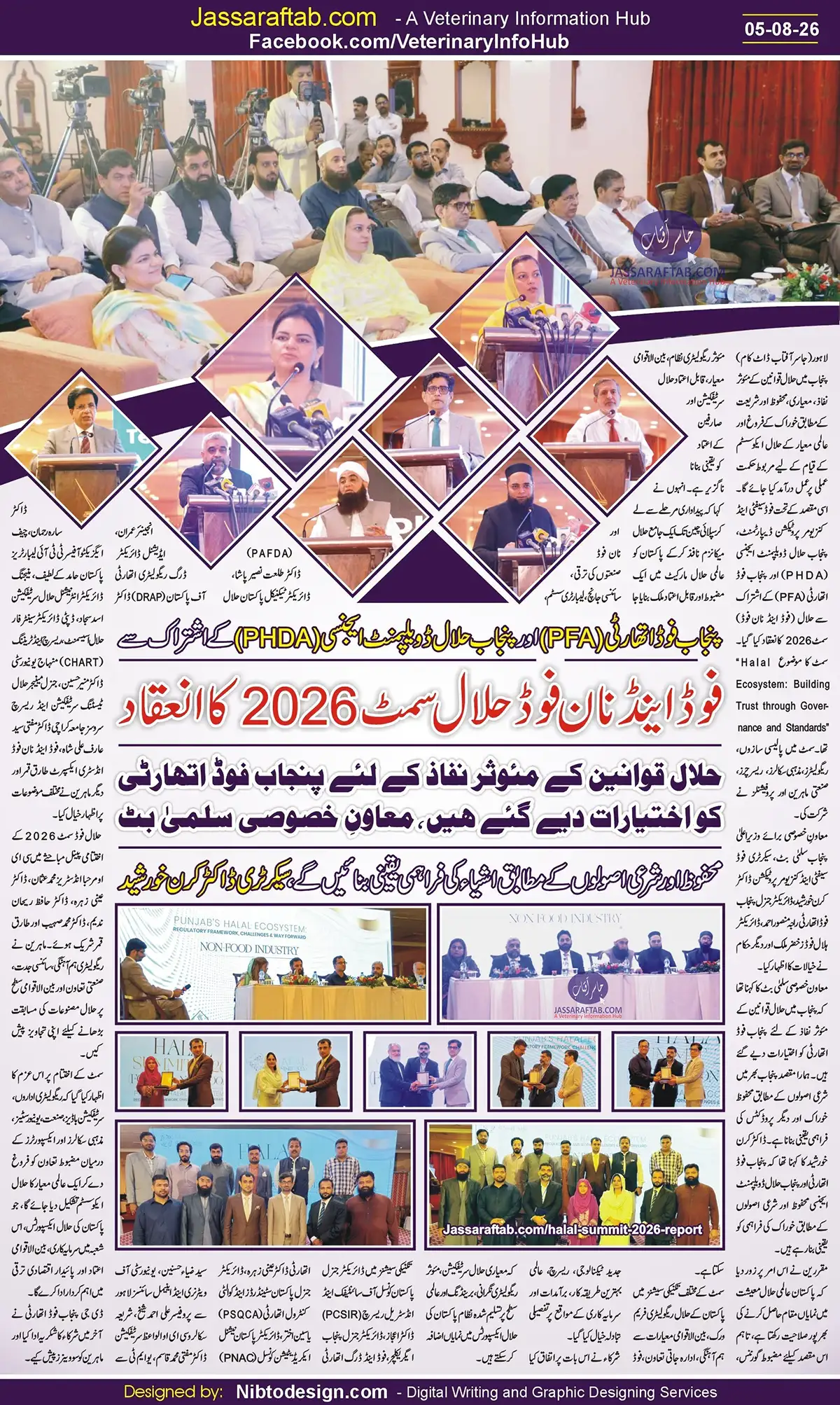
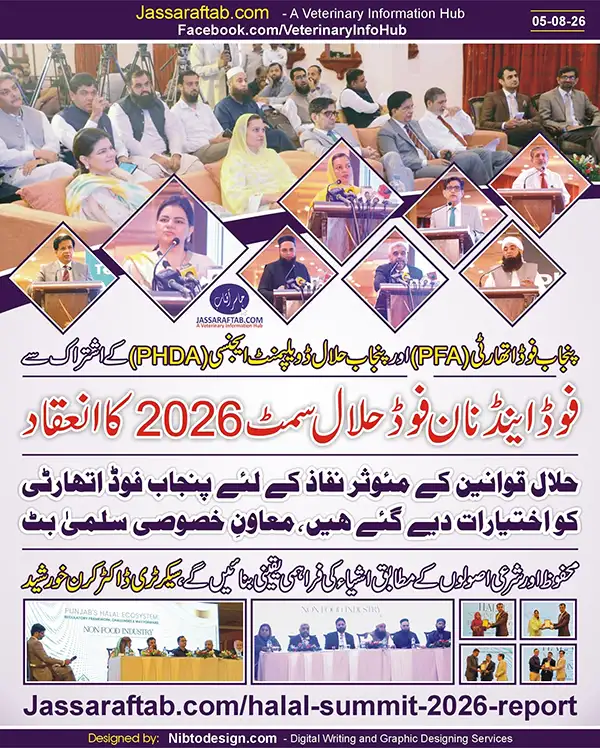
Punjab will implement a comprehensive strategy to strengthen the enforcement of halal laws, promote safe and Shariah-compliant food, and establish a globally recognized halal ecosystem. To support this vision, the Halal Summit 2026 (Food & Non-Food) was jointly organized by the Food Safety and Consumer Protection Department, Punjab Halal Development Agency (PHDA), and the Punjab Food Authority (PFA).

Special Assistant to the Chief Minister of Punjab Salma Butt, Secretary Food Safety and Consumer Protection Dr. Kiran Khurshid, Director General of Punjab Food Authority Raja Mansoor Ahmed, Director Hilal Foods Khizar Malik and other officials expressed their views.
Theme of Halal Summit 2026
The summit was held under the theme “Halal Ecosystem: Building Trust through Governance and Standards.” It brought together policymakers, regulators, religious scholars, researchers, industry leaders, and technical professionals to discuss the future of Pakistan’s halal industry.

SA to CM Salma Butt at Halal Summit 2026
Special Assistant to the Chief Minister Punjab Salma Butt said that the Punjab Food Authority has been empowered to ensure the effective implementation of halal laws across the province.
Halal Meat Export Potential of Pakistan and its Role in Economic Independence
She stated that the government’s objective is to provide consumers with safe food and other halal products that fully comply with Islamic principles. She added that strengthening public confidence in halal products remains a top priority.
حلال فوڈ اینڈ نان فوڈ سمٹ کا لاہور میں انعقاد، خصوصی رپورٹ
Punjab Food Authority and PHDA Working Together for Safe Halal Food
Secretary, Food Safety and Consumer Protection Department, Dr. Kiran Khurshid, said that the Punjab Food Authority and the Punjab Halal Development Agency are jointly working to ensure the availability of safe and Shariah-compliant food products.
She emphasized that coordinated efforts between regulatory institutions will improve food safety while strengthening the provincial halal regulatory framework.
Pakistan Has Strong Potential in the Global Halal Economy
Speakers highlighted that Pakistan has significant potential to become a major player in the global halal economy. However, they stressed that this goal requires strong governance, an effective regulatory system, internationally recognized standards, reliable halal certification, and greater consumer confidence.
They explained that implementing a comprehensive halal mechanism from production to the entire supply chain can position Pakistan as a trusted supplier in the international halal market.
Technical Sessions at Halal Summit 2026
The Halal Summit 2026 featured several technical sessions covering key areas of the halal industry. Experts discussed:
- Pakistan’s halal regulatory framework
- Harmonization with international halal standards
- Institutional collaboration
- Growth of food and non-food halal industries
- Scientific testing and laboratory systems
- Emerging technologies and research
- Global best practices
- Export opportunities
- Investment potential in the halal sector
Participants agreed that internationally accepted halal certification, strong regulatory oversight, effective branding, and globally recognized systems can significantly increase Pakistan’s halal exports.
Leading Experts at Halal Summit 2026
The technical sessions at Halal Summit 2026 included presentations by experts from several national institutions, including:
- Pakistan Council of Scientific and Industrial Research (PCSIR)
- Punjab Agriculture, Food and Drug Authority (PAFDA)
- Pakistan Halal Authority
- Pakistan Standards and Quality Control Authority (PSQCA)
- Pakistan National Accreditation Council (PNAC)
- Drug Regulatory Authority of Pakistan (DRAP)
- University of Veterinary and Animal Sciences (UVAS), Lahore
- University of Management and Technology (UMT)
- TTI Laboratories Pakistan
- International Halal Certification organizations
- Centre for Halal Assessment, Research and Training (CHART), Minhaj University
- University of Karachi
- Food and non-food industry experts
DG PCSIR Dr. Ijaz, DG PAFDA Dr. Talat Naseer Pasha, Director Technical Pakistan Halal Authority Dr. Ainy Zahra, Director PSQCA Yasin Akhtar, Director PNAC Engineer Imran, Additional Director DRAP Dr. Syed Zia Hasnain, Prof Ali Ahmed Sheikh, CEO Al-Waiz Certification Dr. Mufti Muhammad Qasim, Dr. Sara Rehman from UMT, CEO TTI Laboratories Hamid K. Latif, MD International Halal Certification Asad Sajjad, Deputy Director CHART Minhaj University Dr. Munir Hussain, GM Halal Testing Certification and Research Services University of Karachi Dr. Mufti Syed Arif Ali Shah, Food and Non-food industry expert Tariq Qamar and other experts expressed their views on various topics.
The speakers discussed scientific validation, halal testing, accreditation systems, certification mechanisms, regulatory compliance, research collaboration, and industry development.
Halal Meat Exporters and Meat Processors in Pakistan
Panel Discussion at Halal Summit 2026
The closing panel discussion featured Muhammad Usman (CEO, Marhaba Industries), Dr. Aini Zahra, Dr. Hafiz Rehan Nadeem, Dr. Muhammad Sohaib, and Tariq Qamar.
Panelists at Halal Summit 2026 emphasized the need for stronger regulatory coordination, scientific innovation, industrial collaboration, and improved international competitiveness of Pakistan’s halal products.
Strong Commitment to Develop a Global Halal Ecosystem
At the conclusion of the Halal Summit 2026, participants reaffirmed their commitment to building a world-class halal ecosystem through close collaboration among regulatory authorities, certification bodies, industry stakeholders, universities, religious scholars, and exporters.
They expressed confidence that such cooperation will strengthen Pakistan’s halal exports, attract greater investment, enhance international trust, and support long-term economic growth.
Director General, Punjab Food Authority Raja Mansoor Ahmad thanked all participants and presented souvenirs to the speakers and experts in recognition of their valuable contributions.