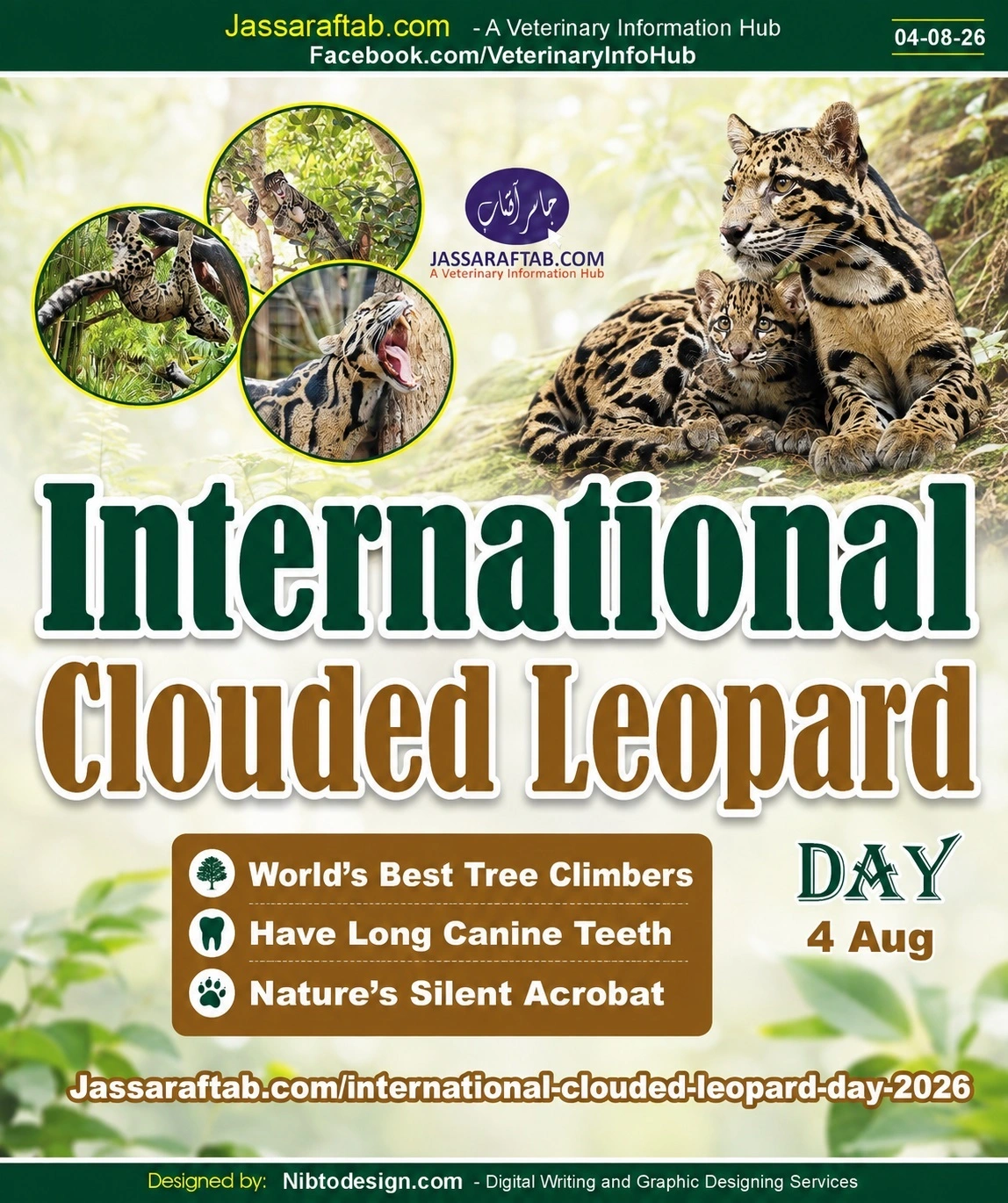
What Is International Clouded Leopard Day?
International Clouded Leopard Day is observed every year on August 4. The day raises awareness about one of the world’s most elusive wild cats. It also highlights the urgent need to protect species of clouded leopard populations and their forest habitats. Although clouded leopards receive less attention than tigers and lions, they play a vital role in maintaining healthy forest ecosystems. Unfortunately, their population continues to decline because of threats to clouded leopards. These threats to clouded leopards include habitat destruction, illegal hunting, and wildlife trafficking. Therefore, clouded leopard conservation needs more attention.

The global awareness campaign encourages people to learn about clouded leopards and support their conservation. Moreover, it promotes research, education, and habitat protection.
Zoos, wildlife parks, conservation organizations, and educational institutions organize special events, online campaigns, educational talks, and fundraising activities to mark the day. As a result, thousands of people around the world learn about these rare and secretive cats every year.

History of International Clouded Leopard Day
International Clouded Leopard Day began in 2018. Carnivore keepers Lauren Amos and Dan Kemp founded the awareness day while working at Howletts Wild Animal Park in Kent, England. They launched the day in partnership with The Aspinall Foundation, an international wildlife conservation charity.
The founders wanted to increase public awareness of clouded leopards living both in the wild and in human care. They also hoped to inspire greater support for clouded leopard conservation programs and scientific research. Initially, the celebration started at Howletts Wild Animal Park. However, it quickly expanded across Europe, Asia, North America, and many other regions. Today, numerous zoos and conservation groups observe the day every year.
What is a Clouded Leopard?
The clouded leopard belongs to the genus Neofelis. However, despite their name they are not closely related to leopards. Scientists consider them a bridge between small cats and the larger members of the big cat family. They have exceptionally long canine teeth, powerful limbs, large paws, and a long tail that helps maintain balance while climbing trees.
The species gets its name from the large cloud-shaped markings on its coat. These markings provide excellent camouflage in dense forests.
Clouded leopards rank among the world’s best tree climbers. They can climb down trees headfirst, hang upside down from branches, and move easily through the forest canopy. Therefore, they spend much of their time above the ground.
Species of Clouded Leopard
There are two recognized living species of clouded leopard. These species of clouded leopard include Mainland Clouded Leopard and Sunda clouded leopard.
Scientists previously classified the clouded leopard as a single species. However, genetic and physical studies have divided it into two distinct species in 2006. Researchers based this classification on molecular evidence, including mitochondrial DNA, microsatellites, and chromosomal analyses. They also examined physical characteristics such as coat patterns, skull structure, and dental features.
Mainland Clouded Leopard (Neofelis nebulosa)
The mainland clouded leopard lives across South and Southeast Asia. Its range includes Nepal, Bhutan, northeastern India, Bangladesh, Myanmar, southern China, Thailand, Laos, Cambodia, and Vietnam.
This species prefers tropical and subtropical forests. However, researchers occasionally record it in higher mountain forests.
Sunda Clouded Leopard (Neofelis diardi)
The Sunda clouded leopard lives only on the Indonesian islands of Borneo and Sumatra. Scientists recognized it as a separate species in 2006 after detailed genetic studies.
Although both species look similar, they differ genetically and have distinct coat patterns.
What About the Formosan Clouded Leopard?
The Formosan clouded leopard was a population of the mainland clouded leopard (Neofelis nebulosa) that was found only in Taiwan. Researchers conducted extensive camera-trap surveys in several protected areas across Taiwan between 1997 and 2012. However, they did not record a single clouded leopard during these studies. As a result, the IUCN Red List classifies the Formosan clouded leopard as Extinct.
Unfortunately, decades of habitat loss and hunting caused its disappearance.
Where Do Clouded Leopards Live?
Clouded leopards inhabit dense tropical and subtropical forests across South and Southeast Asia. They depend on healthy forests because these habitats provide food, shelter, and safe breeding areas.
These cats remain highly secretive. Consequently, scientists still know relatively little about their behavior in the wild compared with other big cats.
What Do Clouded Leopards Eat?
Clouded leopards are carnivores. They hunt both on the ground and in trees.
Their diet includes Deer, Wild pigs, Monkeys, Squirrels, Birds, Rodents, and Small mammals
Their powerful jaws and unusually long canine teeth allow them to capture relatively large prey.
Major Threats to Clouded Leopards
Clouded leopards face numerous threats throughout their range. As a result, both living species are listed as Vulnerable on the IUCN Red List.
Habitat Loss
Habitat destruction remains the greatest threat. Forests continue to disappear because of logging, road construction, mining, urban expansion, and agricultural development.
Large areas of rainforest have also been cleared for palm oil plantations. Consequently, clouded leopards lose essential habitat and become isolated in small forest fragments.
Illegal Hunting and Poaching
Poachers hunt clouded leopards for their beautiful skin, bones, teeth, and other body parts. Some products enter illegal wildlife markets, while others are used in traditional medicine.
Although many countries prohibit hunting, illegal trade continues in several parts of Asia.
Illegal Wildlife Trade
Wildlife traffickers also capture clouded leopard cubs for the illegal exotic pet trade. Young animals often suffer poor welfare conditions during transport. Furthermore, many do not survive.
Decline of Prey
Hunters also reduce populations of deer, monkeys, wild pigs, and other prey species. Therefore, clouded leopards struggle to find enough food in many forests.
Human-Wildlife Conflict
As forests shrink, clouded leopards increasingly encounter people. Occasionally, they prey on domestic animals. In response, some communities kill them to protect livestock.
Climate Change
Climate change further threatens forest ecosystems. Rising temperatures, changing rainfall patterns, and more frequent forest fires reduce suitable habitat for many wildlife species, including clouded leopards.
Why Clouded Leopards Matter
Clouded leopards help maintain ecological balance. They regulate prey populations and contribute to healthy forest ecosystems. Therefore, protecting them also protects countless other plants and animals that share the same habitat.
In addition, conserving clouded leopards supports biodiversity across one of the world’s richest wildlife regions.
Clouded Leopard Conservation and International Clouded Leopard Day
Clouded leopard conservation has become increasingly important as populations continue to decline across Asia. Habitat loss, illegal hunting, and wildlife trafficking remain the biggest threats to clouded leopards and the survival of both clouded leopard species. Therefore, governments, conservation organizations, researchers, and local communities are working together to protect these elusive wild cats and their forest habitats.
Several international organizations, NGOs, zoos, and research institutions actively support clouded leopard conservation. Two leading organizations supporting clouded leopard conservation are the Wildlife Conservation Society (WCS) and the World Wide Fund for Nature (WWF). Both organizations work to protect clouded leopard populations across Asia. They support anti-poaching patrols, strengthen wildlife law enforcement, and help conserve critical forest habitats. In addition, they collaborate with governments and local communities to protect and restore key landscapes in countries such as Malaysia and India, ensuring safer habitats for clouded leopards and other threatened wildlife.
The annual observance encourages people to learn about clouded leopards and support conservation projects. It also highlights the importance of protecting forests, combating illegal wildlife trade, and preserving biodiversity. Ultimately, International Clouded Leopard Day reminds the world that conserving clouded leopards requires collective action. Continued research, stronger wildlife laws, habitat protection, and public support will help ensure that these remarkable wild cats survive for future generations. It will also help lower the threats to clouded leopards.