World Lion Day | History of World Lion Day | The King of the Jungle | Lion Conservation | Importance of Lions | Big Cat Rescue | Lion Recovery Fund
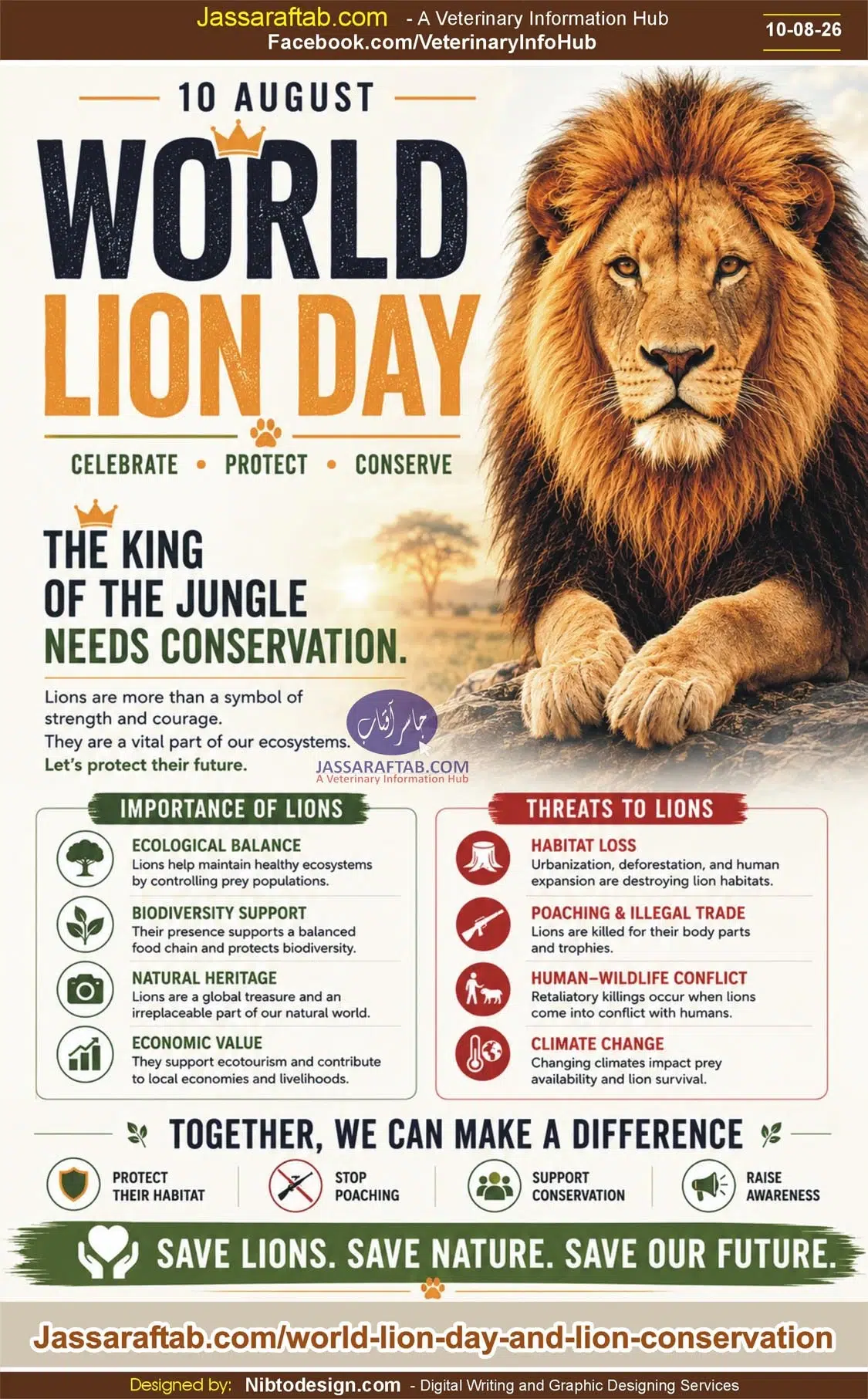
World Lion Day is celebrated every year on August 10. This global event raises awareness about lion conservation, their role in the ecosystem, and the urgent need to protect big cats. They are also known as the king of the jungle. Two wildlife conservationists, Dereck and Beverly Joubert, along with Big Cat Rescue, launched the day to raise awareness about the importance of lions. It also highlights the urgent need to combat threats to lions they face in the wild.

Although lions are strong and iconic, their numbers are rapidly declining. Therefore, lion conservation efforts have become more important than ever.
Therefore, World Lion Day encourages people worldwide to support lion protection. It also reminds us how saving lions helps protect entire ecosystems.

History of World Lion Day
World Lion Day began in 2013. Two wildlife filmmakers and conservationists Dereck and Beverly Joubert, along with Big Cat Rescue, launched the campaign. They saw a sharp decline in lion populations and decided to take action. Therefore, they created a day to raise awareness about importance of lions and inspire protection for lions.
Dereck and Beverly Joubert dedicated their lives to protecting big cats. In 2009, they partnered with National Geographic to launch the Big Cat Initiative (BCI). Their mission focused on saving declining lion populations. Since then, Big Cat Initiative (BCI) has awarded over 150 grants, tackled 3,000 wild cat threats, and removed 13,000 poaching snares.
From the beginning, their goal was clear: to educate people, promote lion conservation, and support global efforts to save the lions. Over time, more organizations and individuals joined the cause. As a result, World Lion Day became a powerful international movement. Each year on August 10, people around the world celebrate lions and highlight the urgent need to protect their shrinking habitats. The day now serves as a reminder that lions, once widespread across Africa, Asia, and Europe, are rapidly disappearing. Through education, advocacy, and coordinated conservation action, World Lion Day continues to play a vital role in giving the King of the Jungle a voice.
Why is World Lion Day Important?
Lions (Panthera leo) are large, powerful carnivores known as the king of the jungle. They live mainly in the grasslands and savannas of Africa, with a small group found in India’s Gir Forest. Unlike most big cats, lions are social animals and live in groups called prides. Male lions have a thick mane, while females are the primary hunters. Lions play a key role in maintaining the balance of their ecosystem. However, they face threats from habitat loss, poaching, and human conflict, making conservation efforts vital for their survival.
Lions once roamed across Africa, Asia, and Europe. Today, they exist only in parts of sub-Saharan Africa and a small region of India. In fact, the global lion population has dropped by over 50% in just the last few decades.
The day also celebrates the cultural, ecological, and symbolic importance of lions. Lions play a key role in maintaining healthy ecosystems by balancing herbivore populations. Without lions, entire food chains can collapse.
Moreover, World Lion Day encourages collaboration between governments, NGOs, researchers, and local communities. Through education and advocacy, this day inspires people to support protection efforts and respect the natural world.
Threats to Lions
Lions face multiple threats that continue to push them toward extinction. World Lion Day plays an important role in combating threats to lions. First, habitat loss remains the biggest danger. As human populations grow, people clear forests and grasslands for farms and buildings. As a result, lions lose the space they need to live and hunt. In addition, human-wildlife conflict increases when lions attack livestock. In retaliation, farmers often kill lions to protect their animals.
Moreover, poaching puts lions at further risk. Poachers kill them for their bones, teeth, and claws, which are used in the illegal wildlife trade and traditional medicine. Trophy hunting also reduces lion numbers in some regions. Meanwhile, the decline of prey species due to overhunting and environmental changes leads to food shortages. Without enough prey, lions grow weaker and more vulnerable.
Climate change adds another layer of danger. Droughts and extreme weather disturb ecosystems and make survival harder for both lions and their prey. Finally, diseases like canine distemper, often spread by domestic animals, can wipe out entire prides. Together, these threats make lion conservation efforts urgent and necessary for protecting the king of the jungle.
International Tiger Day / ٹائیگر کا عالمی دن — ٹائیگر کی خصوصیات، مسکن اور تحفظ کیلئے اقدامات
Lion Conservation Efforts
According to the IUCN Red List, lions are currently classified as Vulnerable. This status means lions face a high risk of extinction in the wild due to several threats, including habitat loss, poaching & climate change. Therefore, World Lion Day celebration highlights the need for lion conservation.
Many organizations are working to protect lions. For example, Panthera runs large-scale lion conservation programs across Africa. Similarly, the National Geographic Big Cats Initiative (BCI)
supports research, anti-poaching efforts, and habitat protection for lions and other big cats.
Moreover, the Lion Recovery Fund supports dozens of local projects to restore lion habitats. Lion Recovery Fund (LRF) began in 2017 as a joint effort by Panthera and the Wildlife Conservation Network. However, the Lion Recovery Fund aims to double the number of wild lions in Africa by 2050.
Since its launch, the LRF has supported dozens of on-ground projects across more than 20 African countries. It takes a four-fold approach. First, it protects lions through anti-poaching and law enforcement. Second, it secures and expands habitats by funding protected areas and wildlife corridors. Third, it reduces human-lion conflict by promoting community-based conservation and education. Lastly, it encourages coexistence, helping local people benefit from living alongside lions. Notably, 100% of donations go directly to conservation in the field. As a result, the LRF plays a crucial role in restoring lion populations and safeguarding their future as the king of the jungle.
Furthermore, governments and communities are joining hands to create protected reserves and promote eco-tourism. These efforts not only help lions but also benefit local economies.