

World Wildlife Day 2026 | History of World Wildlife Day | World Wildlife Day 2026 Theme Medicinal and Aromatic Plants: Conserving Health, Heritage and Livelihoods | Wildlife Conservation |PARC’s National Medicinal, Aromatic Plants and Herbs Program (NMAPHP)
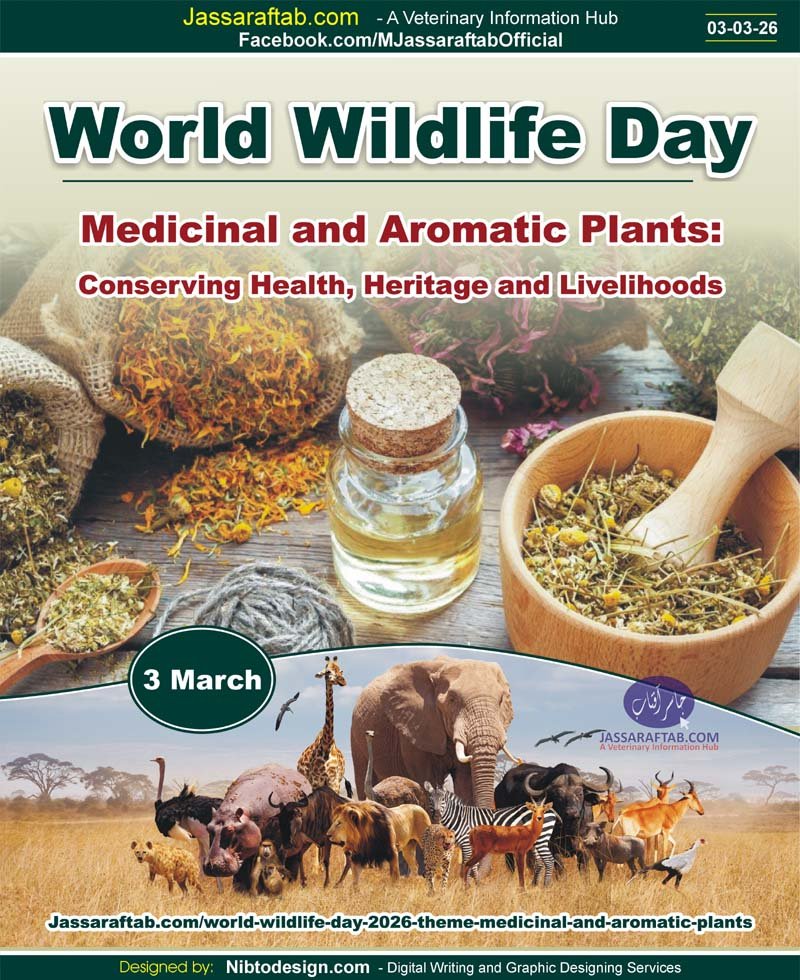
World Wildlife Day is observed every year on 3 March. The United Nations established this day in 2013. It marks the anniversary of the adoption of CITES (the Convention on International Trade in Endangered Species of Wild Fauna and Flora) in 1973. The United Nations created this day to honor wildlife and raise awareness about wildlife conservation. This day has a specific theme every year. So, World Wildlife Day 2026 theme Medicinal and Aromatic Plants: Conserving Health, Heritage and Livelihoods aims to highlight the role of MAPs in human health, cultural heritage, and local livelihoods.

History of World Wildlife Day
On 20 December 2013, during its 68th Session, the United Nations General Assembly (UNGA) officially declared 3 March as United Nations World Wildlife Day (WWD). The date marks the anniversary of the signing of the Convention on International Trade in Endangered Species of Wild Fauna and Flora (CITES) in 1973. Through this resolution, the UNGA designated the CITES Secretariat to facilitate the global observance of this important day. Since then, World Wildlife Day has become the leading international annual event dedicated to wildlife conservation.
Wildlife and biodiversity sustain human life. People across the world depend on nature for food, fuel, medicine, shelter, and clothing. Therefore, protecting ecosystems is essential. Governments, organizations, Indigenous peoples, and communities continue to work together to ensure that plant and animal species survive for future generations. World Wildlife Day celebrates these efforts and encourages further action.

World Wildlife Day – جنگلی حیات کا عالمی دن ، تھیم اور اسکی تاریخ
World Wildlife Day 2026 Theme “Medicinal and Aromatic Plants: Conserving Health, Heritage and Livelihoods.”
WWD has a specific theme every year. Therefore, World Wildlife Day 2026 theme is “Medicinal and Aromatic Plants: Conserving Health, Heritage and Livelihoods.”
This theme pays attention to plants. Specifically, it highlights medicinal and aromatic plants (MAPs). These plants sustain human health. Moreover, they protect cultural traditions. At the same time, they secure rural livelihoods. Therefore, their conservation is urgent.
Why Medicinal and Aromatic Plants Matter?
Medicinal and aromatic plants form the backbone of traditional medicine. For centuries, communities have used them to treat illness. Even today, millions rely on herbal remedies. In fact, the World Health Organization estimates that 70–95 percent of people in developing countries depend on traditional medicine for primary healthcare.
Furthermore, modern medicine also benefits from these plants. Many pharmaceutical drugs originate from plant compounds. Therefore, biodiversity directly supports scientific innovation.
At the same time, aromatic plants provide essential oils. These oils serve the cosmetic, food, and wellness industries. As a result, MAPs generate billions of dollars globally.
Importance of Medicinal and Aromatic Plants
Medicinal and aromatic plants play a vital role in healthcare. In fact, a large proportion of the global population depends on plant-based medicine. Many modern drugs also originate from plant compounds.
For example, plants provide treatments for infections, inflammation, and chronic diseases. Moreover, they support preventive healthcare through herbal remedies.
In addition, aromatic plants produce essential oils. These oils are widely used in pharmaceuticals, cosmetics, and food industries. As a result, MAPs contribute significantly to global economies.
Health Benefits for People and Animals
Healthy ecosystems support healthy people. Medicinal plants grow in forests, rangelands, and mountains. However, habitat loss threatens these natural resources.
First, medicinal plants strengthen immunity. For example, ginseng supports vitality. Likewise, spikenard offers anti-inflammatory benefits. Agarwood contributes to traditional healing systems.
Moreover, MAPs also support veterinary care. Herbal extracts improve digestion and immunity in livestock. Additionally, essential oils act as natural repellents. Therefore, these plants reduce dependence on synthetic chemicals.
Consequently, MAPs link human and animal health. They support a One Health approach.
Preserving Cultural Heritage and World Wildlife Day
Medicinal plants are deeply linked with traditional knowledge. Indigenous communities have used them for centuries. They pass knowledge from one generation to another.
However, this knowledge is at risk. Modernization and environmental degradation are eroding traditional practices. Consequently, valuable information may disappear.
Therefore, conservation through World Wildlife Day must include cultural preservation. Documentation and community engagement are critical. This approach ensures that traditional wisdom survives.
Medicinal and Aromatic Plants Supporting Livelihoods
Millions of people depend on medicinal and aromatic plants for income. Rural communities collect, cultivate, and trade these plants. Therefore, MAPs support poverty reduction.
Medicinal and aromatic plants create income opportunities. Farmers cultivate herbs as high-value crops. Collectors harvest wild plants carefully. Processors produce oils and extracts.
According to global estimates, 50,000–70,000 MAP species are harvested worldwide. Furthermore, one in five people depends on wild plants, algae, and fungi for food and income. Therefore, MAPs reduce poverty in rural areas.
In addition, international trade supports national economies. For instance, traditional Chinese medicine generates billions in revenue. Similarly, herbal markets in Europe and North America continue to expand.
However, economic growth must remain sustainable. Otherwise, overharvesting will destroy resources.
Threats to Medicinal and Aromatic Plants
Medicinal and aromatic plants face several threats. First, habitat destruction reduces their natural range. Deforestation and urban expansion are major causes.
Second, overharvesting depletes wild populations. Many valuable species are collected without proper management.
Third, climate change affects plant growth and distribution. Changing temperatures and rainfall patterns create additional stress.
Finally, illegal trade threatens rare species. Weak regulation allows exploitation.
Therefore, urgent conservation measures are necessary.
Sustainable Use & Conservation Strategies & World Wildlife Day
Effective conservation requires a balanced approach. We must protect plants while allowing their sustainable use. The conservation and sustainable trade of medicinal and aromatic plants (MAPs) support key targets of the Kunming-Montreal Global Biodiversity Framework, including sustainable use of wild species, ecosystem restoration, and recognition of Indigenous communities’ role in conservation. However, more than 20 percent of MAP species are threatened with extinction due to overharvesting, habitat loss, climate change, and illegal trade. Therefore, stronger regulations, increased awareness, and sustainable harvesting practices are essential to protect these valuable plant resources in the wild.
Further, awareness campaigns on World Wildlife Day can promote responsible use. Educated consumers support sustainable products. Therefore, World Wildlife Day plays an important role in wildlife conservation.
Medicinal and Aromatic Plants in Pakistan
Pakistan is rich in medicinal and aromatic plants (MAPs). The country hosts diverse climates and ecosystems. Therefore, it supports a wide range of valuable species. The Himalayas, Hindukush, Karakoram, Balochistan plateau, and plains of Punjab and Sindh all contribute to this diversity.
Moreover, rural communities depend on these plants for healthcare and income. At the same time, traditional systems like Unani and herbal medicine rely heavily on local flora.
Major Medicinal Plants in Pakistan
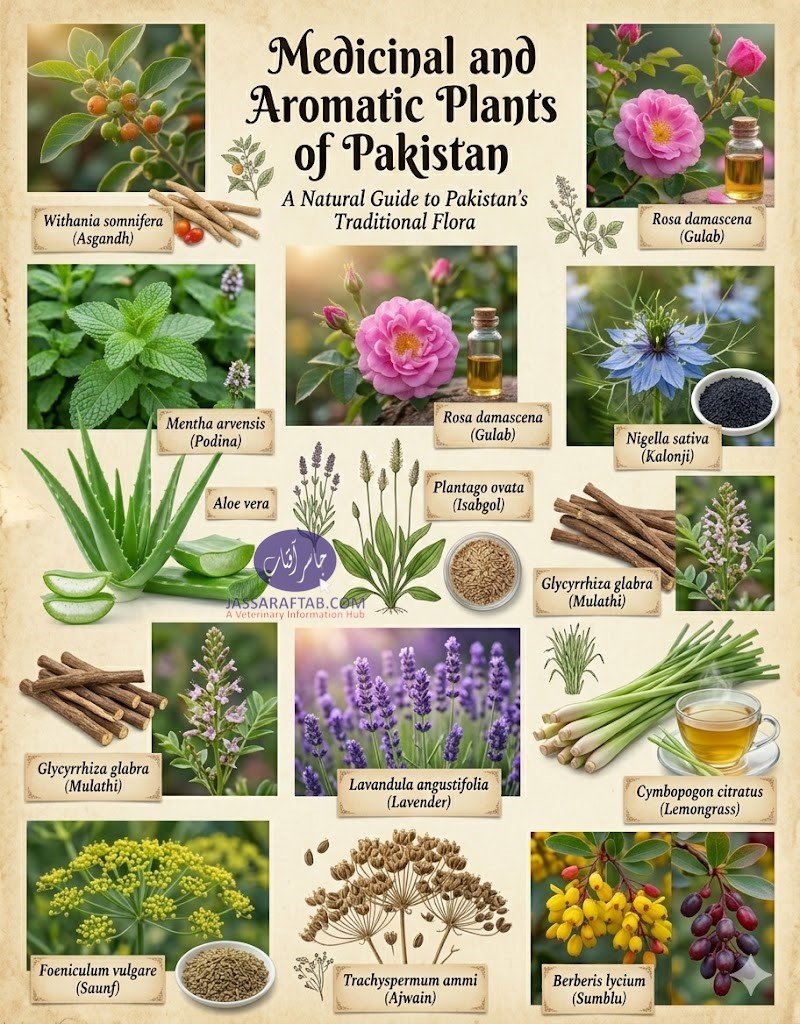
Pakistan hosts several important medicinal plants that support both human and animal health. Withania somnifera (Asgandh) grows in Punjab and Sindh, and people use it for stress relief, immunity enhancement, and reproductive health. Similarly, Plantago ovata (Isabgol) is widely cultivated in Sindh; it promotes digestive health and, therefore, holds strong export value. In northern areas, Glycyrrhiza glabra (Mulathi) thrives and is commonly used to treat cough and gastric problems, while herbal industries also utilize it in syrups.
Moreover, Nigella sativa (Kalonji) is well known for immune support and is widely applied in both human and veterinary remedies. Across the country, Aloe vera (Aloe) grows easily and helps heal skin conditions as well as improve digestion. In addition, Berberis lycium (Sumblu) is found in mountainous regions and supports liver health while acting as a natural antimicrobial agent. Together, these plants play a significant role in Pakistan’s traditional medicine and rural economy.
Aromatic Plants in Pakistan
Pakistan cultivates a wide range of valuable aromatic plants that support both local industries and rural livelihoods. Rosa damascena (Gulab) is grown in Punjab and KPK, where it produces high-value rose oil and rose water; therefore, it strongly supports the cosmetic and fragrance industries. Similarly, Mentha arvensis (Podina) grows widely across the country and produces menthol oil, which is used in food products, medicines, and confectionery. In addition, Cymbopogon citratus (Lemongrass) yields aromatic oil and also acts as a natural insect repellent. In cooler regions, Lavandula angustifolia (Lavender) thrives and contributes to perfumery and aromatherapy markets. Meanwhile, Foeniculum vulgare (Saunf) is widely used in food and herbal preparations and improves digestion.
Likewise, Trachyspermum ammi (Ajwain) offers both aroma and medicinal value, supporting gut and respiratory health. Notably, several of these species—such as mint, fennel, ajwain, lemongrass, and damask rose—serve dual medicinal and aromatic purposes. Therefore, farmers can access multiple markets and increase their income through diversified cultivation.
PARC’s National Medicinal, Aromatic Plants and Herbs Program (NMAPHP)
The National Medicinal, Aromatic Plants and Herbs Program (NMAPHP) is a specialized national initiative launched by the Pakistan Agricultural Research Council (PARC). It was formally established on 10 October 2022 following approval by the PARC Executive Committee. The program operates under the Plant Genetic Resources Institute (PGRI).
The Plant Genetic Resources Institute (PGRI) started systematic research on Medicinal and Aromatic Plants (MAPs) in 1999. Since then, it has conducted extensive collection expeditions in AJ&K, Gilgit, Chitral, Sindh, and Balochistan. In addition, it has acquired exotic germplasm from international genebanks. Currently, PGRI maintains 80 MAP species from different plant families in its glasshouse and field facilities. Notably, its scientists developed “NARC Kalonji,” an improved variety of Nigella sativa.
Moreover, the institute successfully completed seven national and international collaborative projects. These projects focused on the collection, propagation, evaluation, and characterization of MAPs. During 2011–12, PGRI established laboratory-scale facilities for essential oil extraction and analysis under a RADP project. At the same time, it developed antimicrobial and bioassay facilities to explore the medicinal potential of these plants.
Furthermore, in April 2022, the PARC Executive Committee decided to launch a dedicated national program on medicinal and aromatic plants. Consequently, the National Medicinal, Aromatic Plants and Herbs Program was formally established on 10 October 2022 under PSD as part of BCI, now PGRI.
Wildlife Conservation and World Wildlife Day 2026 Theme
Despite their value, many MAP species face threats. Habitat loss reduces natural populations. Climate change alters growing conditions. Moreover, illegal trade increases pressure on rare species.
Currently, over 20 percent of medicinal and aromatic plants appear on the IUCN Red List as threatened. Therefore, immediate action is necessary for Wildlife Conservation.
Firstly, governments must strengthen regulations to support wildlife conservation. CITES has listed many MAP species under controlled trade. However, enforcement must improve the wildlife conservation.
Secondly, cultivation should replace excessive wild harvesting. Farmers can grow medicinal plants on farms. Consequently, pressure on forests decreases.
Thirdly, research must expand. Scientists should study plant populations and sustainable harvest levels. Additionally, digital tracking can improve transparency in trade.
Importantly, World Wildlife Day 2026 Theme focuses on important role of medicinal and Aromatic plants. This theme highlights their role in human health and biodiversity.
Kunming-Montreal Global Biodiversity Framework (GBF) and Wildlife Conservation
The Kunming-Montreal Global Biodiversity Framework (GBF) plays a central role in wildlife conservation by providing a global roadmap to halt biodiversity loss and restore ecosystems by 2030 and beyond. Adopted under the Convention on Biological Diversity (CBD) in 2022, the framework sets clear targets to protect at least 30 percent of the world’s land and oceans, restore degraded habitats, and ensure the sustainable use of wild species.
Moreover, it calls for reducing pollution, controlling invasive species, and reforming harmful subsidies that threaten wildlife. At the same time, the GBF recognizes the vital role of Indigenous peoples and local communities in conservation and promotes equitable benefit-sharing. Therefore, the framework directly strengthens Wildlife Conservation by safeguarding habitats, regulating exploitation, and encouraging international cooperation to secure biodiversity for future generations.


