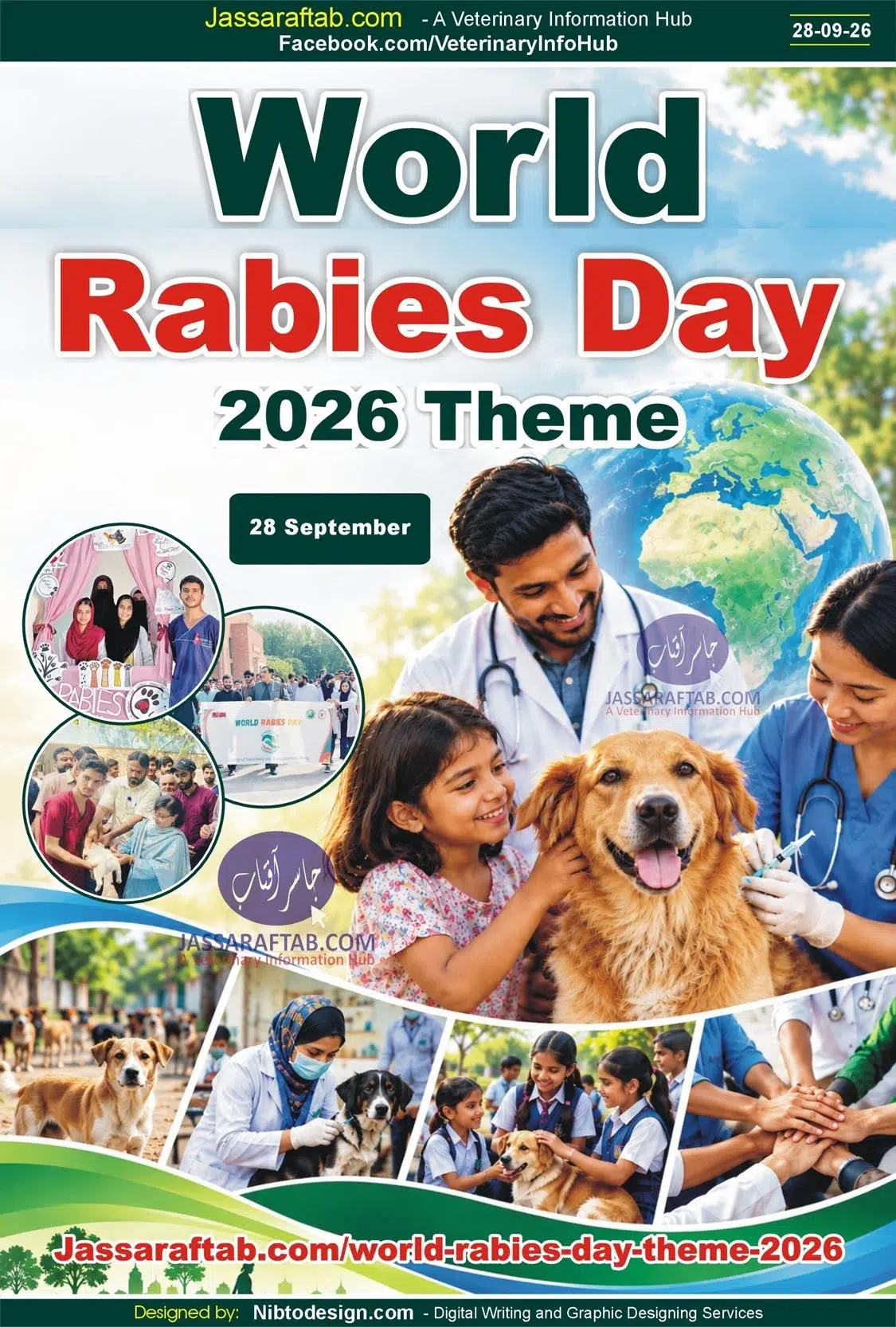
World Rabies Day Theme 2026: Stronger Together | Rabies Elimination
Every year on 28 September, the world observes World Rabies Day. The day raises awareness about rabies prevention and rabies elimination. World Rabies Day Theme 2026 is “Stronger Together.” The theme sends a clear message. Rabies elimination needs collective action. No single sector can eliminate rabies alone.

Therefore, communities, veterinary professionals, healthcare workers, governments, educators, and global partners must work together.
World Rabies Day 2025 Theme – Various Aspects of Rabies Disease and Situation in Pakistan

In 2026, the 20th World Rabies Day will be observed under the theme “Stronger Together.” The theme highlights the need for coordinated action to control rabies.
From local communities and veterinary professionals to governments, healthcare workers, educators, and global partners, everyone has a role to play. Together, we can help create a world free from rabies.
World Rabies Day Theme 2026
The official theme for World Rabies Day 2026 is “Stronger Together.”
The theme focuses on cooperation. It recognizes that rabies control needs connected systems and shared responsibility.
For example, veterinary teams can vaccinate dogs. Healthcare workers can provide timely care. Governments can support policies and funding. At the same time, communities can promote responsible animal care and public awareness.
Thus, every sector contributes to the same goal.
However, World Rabies Day is an initiative of the Global Alliance for Rabies Control (GARC). GARC selects the annual World Rabies Day theme. The campaign also receives support from major global partners, including the World Health Organization (WHO) and the United Against Rabies Forum.
The World Rabies Day Theme 2026, “Stronger Together,” highlights the importance of coordination among different sectors to achieve rabies elimination.
Rabies elimination requires cooperation between animal health and human health systems. It also requires support from governments, communities, schools, researchers and international organizations.
Furthermore, the theme supports the One Health approach. This approach recognizes that human health, animal health and environmental health are closely connected.
Why “Stronger Together”?
Rabies prevention requires action at several levels.
First, countries need strong dog vaccination programmes. Next, they need effective disease surveillance and reporting. At the same time, communities need accurate information.
The 2026 campaign focuses on several key areas:
- Expand access to dog vaccination to prevent rabies transmission.
- Strengthen rabies surveillance and improve disease reporting.
- Increase public awareness through education and community outreach.
- Promote effective policies that protect both people and animals.
- Support sustainable solutions led by local communities.
- Strengthen collaboration among veterinary, healthcare, government, and community partners.
Rabies elimination requires a connected and coordinated system. Veterinary services, healthcare systems, governments, communities, and global partners must work together. Moreover, vaccination, surveillance, public awareness, and timely treatment must support each other. Through this coordinated approach, countries can strengthen rabies prevention and move closer to elimination.
Communities Have an Important Role
Communities are the first line of defence against rabies.
People can help by learning how to avoid animal bites. They can also teach children how to behave safely around dogs and other animals. In addition, responsible pet ownership can reduce risks. Dog owners should follow recommended vaccination programmes and seek veterinary advice when necessary.
Communities can also report suspected rabies cases and support local vaccination campaigns.
Veterinary Professionals: Protecting Animal and Human Health
Veterinary professionals play a central role in rabies prevention.
First, they support animal vaccination. Mass dog vaccination is one of the most effective ways to stop dog-mediated rabies transmission. They also help with disease surveillance, diagnosis and responsible animal population management.
Therefore, stronger veterinary services can also improve coordination between animal and public health systems. As a result, stronger veterinary services can strengthen the wider rabies-control system.
Healthcare Workers’ Role in Rabies Prevention
Healthcare workers play a vital role in rabies prevention. They help prevent deaths by providing timely care after possible exposure.
First, they assess animal bites, scratches, and other possible exposures. They determine the level of rabies risk and guide patients toward appropriate treatment.
Moreover, healthcare workers provide post-exposure prophylaxis (PEP) when indicated. This may include rabies vaccines and, for certain severe exposures, rabies immunoglobulin or monoclonal antibodies.
They also ensure proper wound care. Immediate and thorough wound washing can reduce the risk of rabies infection. Therefore, healthcare workers should encourage patients to wash bite wounds with soap and running water for at least 15 minutes.
In addition, they check the patient’s tetanus vaccination status and assess the risk of bacterial infection. They may provide further treatment when required.
Healthcare workers also play an important role in rabies surveillance and reporting. Accurate records help health authorities identify high-risk areas and plan prevention programmes.
Furthermore, they educate patients and communities about rabies. They can explain the importance of avoiding animal bites, vaccinating dogs, and seeking medical care immediately after exposure.
Finally, healthcare workers should coordinate with veterinary and public health authorities. This cooperation supports animal vaccination, case reporting, outbreak investigation, and community awareness.
Thus, healthcare workers form an essential part of the One Health response to rabies. Through early assessment, timely PEP, wound care, surveillance, education, and coordination, they help protect both people and communities from rabies.
Governments Must Strengthen Coordination and World Rabies Day Theme 2026
Governments play a key role in achieving the World Rabies Day theme 2026, “Stronger Together.” They must connect veterinary, healthcare, and public health systems. Moreover, governments should support dog vaccination, disease surveillance, public awareness, and timely access to post-exposure care. Strong coordination can help different sectors work towards one shared goal: rabies elimination.
They can support mass dog vaccination. They can also improve surveillance and reporting systems. Furthermore, they can ensure access to human rabies vaccines and post-exposure treatment.
Strong legislation, sustainable funding and coordination between veterinary and health authorities are also important.
As a result, national programmes can move from isolated activities toward sustained rabies elimination.
The One Health Approach and World Rabies Day Theme 2026
“Stronger Together” strongly reflects the importance of the One Health approach in rabies elimination. Human health, animal health, and the environment are closely connected. Therefore, veterinary professionals, healthcare workers, governments, communities, and global partners must coordinate their efforts. Together, they can strengthen dog vaccination, surveillance, public awareness, and timely treatment. This connected approach can help countries move closer to a rabies-free future.
Rabies crosses the boundary between animal and human health. Therefore, separate programmes cannot fully address the problem.
Veterinary services can identify and control infection in animals. Meanwhile, healthcare services can protect exposed people. Governments can coordinate both systems. Communities can support vaccination, awareness and reporting.
Together, these actions can break the transmission cycle.
Working Towards Zero by 30 and World Rabies Day Theme 2026
The “Stronger Together” theme supports the global goal of Zero by 30. This goal aims to end human deaths from dog-mediated rabies by 2030. Achieving it requires coordinated action across veterinary, healthcare, government, and community systems. Therefore, countries must strengthen dog vaccination, surveillance, public awareness, and access to timely post-exposure care. Together, these efforts can help move the world closer to Zero by 30.
The global goal is to end human deaths from dog-mediated rabies by 2030, commonly known as “Zero by 30.”
The tools already exist. These include mass dog vaccination, public education, surveillance, responsible dog population management and timely access to PEP.
However, countries must apply these tools consistently. They must also reach communities that face limited access to veterinary and healthcare services.
Bhutan Shows Rabies Elimination is Possible
The “Stronger Together” theme comes at an important time. In September 2026, the World Health Organization ( WHO) validated Bhutan as having eliminated dog-mediated human rabies as a public health problem.
Bhutan achieved this milestone through sustained action. The country used dog vaccination, surveillance, dog population management, community engagement, and coordination between sectors.
Therefore, Bhutan demonstrates the value of a coordinated One Health approach.
Its progress also shows that rabies elimination requires long-term commitment and cooperation.
Why Is World Rabies Day Theme 2026 Important?
The message of World Rabies Day theme 2026 “Stronger Together” goes beyond one day of awareness.
Rabies prevention requires continuous cooperation. Dog owners, veterinarians, doctors, health workers, governments, educators and communities all have a role.
Rabies causes tens of thousands of human deaths every year. WHO estimates around 59,000 deaths annually, although surveillance gaps mean the actual burden remains uncertain. Children account for a large share of victims, particularly in areas where access to preventive treatment is limited.
At the same time, rabies is preventable. Vaccinating dogs can interrupt transmission at its source. Moreover, people exposed to a potentially rabid animal can receive post-exposure prophylaxis (PEP) to prevent the disease.
Thus, World Rabies Day theme 2026 turns attention toward prevention, vaccination, awareness and coordinated action.