


World Hippopotamus Day | Hippo Conservation | Hippo Species | Threats to Hippos | World Hippo Day ? | Do Hippos Sweat Blood?
World Hippopotamus Day or World Hippo Day is observed every year on February 15. It honors hippos and highlights the urgent need for Hippo Conservation. The day also highlights about these unique creatures, their habitats, Hippo Species and the threats to hippos in the wild. However, they are semi aquatic mammals and also called river horse by the Greeks. Furthermore, we learn about interesting facts about hippos and do hippos Sweat Blood?

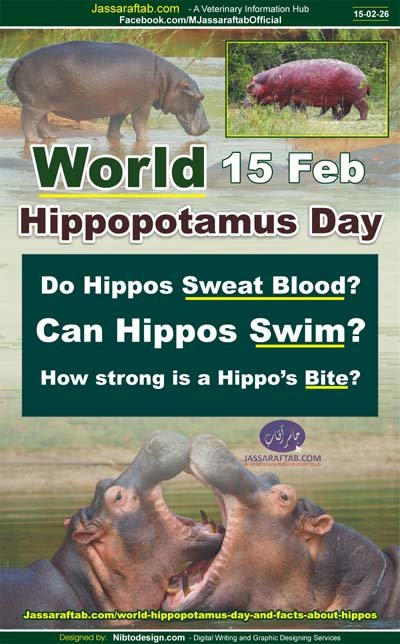
History of World Hippopotamus Day
World Hippo Day was established in 2018 by conservationists and wildlife organizations. The day established to spread awareness about Hippo Conservation, and Hippo species and threats to hippos.
Hippos may seem calm, but they are powerful and play a critical role in ecosystems. Moreover, we will discuss some important facts about hippos and what are hippos.

What Are Hippos?
Hippos, short for hippopotamuses, are large, semi-aquatic mammals that live mainly in rivers, lakes, and wetlands of sub-Saharan Africa. Their scientific name is Hippopotamus amphibius, which comes from Greek and means “river horse.” However, despite the name, hippos are more closely related to whales and dolphins than to horses.
Hippos are among the largest land animals on Earth. They have massive bodies, short legs, and large heads with wide mouths and strong teeth. Their skin is thick and sensitive, so they spend much of the day in water to stay cool. At night, they leave the water and travel onto land to graze on grass.
These animals are known for being semi-aquatic, which means they live both in water and on land. They can stay underwater for several minutes and can even sleep in water, rising automatically to breathe. Although they look calm, hippos are highly territorial and can be very aggressive, especially in water.
دریائی گھوڑے کا عالمی دن اور اسکی خصوصیات | World Hippopotamus Day
Hippo Species
There are two living species of hippos. These hippo species include Common Hippopotamus and Pygmy Hippopotamus.
Common Hippopotamus
The Common Hippopotamus (Hippopotamus amphibius) is one of the largest land mammals and is widely found across sub-Saharan Africa. It lives in rivers, lakes, and wetlands, where it spends most of the day to stay cool and protect its sensitive skin. However, it comes out at night to graze on grass and can travel several kilometers in search of food. This species is highly social and lives in groups called pods, usually led by a dominant male.
Moreover, the common hippo plays an important role in ecosystems, as its grazing controls vegetation and its waste provides nutrients to aquatic life. Despite its size, it can move quickly on land and can be very aggressive, especially when protecting its territory. Unfortunately, the common hippopotamus faces serious threats from habitat loss, poaching, and human-wildlife conflict. Therefore, conservation efforts are essential to protect this species and maintain the health of river ecosystems.
Pygmy Hippopotamus
The Pygmy Hippopotamus (Choeropsis liberiensis) is a smaller and more secretive relative of the common hippo. They found mainly in the dense forests and swamps of West Africa, especially in Liberia, Sierra Leone, Guinea, and Côte d’Ivoire. Unlike the common hippo, it is more solitary and spends much of its time on land, although it still depends on water to keep its skin moist. It is mostly nocturnal, so it remains hidden during the day and becomes active at night to feed on leaves, fruits, and vegetation.
Moreover, the pygmy hippo has a smoother skin and more adapted limbs for walking in forest environments. However, this species is classified as endangered due to habitat loss, hunting, and human encroachment. Therefore, conservation efforts, including forest protection and community awareness, are essential to ensure the survival of this rare and unique species.
Did You Know About Hippos? Fascinating Facts About Hippos
Hippos are one of the most remarkable animals on Earth. They are third largest mammals on the earth, powerful, and surprisingly fascinating. Here are some amazing facts about hippos you might not know:
Hippos are Massive Mammals
The Common Hippopotamus is the third-largest land mammal, after elephants and rhinos. Adult males can weigh up to 1,800 kg.
Semi-Aquatic Life of Hippos
Hippos live in freshwater habitats such as rivers, lakes, and sometimes mangroves. Although their skin is thick, it is very sensitive and can easily dry out or burn under the intense African sun. Therefore, they spend most of the day in water or mud to stay cool, hydrated, and protected.
Can Hippos Swim?
Hippos cannot swim in the traditional sense and cannot breathe underwater. In fact, their bodies are so dense that they do not float. Instead, they move by walking or running along the bottom of rivers. However, their eyes, ears, and nostrils are positioned on top of their heads, which allows them to see and breathe while mostly submerged. When fully underwater, their ears and nostrils close tightly to keep water out, and they can hold their breath for up to five minutes.
During the day, hippos often rest or sleep in the water. They have a natural reflex that allows them to rise to the surface for air without waking up. As evening approaches, they leave the water to feed and can eat up to 50 kilograms (around 110 pounds) of grass in a single night.
Powerful Bite in the Animal Kingdom
Hippos have one of the most powerful bites in the animal kingdom. Their large jaws can open up to 150 degrees, which allows them to display their massive canine and incisor teeth. These teeth can grow very long and sharp, and they are used mainly for defense and fighting rather than feeding. Moreover, a hippo’s bite force is extremely strong, capable of crushing bones and causing serious damage.
Male hippos often use their powerful jaws during territorial fights, and these clashes can be very dangerous. Although hippos are herbivores, they can become highly aggressive when threatened, especially in water. Therefore, their strong bite makes them one of the most feared animals in Africa.
Blood Sweat
An interesting fact about the Common Hippopotamus is that they produce a reddish oily liquid called “blood sweat”. Despite its name, it is neither blood nor sweat. This natural secretion acts as a sunblock and moisturizer, protecting their skin from the sun and keeping it from drying out.
When hippos rest on land, they release an oily, reddish substance from their skin.This secretion acts as a natural moisturizer, water repellent, and sunblock, and it also helps protect against germs. Because of its color, many people believe that hippos “blood sweat” but this is only a myth.
Hippo Conservation Efforts and World Hippopotamus Day
Hippos face serious threats in the wild. These threats to hippos include habitat loss, poaching for meat and ivory, and increasing human–wildlife conflict. As human populations expand, they encroach on riverbanks and wetlands, which reduces the natural habitat of hippos and forces them into closer contact with people. As a result, conflicts often occur, and hippos are sometimes killed. Therefore, hippo conservation strategies focus on protecting rivers, wetlands, and national parks to secure safe habitats for these animals.
In addition, researchers actively monitor hippo populations through field surveys and scientific studies to track their numbers and health. Moreover, conservation programs engage local communities to raise awareness and promote coexistence, which helps reduce conflict and encourages sustainable practices.
Furthermore, international collaborations, such as the IUCN Hippo Specialist Group, develop policies and conservation plans to protect hippos at a global level. Protecting hippos not only safeguards the species but also ensures healthy rivers, wetlands, and biodiversity. Consequently, these efforts support local communities that depend on these ecosystems for water, food, and livelihoods.
World Hippopotamus Day and Hippo Conservation
World Hippopotamus Day reminds us that even the largest animals need protection. Therefore, every effort matters. Awareness campaigns play an important role. Habitat preservation is also essential. Together, these actions help secure a sustainable future for these iconic river horse.


