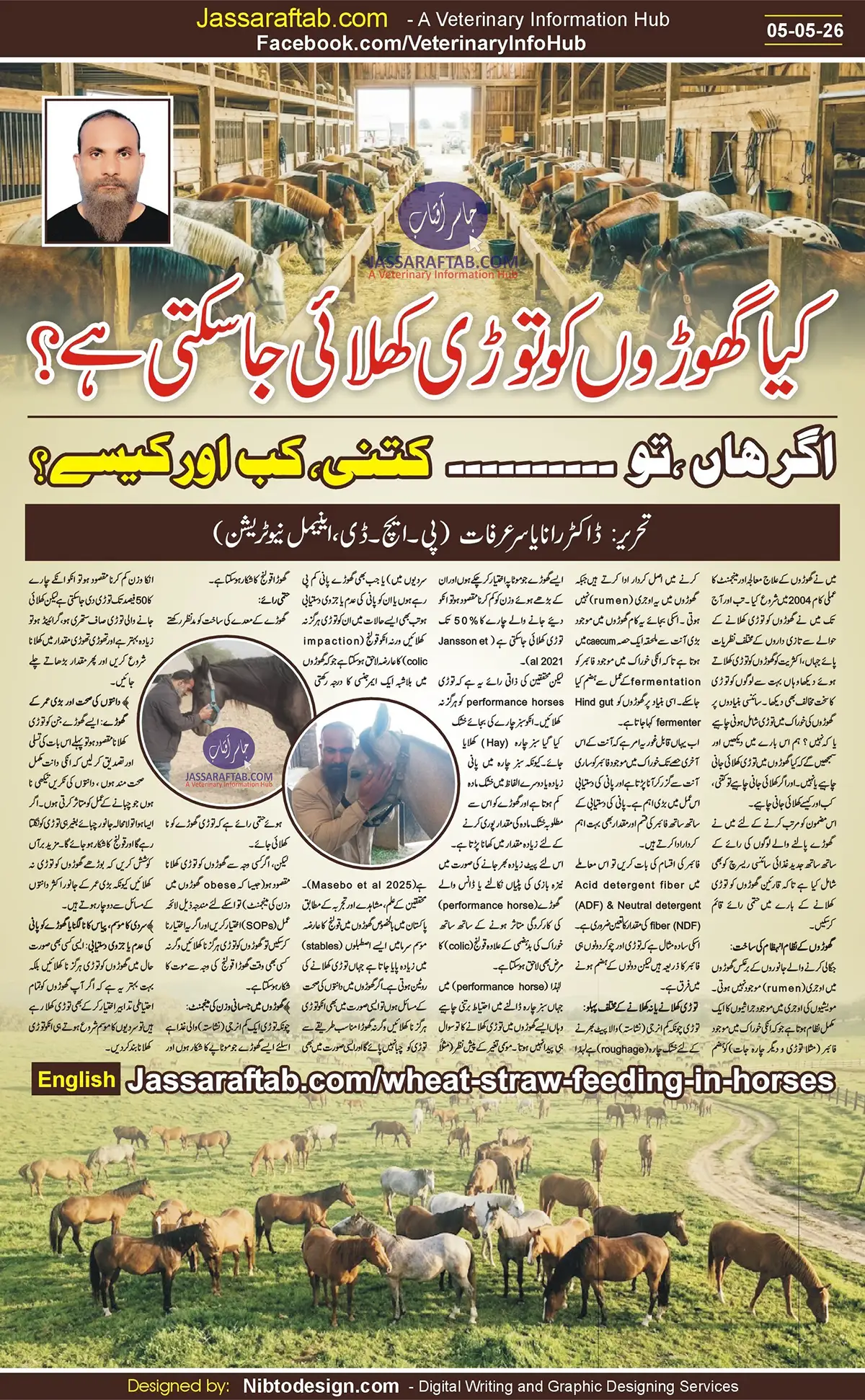
Wheat Straw Feeding in Horses – Scientific Facts, Risks, and Practical Guidelines
Wheat Straw Feeding in Horses has remained a debated topic among horse breeders and veterinarians. Since 2004, practical experience in horse treatment and management has revealed mixed opinions. Many breeders support wheat straw in horse feeding, while others oppose it. This raises an important question: whether to include wheat straw in horse feed or not?

This article, by Dr. Rana Yasir Arfat, PhD in Animal Nutrition, explains wheat straw in horse feed based on field observations and modern nutritional science. It also explains when, how, and how much wheat straw in horse feeding can be included.
Horse Digestive System
To understand wheat straw feeding in horses, it is important to first understand the digestive system. Unlike ruminants, horses do not have a rumen. In ruminants like cattle, fiber digestion occurs in the rumen through microbial fermentation, but in horses, this process takes place in the caecum.
Because of this, horses are classified as hindgut fermenters. Wheat straw in horse feeding depends heavily on how fiber is processed in this part of the digestive system.

Wheat Straw Feeding in Horses and the Role of Water and Fiber
In feeding of wheat straw, fiber must pass through the entire digestive tract before reaching the caecum. This makes water availability extremely important. Without adequate water, this feeding can lead to serious digestive problems.
Additionally, fiber composition plays a critical role. Parameters such as Acid Detergent Fiber (ADF) and Neutral Detergent Fiber (NDF) influence how effectively wheat straw in horse feed supports digestion. Even though both straw and bran are fiber sources, wheat straw in horse feeding results in different digestion outcomes compared to other feeds.
Chajjimar Feed; Offering the best Livestock Feed Products
Nutritional Aspects of Wheat Straw Feeding in Horses
Wheat straw feeding in horses involves providing a low-energy, low-starch roughage that mainly serves to fill the stomach. Research (Jansson et al., 2021) suggests that wheat straw can be fed in obese horses, where up to 50% of the diet may consist of wheat straw.
This makes the use of wheat straw in horse feeding a potential tool for weight management when used carefully.
دنیا میں گھوڑوں کی نسلیں، پاکستان میں صورتحال اور گھوڑے کی ارتقائی تاریخ
Wheat Straw Feeding in Horses and Performance Horses
Wheat straw is not recommended for performance horses. Instead, such horses should be fed hay (dried green fodder).
Green fodder contains more water and less dry matter, which forces horses to consume larger quantities. This can lead to overfilling, reduced performance, indigestion, and increased risk of colic. Therefore, wheat straw feeding in horses should be strictly avoided in performance animals.
Health Risks of Wheat Straw Feeding in Horses
One of the most serious risks of wheat straw in horse feeding is impaction colic. During winter or in conditions where horses drink less water, wheat straw feeding in horses becomes particularly dangerous.
When water intake is reduced, wheat straw can cause blockage in the digestive tract of horses, leading to a life-threatening emergency (Masebo et al., 2025). Field observations in Pakistan show that wheat straw in horse feeding is strongly associated with higher cases of colic in winter, especially in stables where it is routinely practiced.
Wheat Straw in Horse Feeding and Dental Health Issues
Dental health is another critical factor in wheat straw in horse feed. Horses with dental problems cannot chew straw properly. As a result, feeding wheat straw to horses may lead to swallowing large, unchewed particles, increasing the risk of colic.
This issue becomes more severe in older horses, where dental problems are more common. Therefore, wheat straw feeding in horses should generally be avoided in such cases.
Final Verdict
Based on the digestive physiology of horses and field observations, the conclusion regarding is clear:
Wheat straw feeding in horses should not be practiced as a routine feeding method.
However, in specific situations such as weight management in obese horses, wheat straw in horse feeding may be considered under strict management. If proper precautions cannot be ensured, wheat straw in horse feeding should be completely avoided, as it can lead to fatal colic.
Guidelines for Safe Wheat Straw Feeding in Horses
For Weight Management
Wheat Straw can be fed to obese animals to reduce energy intake. In such cases, up to 50% of the diet may consist of wheat straw. The straw must be clean, preferably ground, and introduced gradually to allow adaptation.
Feeding of wheat straw in horse and Dental Care
Before implementing wheat straw in horse feed, it is essential to examine dental health. Sharp teeth or chewing problems can make wheat straw feeding in horses dangerous. If proper chewing is not possible, the risk of colic increases significantly. For this reason, wheat straw in horse feeding should be avoided in older animals.
Wheat Straw in Horse Feed in Winter and Low Water Intake
Wheat straw in horse feed should never be practiced when water intake is low or water availability is limited. Even when precautions are taken, wheat straw feeding in horses should be discontinued at the beginning of winter to prevent digestive complications.
Conclusion
While traditional practices support the feeding of wheat straw in horses, scientific evidence highlights significant risks. Wheat straw feeding in horses must be carefully evaluated, and proper feeding management, adequate water intake, and dental health must be ensured to avoid serious conditions like colic.
مال برداری اور دیگر کاموں میں استعمال ہونے والے گدھوں کے حقوق، عائدہ انجم کی خصوصی تحریر
References
- Jansson, A., Harris, P., Davey, S. L., Luthersson, N., Ragnarsson, S., & Ringmark, S. (2021). Straw as an alternative to grass forage in horses — Effects on post-prandial metabolic profile, energy intake, behaviour and gastric ulceration. Animals (Basel), 11(8), 2197. https://doi.org/10.3390/ani11082197. PMC
- Hansen, D. K., Webb, G. W., & Webb, S. P. (1992). Digestibility of wheat straw or ammoniated wheat straw in equine diets. Journal of Equine Veterinary Science, (12), 223–226. (Abstract/source at ScienceDirect). ScienceDirect
- Misra, A. K., Mehra, U. R., & Dass, R. S. (2006). Assessment of feeding urea-ammoniated wheat straw on growth performance, feed intake and nutrient utilization in crossbred calves. Livestock Research for Rural Development, 18(11), Article 164. http://www.lrrd.org/lrrd18/11/misr18164.htm. Livestock Research for Rural Development
- MadBarn (clinic/nutrition summary). (2022). Feeding straw to horses: A low-energy forage alternative. https://madbarn.com/feeding-straw-to-horses/ (practical guidance summarising research). Mad Barn USA+1
- Masebo, N. T., & coauthors. (2025). A literature review on equine bedding: impacts on horse welfare (includes discussion of ingestion/impaction risks). Animals, 15, 751.