Ramghani Sheep Farming Potential
US and Pakistan cross Ramghani sheep farming has potential to increase the income of farmers | Jabba Livestock Farm | رمغانی بھیڑمویشی

ڈائریکٹر جنرل نیشنل ویٹرنری لیبارٹری کا جابہ لائیوسٹاک ریسرچ سنٹر کا دورہ
مالیکیولر جنیٹکس کے ذریعے پاکستان میں بھیڑ کی نئی نسل تیار، زرعی یونیورسٹی فیصل آباد میں سیمینار

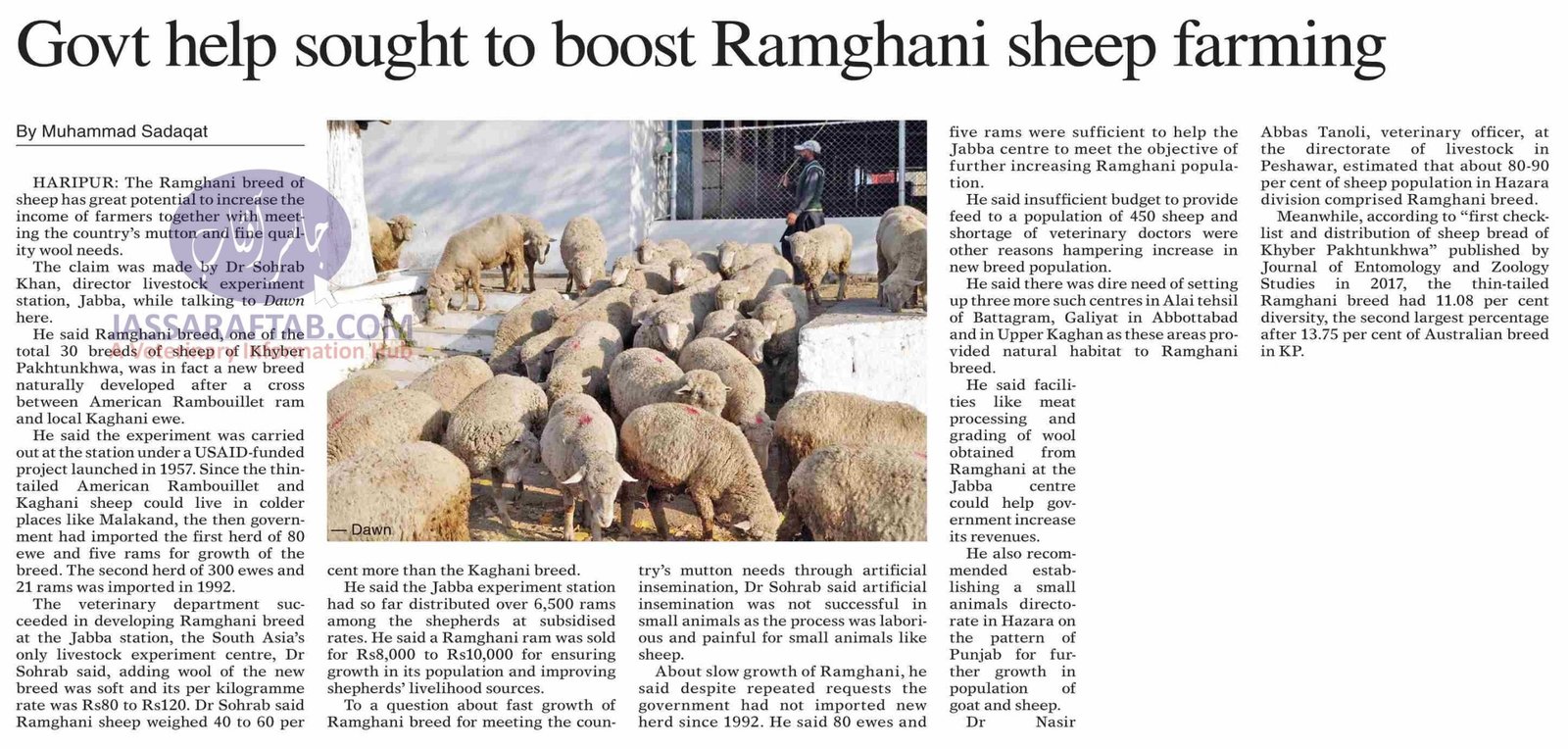
The Ramghani sheep breed, developed at the Jabba livestock experiment station under a USAID-funded project launched in 1957, is a cross between the American Rambouillet ram and the local Kaghani ewe. This thin-tailed breed possesses great potential to boost farmers’ incomes and meet Pakistan’s mutton and fine wool demands, as it produces soft wool and weighs 40% to 60% more than the local Kaghani breed. To support local livelihoods and population growth, the Jabba station—recognized as South Asia’s only livestock experiment centre—has distributed over 6,500 rams to shepherds at subsidized rates. Today, the breed constitutes an estimated 80% to 90% of the sheep population in the Hazara division.
Despite its high value, the breed faces development hurdles due to an insufficient feed budget, a shortage of veterinary doctors, and the fact that no new ancestral herds have been imported since 1992. Furthermore, accelerating growth via artificial insemination has proven unsuccessful because the process is too laborious and painful for small animals like sheep. To resolve these issues and maximize government revenue, veterinary officials recommend establishing a dedicated small animals directorate in Hazara, building meat processing and wool grading facilities, and setting up three new breeding centers across Battagram, Abbottabad, and Upper Kaghan to expand the breed’s natural habitat.