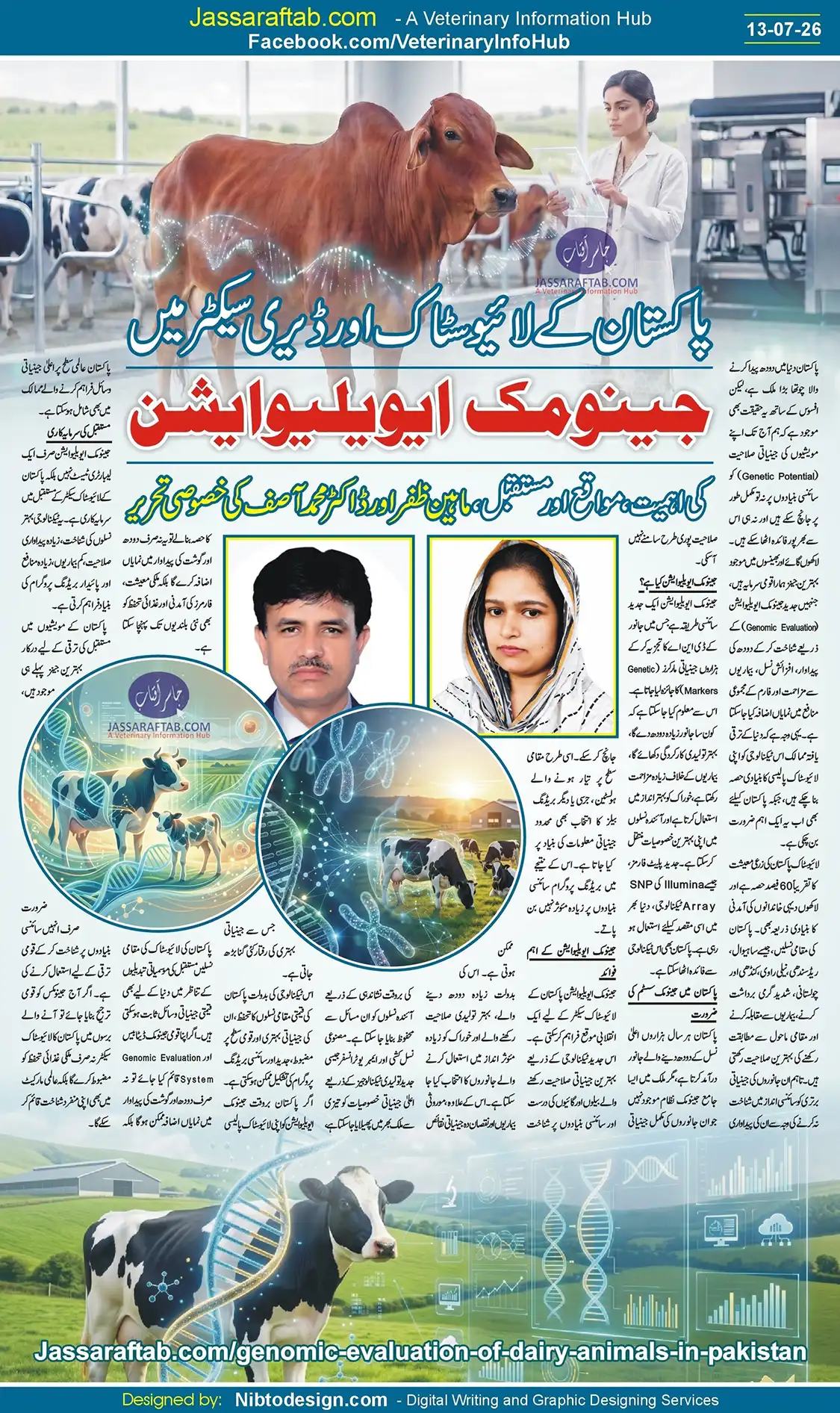
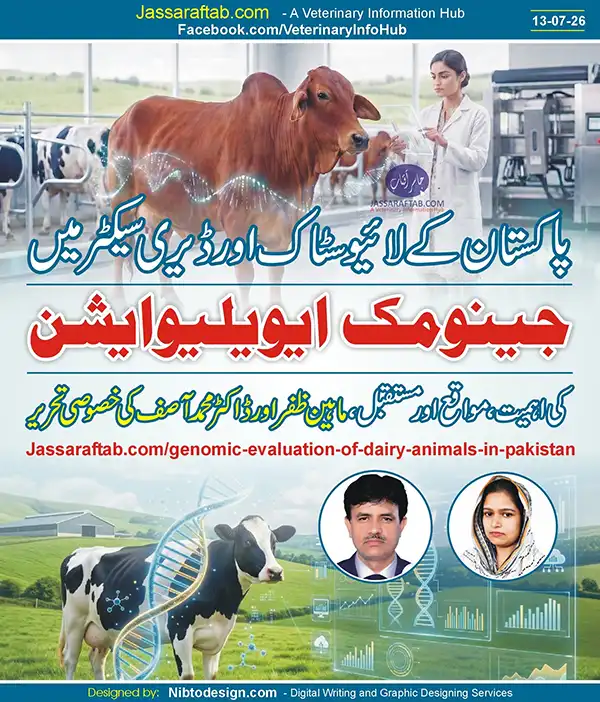
Genomic Evaluation of Dairy Animals: A Strategic Investment to Transform Pakistan’s Livestock Sector
Genomic Evaluation of Dairy Animals in Pakistan and its impct. This article is written by Maheen Zafar and Dr, Muhammad Asif from Global Marketing Services Lahore and National Institute for Biotechnology and Genetic Engineering (NIBGE) Faisalabad. This article highlights the status, opportunities and future of genomic evaluation of Livestock.

Imagine a country that ranks as the world’s fourth-largest milk producer, yet has never systematically identified, evaluated, or capitalized on the genetic potential of its dairy animals. That is Pakistan’s livestock sector today. Hidden within millions of cattle and buffalo is an invaluable national asset capable of transforming dairy productivity, profitability, and competitiveness. Unlocking this genetic wealth through genomic evaluation is not just a scientific opportunity, it is a strategic economic investment that deserves the urgent attention of policymakers, industry leaders, and investors.
Genomic Evaluation of Dairy Animals – An Asset we Keep Underusing
Livestock already contributes nearly 60% of Pakistan’s agricultural value addition and supports more than eight million rural farming families. Our livestock breeds like Nili Ravi, Kundhi Sahiwal, Red Sindhi, cholistani etc. are not local curiosities, they are heat-tolerant, disease-resilient animals shaped by centuries of adaptation, exactly the traits that global dairy and beef industries are now scrambling to breed for as climate stress reshapes agriculture worldwide. Yet productivity per animal in Pakistan still lags far behind international benchmarks. That gap is not a dead end. It is the upside if we choose to close it with data instead of imports.

The Tool That Closes This Gap
Genomics is how leading dairy economies have closed this productivity gap, and the infrastructure to do so is already mature and widely available. Modern genotyping platforms, including genomic arrays such as the Infinium BovineSNP50 and BovineHD BeadChip, can screen an animal’s DNA for tens to hundreds of thousands of genetic markers in a single test, identifying animals with superior genetic potential for higher milk yield, improved fertility, faster growth, and greater disease resistance. These are not experimental tools; they are already deployed at scale in cattle genotyping programs worldwide. Pakistan does not need to invent this technology. It simply needs to install and implement it.
Mapping Pakistan’s Dairy Genetics
Most commercial SNP arrays were developed using European dairy breeds, leaving Pakistan’s indigenous cattle and buffalo underrepresented in existing genomic reference datasets. That gap is not a limitation; it is an opportunity to invest in developing Pakistan’s own genomic reference population. A national genotyping capability would enable breeders to identify and select genetically superior animals already adapted to local climate, disease pressure, and production systems. By building a robust national genomic database, Pakistan can accelerate genetic improvement, strengthen breeding programmes, and unlock the full productive potential of its dairy sector.
Importance of National System of Genomic Evaluation of Dairy Animals and Livestock
- The Missing Genomics Infrastructure
Pakistan imports approximately 5,000 dairy animals annually to support the commercial dairy sector. However, in the absence of a national livestock genomics facility, Animal Quarantine Department Pakistan is unable to verify their breed composition, or screen for health and fertility traits.
Similarly, when locally born Holstein Friesian or Jersey bull or its semen is procured by government, selection is generally limited to parentage verification performed by Livestock and dairy development department Punjab and beta-casein (A1/A2) genotyping performed by National Institute for Biotechnology and Genetic Engineering (NIBGE), Faisalabad. Comprehensive genomic evaluation of livestock for economically important dairy, health and fertility traits is not available, limiting evidence-based selection and slowing genetic improvement in Pakistan’s dairy population.
- Elite animals already exist in Pakistan
Genomic evaluation of livestock enables the accurate identification of genetically superior bulls and cows within the national herd, allowing breeding decisions to be based on genetic merit rather than appearance or pedigree alone.
- Better decisions, lower risk
Genomic testing can identify carriers of harmful recessive mutations and assess genetic susceptibility to economically important diseases before animals are selected for breeding. This enables more informed breeding decisions, minimizes the risk of transmitting undesirable genetic traits to future generations, and contributes to healthier, more productive, and more resilient herds.
- Genetic progress can be accelerated
Once genetically superior cattle and buffalo are identified, their genetics can be rapidly multiplied and disseminated across the country through artificial insemination and embryo technology, delivering cumulative and permanent genetic improvement across successive generations.
Importance of Genomic Evaluation of Dairy Animals
The technology helps identify animals carrying the best genes for milk production, growth rate, fertility, feed efficiency, carcass quality, and disease resistance. Rather than waiting years to evaluate an animal’s performance, breeders can estimate its genetic value shortly after birth.
Benefits of Genomic Evaluation of Dairy Animals
National breeding programs can use genomic data to develop genetically superior bulls for artificial insemination, improve the accuracy of breeding values, reduce inbreeding, and conserve valuable indigenous genetic resources. Universities and research institutions can identify genes associated with climate resilience, heat tolerance, and disease resistance traits particularly important for Pakistan’s challenging environmental conditions. The question is no longer whether genomic selection is important, or even which technology to use. The real question is how quickly Pakistan can adopt it.
Genotyping is more than a laboratory test it is an investment in the future of our livestock industry. By harnessing advanced genomic technologies such as those developed by Illumina, Pakistan can build healthier animals, stronger herds, more profitable farms, and a more competitive agricultural economy. The genes for tomorrow’s productivity already exist within our livestock. It is time we started identifying them.