

Beyond the Working Animal: Emerging Donkey Meat Industry of Pakistan and Export Opportunities
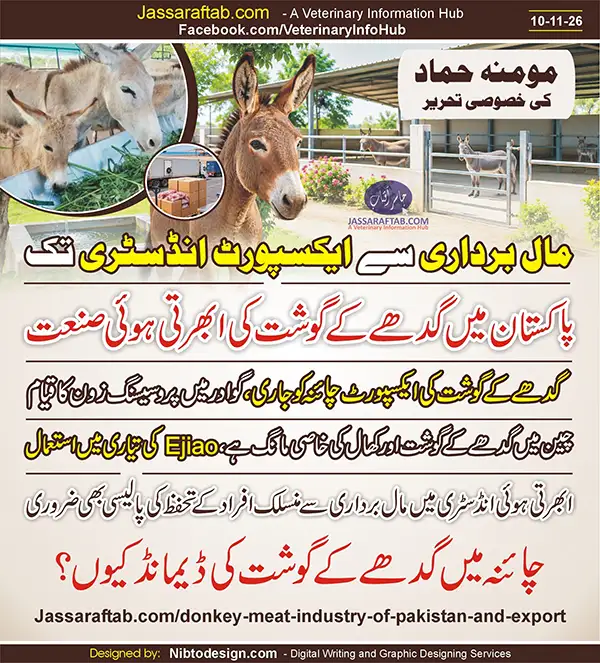
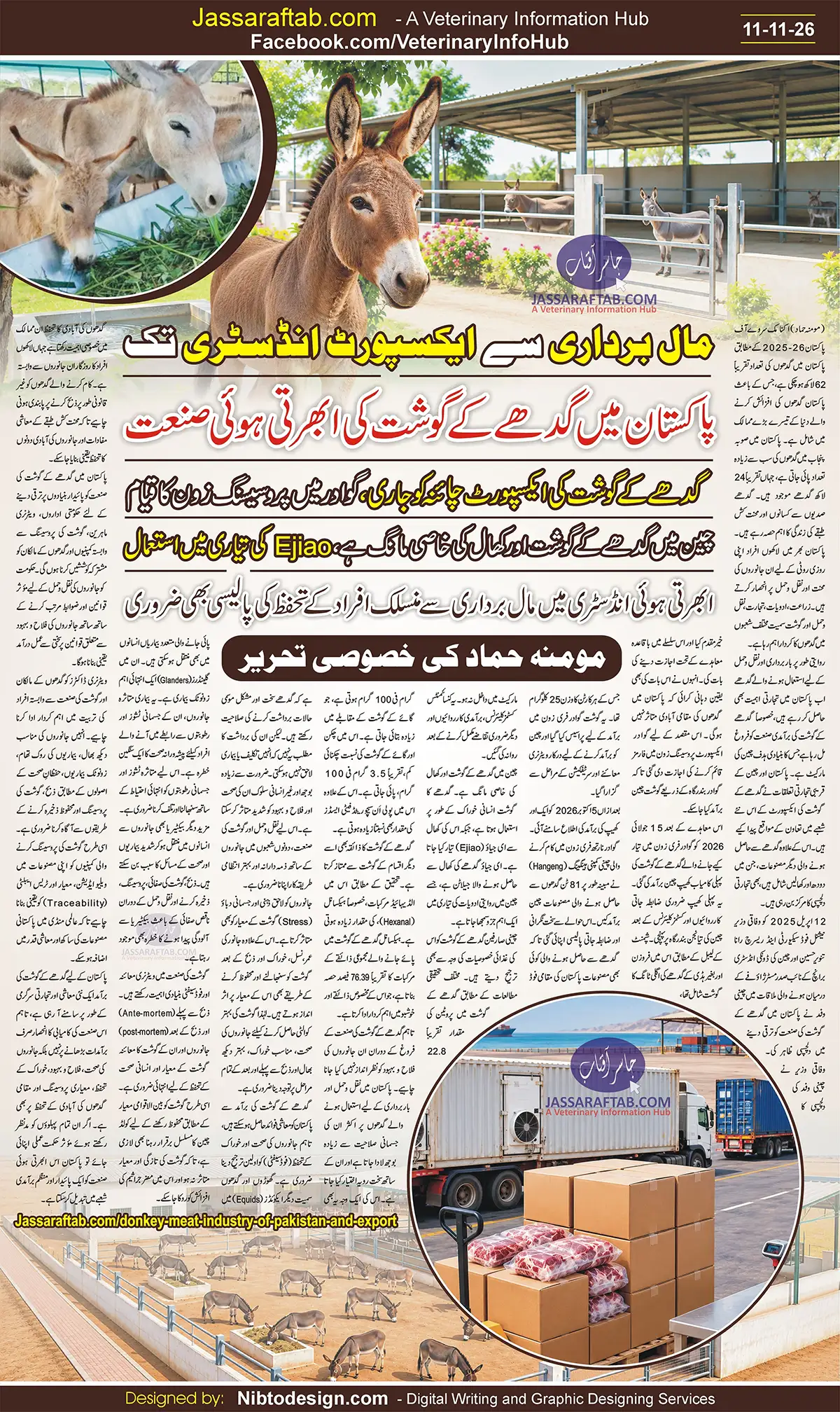
The donkey meat industry in Pakistan is emerging as a new export opportunity, with growing demand from China for donkey meat, hides, and other animal-derived products. This article explores Pakistan’s donkey meat export potential, China’s market demand, donkey meat nutritional value, and the measures needed to establish a sustainable and responsible industry. It also highlights why China demands donkey meat and facts about Ejiao.

Home to approximately 6.2 million donkeys, Pakistan ranks among the world’s largest donkey-rearing countries. Following the establishment of donkey meat export facilities in Gwadar and the successful shipment of donkey meat to China in 2026, this emerging sector is attracting commercial interest. However, the development of Pakistan’s donkey meat export industry also raises important questions about animal welfare, population conservation, zoonotic diseases, veterinary inspection, and food safety.
Pakistan’s Donkey Population and Its Economic Importance for the Donkey Meat Industry
According to the Pakistan Economic Survey 2025-26, Pakistan is home to approximately 6.2 million donkeys, making it the world’s third-largest donkey-rearing country. Among Pakistan’s provinces, Punjab accounts for a major share of the country’s donkey population, with approximately 2.40 million donkeys.

Donkeys play a key role in farmers’ lives by providing extensive labour and carrying heavy workloads. Millions of people across Pakistan reportedly depend on equine labour for their livelihoods. Donkeys have contributed to many sectors, including agriculture, medicine, trade, transportation, and the meat industry. Their large population also provides a potential foundation for the development of Pakistan’s emerging Donkey Meat Industry.
گدھوں کی کھالوں کی ایکسپورٹ پر پابندی ختم، گوادر فری زون میں سلاٹر ہاؤسز کو اجازت ۔۔ تفصیلی رپورٹ
Donkey Meat Industry: Pakistan’s Emerging Export Opportunity
Beyond their traditional role as working animals, donkeys are gaining commercial importance in Pakistan, particularly with the development of a donkey meat export industry targeting the Chinese market. Pakistan’s close trade relations with China have created opportunities for cooperation in this emerging Donkey Meat Industry. Moreover, other donkey-derived products, including milk and hides, have also attracted growing commercial interest.
دنیا میں گھوڑوں کی نسلیں، پاکستان میں صورتحال اور گھوڑے کی ارتقائی تاریخ
Pakistan-China Cooperation in the Donkey Meat Industry
On April 12, 2025, during a meeting between Federal Minister for National Food Security and Research Rana Tanveer Hussain and Mr. Zaho Fei, Vice President of China’s Donkey Industry Branch, the Chinese delegation showed interest in developing the donkey meat sector in Pakistan.
The Federal Minister welcomed their interest and stated that permission would be granted under a formal agreement. He also assured the delegation that Pakistan’s local donkey population would not be affected. Farms were allowed to be established in the Gwadar Export Processing Zone to facilitate exports to China through Gwadar Port.
First Donkey Meat Shipment from Pakistan to China
Following the agreement, on July 15, 2026, the first successful shipment of donkey meat produced in Gwadar Free Zone was exported from Pakistan to the Chinese market after completing the required regulatory and customs procedures at Tianjin Port.
The shipment label identified the product as frozen, boneless donkey foreleg meat, with each carton weighing 25 kilograms. The meat was prepared for export at the Gwadar Free Zone in Balochistan and underwent the veterinary inspection and certification procedures required for export to China. This shipment marked an important development in Pakistan’s Donkey Meat Industry.
مال برداری اور دیگر کاموں میں استعمال ہونے والے گدھوں کے حقوق، عائدہ انجم کی خصوصی تحریر
Donkey Meat Export of 81 Tonnes
A subsequent shipment was reported on October 5, 2026. Hangeng, a Chinese company operating in Gwadar North Free Zone, reportedly exported 81 tonnes of donkey-derived products to China under a strictly controlled policy to ensure that no donkey-derived product enters Pakistan’s local food market.
The consignments were dispatched after completing the required customs clearance, export procedures, and other regulatory requirements.
Why Is Donkey Meat in High Demand in China?
There is high demand for donkey meat and hides in China, mainly for human consumption and the production of Ejiao. Ejiao is a donkey-hide gelatine that is currently in significant demand in China, where it is considered an ingredient in traditional medicine.
Chinese consumers prefer donkey meat due to donkey meat nutritional value compared with livestock, poultry meat, and pork. Research on donkey meat has reported a high protein content of 22.8g/100g, which is higher than beef and pork. It is also low in fat (3.5g/100g) compared with chicken meat, beef, and pork, and contains higher levels of polyunsaturated fatty acids (PUFA).
Donkey meat is also considered more flavourful than other types of meat due to its higher content of aldehyde compounds, particularly hexanal, which accounts for 76.39% of the overall flavour compounds present in donkey meat. Donkey meat nutritional value and its sensory characteristics contribute to the growing demand for donkey meat and the expansion of the Donkey Meat Industry in China.
Animal Welfare and Meat Quality in the Donkey Meat Export Industry
Above all, the welfare of donkeys must not be overlooked in the development of the meat industry. In Pakistan, donkeys used for transportation are often overloaded and subjected to harsh handling, partly because of their ability to tolerate harsh and challenging environmental conditions.
However, their resilience does not make them immune to suffering. Excessive burdens and inhumane handling can compromise their health and welfare, highlighting the need for responsible and better animal management in both the transportation and meat industries.
گدھے کا عالمی دن، آغاز پاکستان سے ۔۔ اہمیت، خصوصیات اور ویلفیئر
Stress affects the quality of meat. In addition to stress, several other factors, such as age, breed, nutrition, and post-slaughter handling, also affect meat quality. These factors must be considered to maintain quality standards in the developing Donkey Meat Industry.
Animal Health and Food Safety Risks
While the Donkey Meat Industry may offer economic opportunities for Pakistan, animal health and food safety must be the primary considerations. Several zoonotic diseases associated with equids can affect humans.
Among the important diseases, Glanders, a serious zoonotic disease caused by Burkholderia mallei, is an important occupational health concern for people handling infected equids and their tissues or secretions. Therefore, contaminated tissues and body fluids require proper and careful handling.
Besides Glanders, other bacteria may also be involved in zoonotic transmission and can cause severe illnesses and health problems in humans. Bacterial contamination may also arise during slaughtering, handling, processing, storage, and transportation.
Veterinary Inspection and Food Safety Standards for the Donkey Meat Export
Veterinary inspection and food safety are important considerations for the meat industry. Ante-mortem and post-mortem examinations are crucial steps in maintaining proper slaughtering and meat processing standards.
To keep donkey meat up to the required standards, maintaining the cold chain is also essential. Proper temperature control during storage and transportation helps maintain meat quality and safety. These measures are essential for the sustainable development of Pakistan’s Donkey Meat Industry and meeting international export requirements.
Donkey Population Conservation and Sustainable Development
Conserving the donkey population is particularly important in countries where many people depend on these animals for their livelihoods. Illegal slaughtering of working donkeys must be banned to protect the animals that support millions of people.
Thus, ensuring the sustainable development of Pakistan’s Donkey Meat Industry requires coordinated efforts from government authorities, veterinary professionals, meat processors, and donkey owners.
Government authorities must regulate the transportation of these animals and enforce animal welfare laws. Veterinarians must play a pivotal role in educating donkey owners and meat processors about animal handling, zoonotic diseases, hygienic slaughtering, meat processing, and storage.
Meat processing companies must ensure value addition and traceability of their products to achieve greater economic benefits. The cold chain must also be maintained for the proper storage and transportation of meat.
Conclusion
Pakistan’s emerging Donkey Meat Industry offers opportunities to expand international trade and generate economic benefits. However, its sustainable development requires a balanced approach that considers animal welfare, population conservation, veterinary health, food safety, and international meat quality standards.
Coordinated efforts by government authorities, veterinary professionals, donkey owners, and meat processing companies will be essential to developing a responsible and sustainable Donkey Meat Industry in Pakistan.


