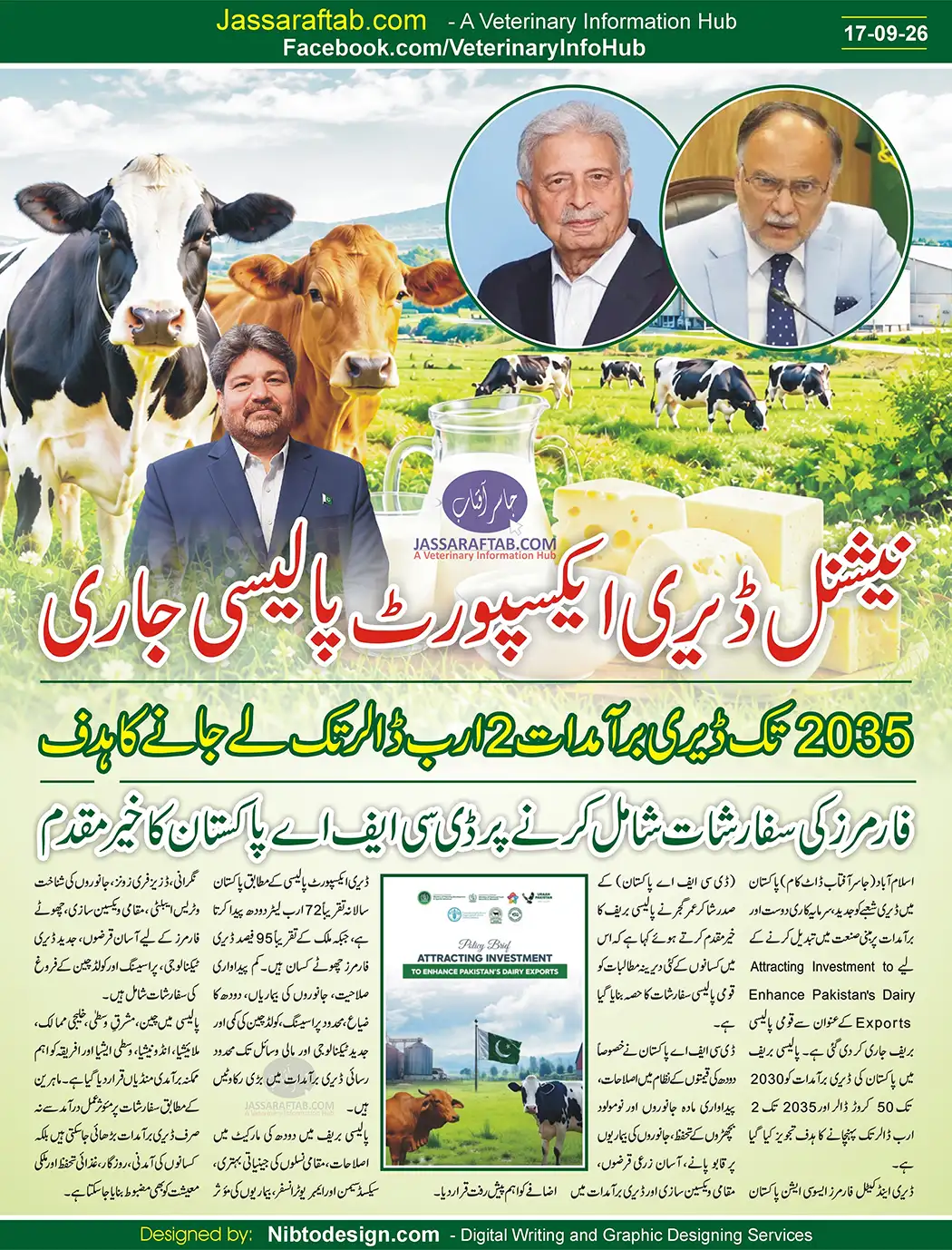
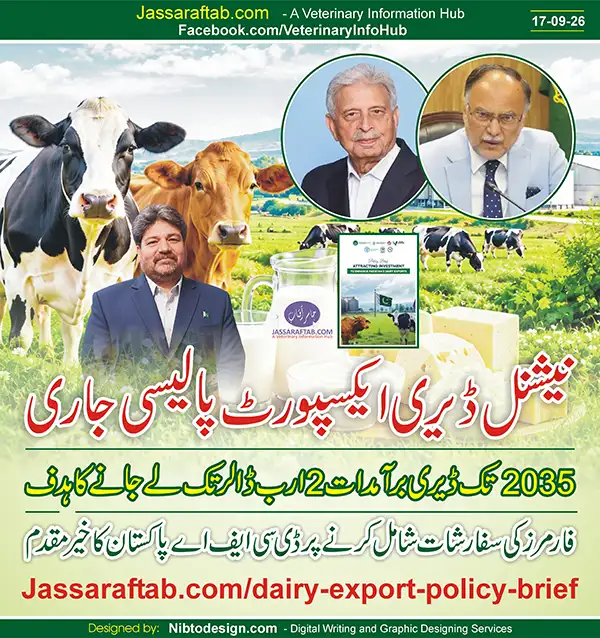
Pakistan Unveils Dairy Export Policy Brief to Attract Investment and Boost Dairy Exports
Pakistan has outlined a comprehensive policy roadmap aimed at attracting investment, improving dairy-sector productivity and transforming the country into a competitive exporter of milk and dairy products. The Dairy Export Policy Brief, titled “Attracting Investment to Enhance Pakistan’s Dairy Exports,” highlights the significant dairy potential Pakitan and identifies key constraints that are limiting export growth.

National Dairy Conference
To bring to light the potential and suggest policy measures to improve efficiency and enhance its contribution in export, Planning Commission of Pakistan organized a national dairy conference on February 9, 2026 inviting the eminent stakeholders from public and private sector. The conference was inaugurated by the Secretary and chaired by the Minister for Planning, Development, and Special Initiatives and co-chaired by the Minister for National Food Security and Research.

The National Dairy Conference focused on transforming Pakistan’s dairy sector into a competitive export industry, with focus on boosting productivity, reducing costs, and formalizing the supply chain to create exportable surplus. The conference underscored the potential of the dairy sector to enhance exports of its products to 500$M till 2030 and US$2B in 2035.
پلاننگ کمیشن کے زیر اہتمام نیشنل ڈیری کانفرنس کا انعقاد
DCFA Pakistan
DCFA Pakistan has appreciated this initiative, especially including the Farmers’ recommendations in policy. President Dairy and Cattle Farmers Association Pakistan has issued a statement while focusing on immediate action for the development of dairy sector in Pakistan meeting the export potential.
Dairy and Cattle Farmers Association Pakistan – DCFA Pakistan
Proposed Roadmap and Dairy Export Policy Brief 2026
According to the Dairy Export policy brief, Pakistan is the 4th-largest milk producer globally, producing around 72 billion litres of milk annually. However, the sector faces challenges including low animal productivity, fragmented milk supply chains, limited processing capacity, inadequate cold-chain infrastructure, animal diseases, weak quality standards and insufficient investment. The dairy sector also faces a substantial trade deficit.
The proposed roadmap seeks to transform Pakistan’s dairy industry from a largely domestic-oriented sector into an export-driven, high-value industry. The brief identifies major export opportunities in markets including China, Indonesia, Malaysia, Saudi Arabia, GCC countries and African markets, with potential for products such as high-fat dairy products, cheese, butter, whey, specialty milk, yoghurt, semen, embryos, silage and hay.
Pakistan Livestock Census 2024; Livestock Population; National, Provincal and District Wise
Investment and Policy Reforms
The Dairy Export Policy Brief recommendations focus on modernizing dairy farms, improving animal genetics, strengthening disease control, upgrading processing facilities and developing export-oriented infrastructure. Key proposals include deregulating milk markets, improving quality and safety standards, rationalizing taxes and import duties on dairy inputs and technology, expanding access to finance, and supporting farmers through livestock insurance and targeted assistance.
The Dairy Export Policy Brief also emphasizes investment in genetic improvement, sexed semen and embryo transfer, climate-resilient dairy farming, feed and fodder technologies, cooling systems, veterinary services and digital farmer advisory platforms. It calls for stronger milk-processing and value-addition facilities to produce internationally competitive dairy products.
Pakistan Dairy Association (PDA)
Dairy Export Policy Brief on Stronger Export Infrastructure and Disease Control
For export growth, the brief recommends establishing reliable cold-chain and logistics infrastructure, export processing zones, improved animal traceability and veterinary input monitoring. It also proposes strengthening Pakistan’s animal disease surveillance and control system, including measures for diseases such as Foot-and-Mouth Disease (FMD), and improving compliance with international sanitary and animal-health standards.
The proposed framework assigns responsibilities to the federal and provincial governments, private sector, financial institutions, farmers, research organizations and development partners. The objective is to build coordinated public-private partnerships and create an enabling environment for domestic and foreign investment.
Immediate Actions for 2026–27 under Dairy Export Policy Brief
The brief proposes several immediate measures, including approval of pending livestock policies, deregulation of milk markets, implementation of animal identification and traceability systems, establishment of disease-free dairy zones, improved access to group financing, rationalization of taxes and import duties, modernization of dairy processing and stronger enforcement of animal slaughter regulations. It also calls for action against illegal milk-powder imports and greater private-sector participation in dairy export promotion.
The policy brief concludes that Pakistan has the potential to turn its large dairy base into a globally competitive, export-oriented industry. With coordinated reforms, investment in technology and infrastructure, improved animal productivity and stronger quality and disease-control systems, the dairy sector could contribute to higher farmer incomes, employment generation, value addition and increased export earnings.