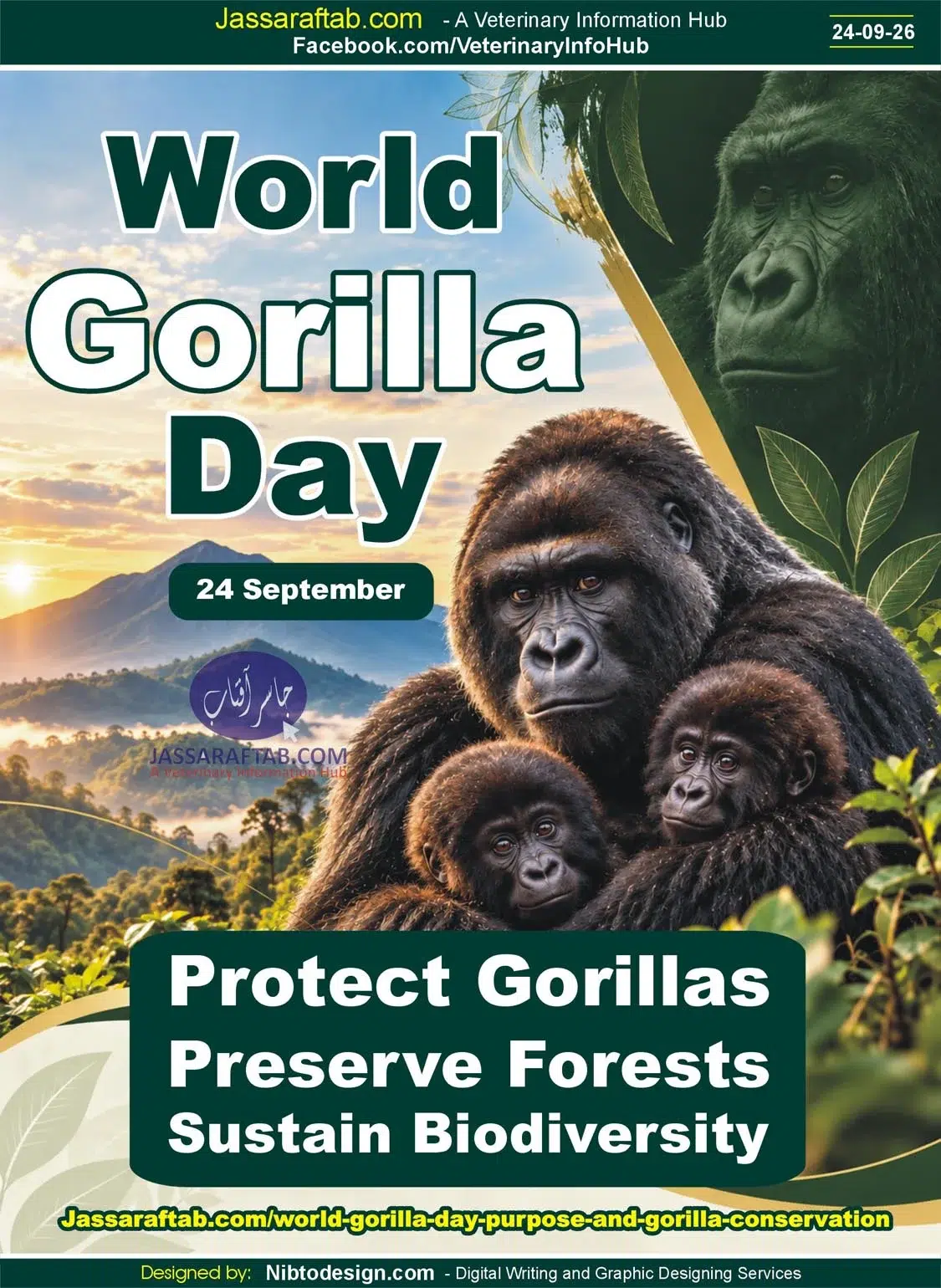
What is World Gorilla Day? | History of World Gorilla Day 2026 | Purpose and Conservation of Gorillas
World Gorilla Day is observed every year on September 24. However, World Gorilla Day 2026 raises global awareness about gorilla conservation. It also highlights the major threats to gorillas in the wild. The day also encourages governments, conservation organizations, local communities, and the public to protect gorillas and their natural habitats. The history of World Gorilla Day is discussed in detail in this article.

Gorillas are among our closest living relatives. They also play an important role in forest ecosystems. They are also an important part of Africa’s natural heritage.
However, gorillas face several serious threats. These include habitat loss, hunting, disease, human-wildlife conflict, and climate change.

History of World Gorilla Day 2026
World Gorilla Day was established in 2017. September 24 has a special connection with the history of gorilla research and conservation. The first World Gorilla Day was observed in 2017. The year also marked the 50th anniversary of the Karisoke Research Center, which is operated by the Dian Fossey Gorilla Fund.
World Gorilla Day | Gorilla Conservation and Characteristics of Gorilla
On September 24, 1967, renowned primatologist Dr. Dian Fossey established the Karisoke Research Center in Rwanda’s Volcanoes region. She began her long-term study of mountain gorillas there.
Fossey established her research camp between Mount Karisimbi and Mount Bisoke. She then began closely observing mountain gorillas and studying their behavior.
Her research later became an important part of international efforts to understand and protect mountain gorillas. In addition, she worked to protect gorillas from poaching and other human threats.
Fifty years later, in 2017, September 24 became World Gorilla Day. The day marked the 50th anniversary of Fossey’s work.
It also created a global opportunity to focus attention on gorilla conservation. Furthermore, it continues to promote awareness about the protection of gorillas and their habitats.
Dian Fossey’s work showed the importance of long-term research and field conservation. She also demonstrated the value of public awareness and anti-poaching efforts.
Today, the Dian Fossey Gorilla Fund continues conservation and research work in the region.
Purpose of World Gorilla Day 2026
The main purpose of World Gorilla Day is to increase awareness and encourage action for gorilla conservation.
The day highlights the ecological importance of gorillas. It also explains their role in forest ecosystems.
At the same time, it draws attention to the major threats that gorillas face in the wild.
World Gorilla Day aims to:
- Raise public awareness about gorillas and their habitats.
- Encourage the protection of forests and natural habitats.
- Support anti-poaching and wildlife protection efforts.
- Promote scientific research and population monitoring.
- Highlight the dangers of illegal wildlife trade.
- Encourage responsible wildlife tourism.
- Promote cooperation between governments and conservation organizations.
- Support communities living near gorilla habitats.
Furthermore, international cooperation plays an important role in gorilla conservation. Gorilla habitats can cross national borders.
Therefore, governments and conservation organizations need to work together. International agreements can also support cooperation between gorilla-range countries.
Gorillas and Their Natural Habitat
Gorillas live mainly in the forests of central and western Africa. They depend on forests for food, shelter, movement, and social life.
There are two recognized gorilla species:
Eastern Gorilla
The eastern gorilla includes the mountain gorilla and Grauer’s gorilla.
Mountain gorillas live in high-altitude forests in Rwanda, Uganda, and the Democratic Republic of Congo (DRC).
Conservation programs have improved the protection of mountain gorillas. As a result, their conservation status improved from Critically Endangered to Endangered on the IUCN Red List in 2018.
Western Gorilla
The western gorilla includes the western lowland gorilla and the Cross River gorilla.
The Cross River gorilla lives mainly in forests along the Nigeria-Cameroon border. Its population is small and fragmented.
Therefore, protecting its remaining habitat is especially important.
Major Threats to Gorillas and World Gorilla Day
Gorillas face several threats in the wild. World Gorilla Day helps draw attention toward major threats to gorillas.
Habitat Loss
Habitat destruction remains one of the major threats to gorillas. People clear forests for agriculture, settlements, roads, logging, and other activities. Consequently, gorillas lose important feeding and shelter areas.
Forest fragmentation creates another problem. When forests become smaller and separated, gorilla groups can become isolated.
As a result, they may have less access to food and suitable breeding areas. Isolation can also reduce genetic diversity.
The Cross River gorilla is particularly vulnerable because much of its remaining habitat is fragmented.
Poaching and Illegal Hunting
Poaching also threatens gorilla populations.
Hunters may kill gorillas directly. In addition, gorillas can become trapped in snares intended for other animals.
Illegal wildlife trade creates another serious threat. Hunters may capture young gorillas for illegal trade.
However, capturing young gorillas can also result in the death of adult animals that try to protect them.
Therefore, World Gorilla Day helps create awareness about poaching and the illegal wildlife trade. It also encourages stronger wildlife protection measures.
Disease
Gorillas are vulnerable to infectious diseases. Their close biological relationship with humans means that some diseases can pass between people and gorillas.
Disease outbreaks can therefore have serious effects on wild populations.
For example, Ebola outbreaks have caused major population losses among some western lowland gorilla populations.
Therefore, disease prevention remains an important part of gorilla conservation.
Climate Change
Climate change can also affect gorilla habitats.
Changes in temperature and rainfall can alter forest ecosystems. They can also affect the availability of plants and other food resources.
Furthermore, climate change can increase pressure on already threatened forest habitats.
Therefore, conservation programs must consider the long-term effects of climate change.
Human-Wildlife Conflict
Gorillas and people increasingly share limited land and natural resources.
Agricultural expansion can bring human settlements closer to gorilla habitats. Consequently, interactions between people and gorillas can increase.
Such interactions can create risks for both people and wildlife.
Therefore, conservation programs must protect gorillas while also supporting the needs of local communities.
Gorilla Conservation and World Gorilla Day
Gorilla conservation requires several approaches. These include habitat protection, law enforcement, scientific research, community participation, and responsible tourism.
Protection of Natural Habitats
Protecting natural habitats remains a major conservation priority.
National parks, wildlife reserves, and forest corridors can provide important protection. They also help maintain connected habitats.
For example, mountain gorilla conservation covers protected areas in Rwanda, Uganda, and the DRC.
Moreover, cooperation between these countries supports the management of shared gorilla habitats.
Anti-Poaching Measures
Rangers play an important role in gorilla protection.
They patrol forests and monitor gorilla groups. They also remove snares and support wildlife law enforcement.
In addition, rangers can collect information about threats and report illegal activities.
However, anti-poaching programs need local support. Therefore, cooperation with communities and government authorities remains essential.
Scientific Research and Monitoring
Scientific research provides important information about gorillas.
Researchers monitor population size, reproduction, health, behavior, and movement.
Long-term research has been particularly important for mountain gorillas.
Furthermore, researchers can use this information to identify threats and improve conservation programs.
Community-Based Conservation
Gorilla conservation cannot succeed without local communities.
Many communities live close to gorilla habitats. They depend on natural resources for food, agriculture, water, and livelihoods.
Therefore, conservation programs must consider their needs.
Community-based programs can provide education and livelihood opportunities. They can also improve food and water security.
For example, the Dian Fossey Gorilla Fund focuses on protecting gorillas, conducting scientific research, developing conservationists, and building resilient communities.
Responsible Tourism
Gorilla tourism can support conservation.
Tourism can generate income for protected areas and local communities. It can also create greater public interest in gorilla protection.
However, tourism must remain responsible.
Visitors should follow wildlife guidelines. They should maintain appropriate distances and avoid actions that could stress animals.
Furthermore, visitors should follow health and hygiene measures to reduce the risk of disease transmission.
International Cooperation
Gorillas do not recognize national borders. Therefore, countries must cooperate to protect them.
Governments, researchers, conservation organizations, and local communities all have important roles.
In addition, international agreements can support cooperation between countries.
Cross-border conservation programs are especially important where gorilla populations and forests extend across national boundaries.
Why World Gorilla Day 2026 Matters
World Gorilla Day is more than a celebration of an iconic animal. It reminds people that gorilla survival depends on healthy forests and effective conservation.
The experience of mountain gorilla conservation shows the value of long-term research, habitat protection, and community involvement.
At the same time, western and Cross River gorillas continue to face serious threats. Therefore, conservation efforts must continue.
World Gorilla Day provides an opportunity to learn about gorillas and their natural habitats. It also encourages people to support wildlife conservation.
Most importantly, protecting gorillas means protecting the forests and ecosystems on which many other species also depend.
By raising awareness and encouraging practical conservation action, World Gorilla Day helps build greater support for the long-term survival of gorillas.