


World Bonobo Day | Threats to Bonobos| Difference Between Bonobos and Chimpanzees | Bonobo Conservation
World Bonobo Day is observed every year on February 14 to raise global awareness about Bonobo Conservation and threats to Bonobos. The day highlights the need to protect this endangered great ape and its rapidly shrinking rainforest habitat in Central Africa. However, they are endemic to the Democratic Republic of Congo (DRC). This day also highlights the difference between Bonobos and Chimpanzees. Many people know chimpanzees and gorillas, but few know about bonobos.


History of World Bonobo Day
World Bonobo Day was created by the Bonobo Conservation Initiative and the Lola ya Bonobo Sanctuary in 2017. The day was created to emphasize the urgent need to combat escalating threats to bonobos and strengthen global efforts for bonobo conservation. This day celebration coincides with Valentine’s Day. These organizations selected February 14 deliberately. Since the date is globally associated with love and compassion, organizers wanted to connect these values with bonobo conservation. Bonobos are widely known for their peaceful, cooperative, and socially bonded societies. Therefore, the date symbolically reflects the species’ social nature.
What are Bonobos?
Bonobos are great apes like chimpanzees, gorillas, and orangutans. Bonobos live only in the tropical rainforests of the Democratic Republic of the Congo. In fact, they are found south of the Congo River, which naturally separates them from chimpanzees populations. Because they exist in just one country, their survival depends heavily on forest protection in that region.

However, unlike chimpanzees, bonobos are known for their peaceful and cooperative social behavior. Therefore, scientists often study them to better understand empathy, conflict resolution, and social bonding in primates.
بونوبو کا عالمی دن اس کی خصوصیات اور دیگر معلومات
Difference between Bonobos and Chimpanzees
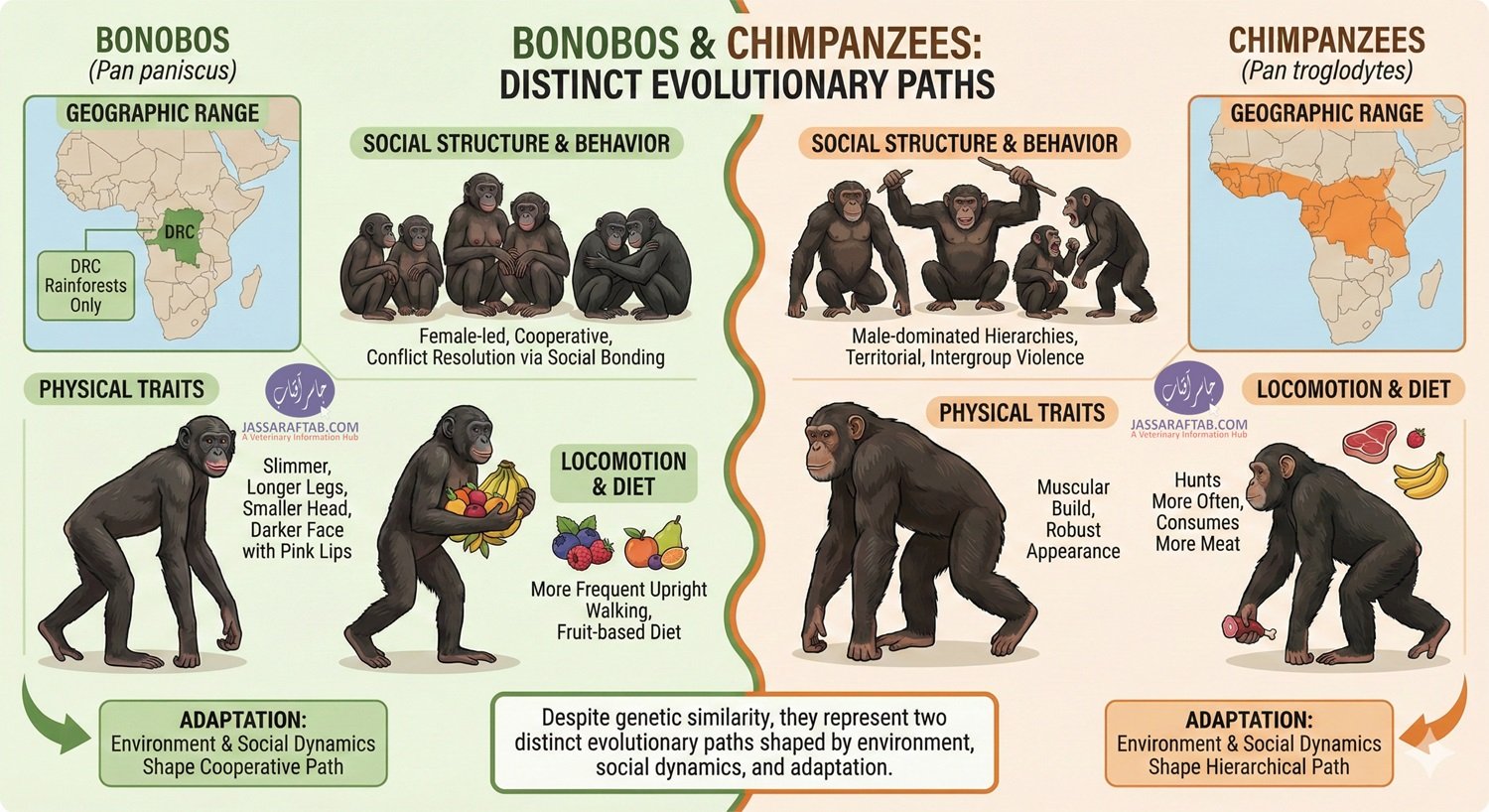
Bonobos and chimpanzees are closely related great apes, yet they differ significantly in behavior, social organization, and physical traits. The Bonobo lives only in the rainforests of the Democratic Republic of the Congo, whereas the Chimpanzee ranges across several countries in Central and West Africa. Bonobos form female-led, cooperative groups where members resolve conflicts through social bonding rather than aggression. In contrast, chimpanzees live in male-dominated hierarchies and often display territorial behavior and intergroup violence.
World Chimpanzee Day/ چمپینزی کا عالمی دن ، اسکی تاریخ اور دن کا مقصد
Physically, bonobos appear slimmer, with longer legs, smaller heads, and darker faces with pink lips, while chimpanzees have a more muscular build and a robust appearance. Moreover, bonobos tend to walk upright more frequently and rely heavily on fruit-based diets, whereas chimpanzees hunt more often and consume more meat. Therefore, despite their genetic similarity, bonobos and chimpanzees represent two distinct evolutionary paths shaped by environment, social dynamics, and adaptation.
More importantly, unlike other primates, bonobos avoid voilence. They prefer social bonding rather than aggression.
Major Threats to Bonobos and World Bonobo Day
Bonobos have suffered a sharp population decline over the past 12 to 20 years. There are many threats to bonobos in the wild. These threats to bonobos include:
Habitat loss and Deforestation
First and foremost, habitat destruction is a major threat. They are facing habitat loss due to political unrest in Democratic Republic of the Congo. Due to which only a limited portion of their natural habitat falls within protected areas. Ongoing conflict in the Democratic Republic of the Congo has weakened law enforcement in national parks. As a result, illegal hunting and other destructive activities often continue without proper control.
Logging, agricultural expansion, and infrastructure development are rapidly shrinking Congo’s rainforests. As forests disappear, bonobo populations become fragmented. Consequently, isolated groups struggle to survive and reproduce.
Additionally, mining activities for minerals such as coltan further degrade their habitat. Roads built for extraction also open remote forests to illegal activities.

Bushmeat Hunting
Secondly, illegal hunting poses a severe risk due to political unrest in DRC. Many local communities rely on bushmeat as a primary source of protein. Although bonobos are legally protected, hunters kill them for bushmeat. In many cases, hunters also capture orphaned infants for illegal wildlife trade after killing their mothers.
As a result, entire family groups are destroyed, and population recovery becomes extremely difficult.
Slow Reproduction
At the same time, bonobo reproduction rates remain slow. Females typically reach sexual maturity around 12 years of age and may give birth shortly afterward. However, they produce only one infant every five to six years. Mothers nurse and carry their young for up to five years, which requires significant time and energy investment. Consequently, population recovery occurs very slowly and cannot keep pace with high levels of poaching, habitat loss, and human encroachment.
Political Instability and Weak Enforcement
The Democratic Republic of the Congo has faced decades of political instability. Consequently, conservation enforcement in remote forest areas remains weak. Armed conflict, poverty, and lack of resources make wildlife protection challenging.
Climate Change
Moreover, climate change threatens rainforest ecosystems. Further, changing rainfall patterns and rising temperatures may alter food availability for bonobos. Over time, these environmental shifts could further stress already vulnerable populations.
Together, these threats to bonobos create a dangerous situation for bonobos. Therefore, global awareness, stronger law enforcement, and community-based conservation efforts remain essential to protect this unique and peaceful great ape.
Bonobo Conservation Efforts and World Bonobo Day
The International Union for Conservation of Nature (IUCN) has listed bonobos as an endangered species, and human-driven threats continue to reduce their population.
According to Friends of Bonobos, only about 20,000 to 50,000 bonobos remain in the wild. However, researchers question the accuracy of this estimate. Scientists struggle to collect reliable data because bonobos live in remote, swampy rainforests that are extremely difficult to access. Moreover, prolonged political instability and armed conflicts in the Democratic Republic of the Congo repeatedly disrupt field research and conservation programs. As a result, scientists face significant challenges when they attempt to conduct comprehensive population surveys and determine the species’ true numbers.
Despite these serious threats to Bonobos, conservationists actively protect bonobos and their forest habitat. They continue to implement multiple conservation initiatives to secure the future of this endangered great ape.
Protected Areas
One of the most important conservation achievements is the establishment of Lomako-Yokokala Faunal Reserve and Salonga National Park. These reserves provide critical habitat for bonobos. These protected areas restrict hunting and deforestation within designated boundaries.
However, enforcement remains essential. Therefore, international support and funding play a crucial role in maintaining these reserves.
Community-Based Conservation
Conservation groups increasingly involve local communities in protection efforts. Instead of excluding residents, programs offer alternative livelihoods, education, and healthcare support.
As a result, communities become partners in Bonobo conservation rather than participants in hunting or deforestation.
Bonobo Conservation Organizations and World Bonobo Day
Organizations such as the Bonobo Conservation Initiative, Friends of Bonobos, African Wildlife Foundation and WWF focus on empowering Congolese communities to protect forests while improving living standards. This model ensures long-term sustainability.
Rescue and Rehabilitation
Several sanctuaries rescue orphaned bonobos from illegal trade. These facilities rehabilitate young apes and, when possible, reintroduce them into protected forests.
Such programs not only save individual animals but also raise awareness globally about the species’ plight.
Research, Education & World Bonobo Day
Scientific research improves understanding of bonobo behavior, genetics, and ecology. Consequently, conservation strategies become more effective.
Meanwhile, educational campaigns on World Bonobo Day inform the global public about responsible consumption and the environmental impact of mining and deforestation.


