

World Aquatic Animal Day | History of World Aquatic Animals Day | What are Aquatic Animals? | Types of Aquatic Animals |Aquatic Animals Conservation
World Aquatic Animal Day is observed every year on April 3. It highlights the importance of animals that live in water. Moreover, it promotes welfare of aquatic animals, aquatic animals conservation, and sustainable use. This day also focuses on what are Aquatic animals? Types of aquatic animals and how to protect aquatic animals? These animals include Fish, marine mammals, coral, plankton, aquatic insects larva, worms, mollusks, crustaceans, amphibians, reptiles, and Echinoderms


Aquatic animals play a critical role in ecosystems, food production, and global biodiversity. Therefore, protecting them is essential for environmental balance and human survival.
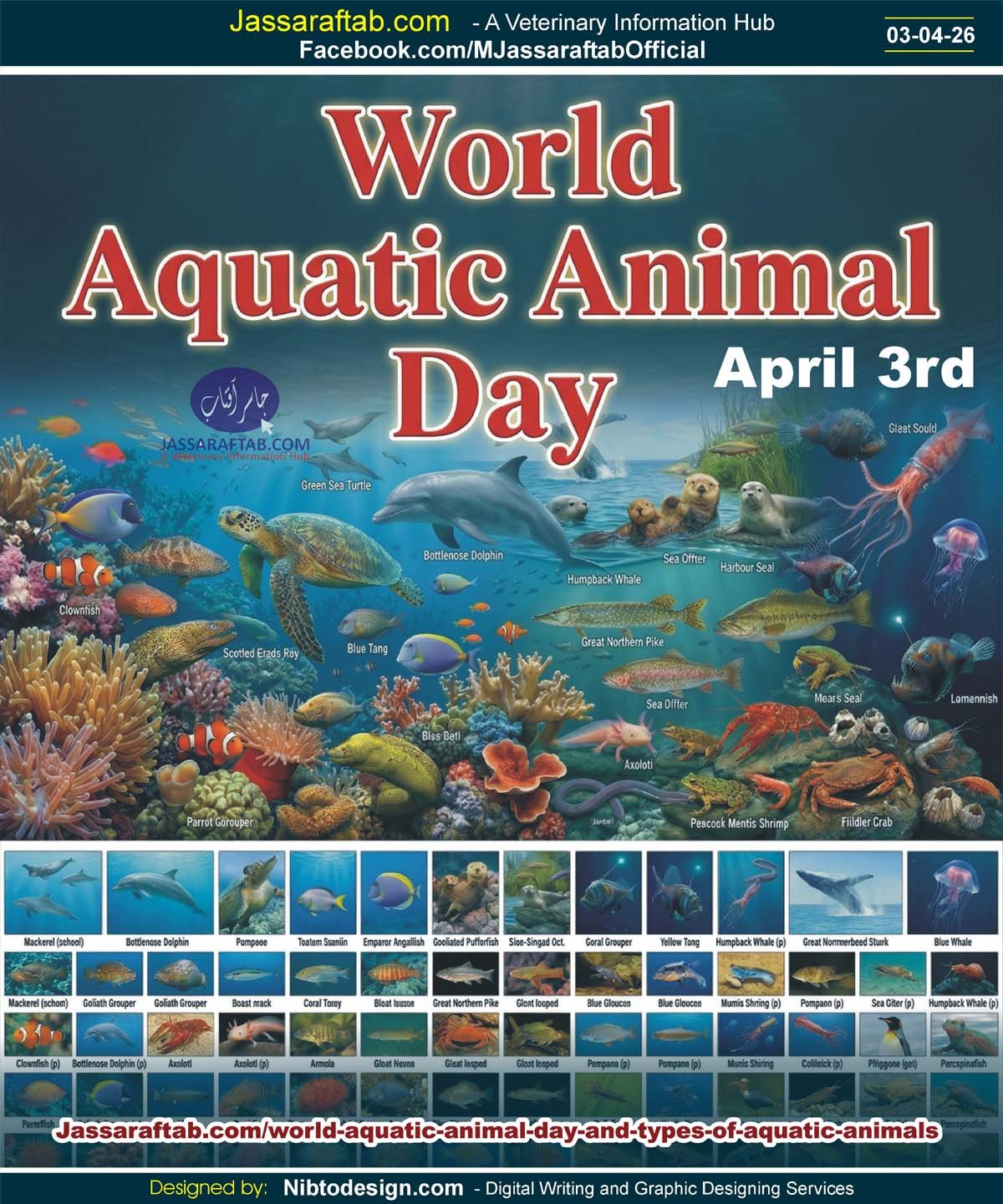
History of World Aquatic Animal Day
World Aquatic Animal Day was established in 2020 by the Aquatic Animal Law Initiative (AALI) at Lewis & Clark Law School in the United States. The World Aquatic Animal Day initiative aimed to raise awareness about the often-overlooked welfare of aquatic animals.
Initially, aquatic animals conservation efforts mainly focused on terrestrial animals. However, experts recognized that aquatic species also face serious threats. Therefore, this day was introduced to address that gap. Since then, it has gained global attention. In addition, organizations, researchers, and policymakers now actively participate in awareness campaigns and conservation programs.
World Aquatic Animals Day / آبی جانوروں کا عالمی دن اور ان کی اہمیت
What Are Aquatic Animals? World Aquatic Animal Day
Aquatic animals are animals that live in water for most or all of their life. They depend on water for breathing, feeding, movement, and reproduction. Moreover, these animals are specially adapted to survive in aquatic environments such as oceans, rivers, lakes, and ponds.
For example, many aquatic animals like fish breathe through gills. Similarly, others such as whales and dolphins breath air but still live in water. Therefore, aquatic animals show different adaptations based on their environment.
In addition, aquatic animals include many groups such as fish, crustaceans, mollusks, amphibians, reptiles, and marine mammals. Each group plays a unique role in the ecosystem.
Overall, aquatic animals are essential for maintaining ecological balance, supporting biodiversity, and providing food resources. Therefore, their protection is very important for a sustainable future.
On World Aquatic Animal Day people also highlight about aquatic animals and types of aquatic animals.
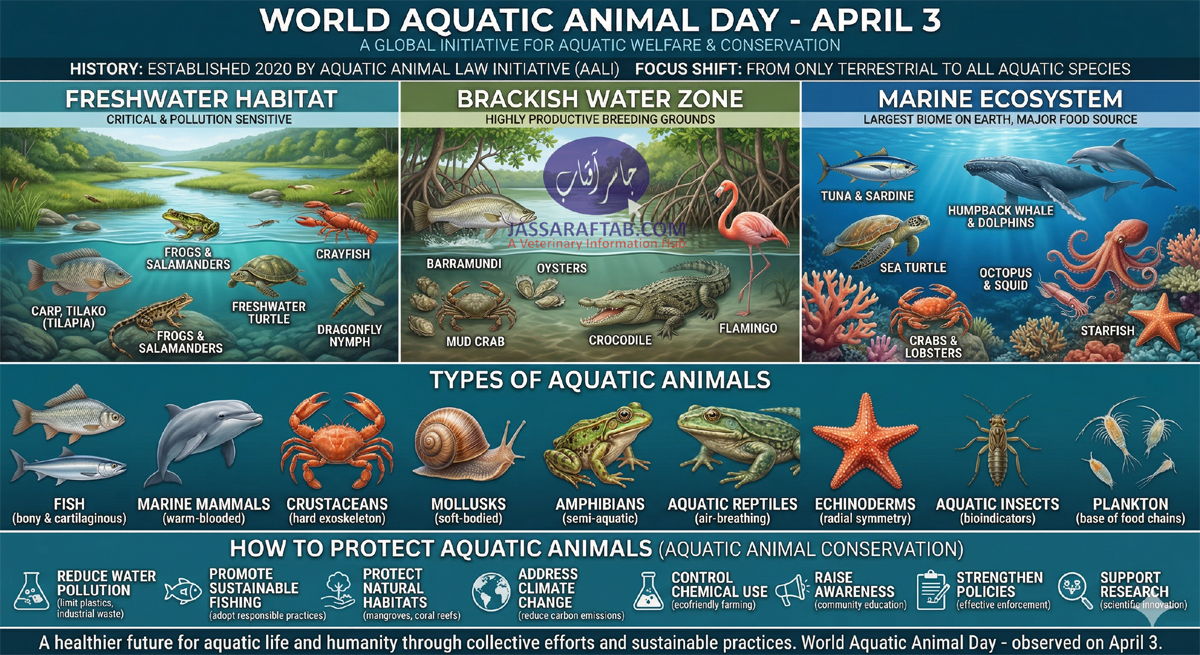
Aquatic Animals by Types of Water
Aquatic animals are found in three main types of water. Each environment supports different species. Therefore, understanding these categories helps in better study and conservation.
Freshwater Animals
Freshwater animals live in rivers, lakes, ponds, and wetlands. Moreover, these environments have low salt content.
Examples of Freshwater Aquatic Animals:
- Fish: Carp, Rohu, Tilapia, Catfish
- Amphibians: Frogs, Toads, Salamanders
- Reptiles: Freshwater turtles, Water snakes
- Crustaceans: Freshwater prawns, Crayfish
- Insects: Mosquito larvae, Dragonfly nymphs
In addition, freshwater species are very sensitive to pollution. Therefore, clean water is essential for their survival.
Marine (Saltwater) Animals
Marine animals live in oceans and seas. These environments contain high salt levels. Moreover, marine ecosystems are the largest on Earth.
Examples of Marine Aquatic Animals:
- Fish: Tuna, Salmon, Sardine
- Mammals: Whales, Dolphins, Seals
- Reptiles: Sea turtles, Marine snakes
- Crustaceans: Crabs, Lobsters, Shrimp
- Mollusks: Octopus, Squid, Oysters
- Echinoderms: Starfish, Sea urchins
Furthermore, marine animals play a major role in global food chains and oxygen production.
Brackish Water Animals
Brackish water is a mixture of freshwater and saltwater. It is found in estuaries, lagoons, and coastal areas. Therefore, animals living here must tolerate changing salinity.
Examples of Brackish Water Animals:
- Fish: Barramundi, Milkfish
- Crustaceans: Mud crabs, Certain shrimp species
- Mollusks: Oysters
- Reptiles: Crocodiles
- Birds (associated with aquatic systems): Flamingos, Herons
Moreover, brackish water ecosystems are highly productive. They serve as breeding and nursery grounds for many species.
In addition, aquatic animals include many groups such as fish, crustaceans, mollusks, amphibians, reptiles, and marine mammals. Each group plays a unique role in the ecosystem.
Overall, aquatic animals are essential for maintaining ecological balance, supporting biodiversity, and providing food resources. Therefore, their protection is very important for a sustainable future.
Types of Aquatic Animals
Aquatic animals can be classified into several major groups based on their biological characteristics and habitats. There are many types of aquatic animals. However, some prominant types of aquatic animals are given below.
Fish
Fish are one of the most abundant types of aquatic animals. They are fully adapted to water and breathe through gills. They include bony fish such as tilapia and carp, as well as cartilaginous fish such as sharks and rays. Moreover, fish are a major source of protein and support global fisheries and aquaculture industries.
Marine Mammals
Marine mammals live in water but breathe air. These types of aquatic animals include whales, dolphins, seals, and manatees. In addition, they are warm-blooded and highly intelligent. Therefore, they are considered important indicators of ocean health.
Crustaceans
Crustaceans are aquatic animals with hard exoskeletons and segmented bodies. Examples include shrimp, crabs, and lobsters. Moreover, they are economically important and widely used in aquaculture and seafood industries.
Mollusks
Mollusks are soft-bodied animals. Some have shells, while others do not. Common examples of these types of aquatic animals include octopus, squid, clams, and oysters. Furthermore, many mollusks act as filter feeders and help maintain water quality.
Amphibians
Amphibians live both in water and on land. However, they depend on water for reproduction. Examples include frogs, toads, and salamanders. Moreover, they are sensitive to environmental changes and act as bioindicators.
Aquatic Reptiles
Aquatic reptiles spend most of their time in water but breathe air. These include sea turtles, crocodiles, and water snakes. In addition, many species are under threat due to habitat destruction and climate change.
Echinoderms
Echinoderms are exclusively marine animals with radial symmetry. Examples include starfish, sea urchins, and sea cucumbers. Moreover, they play a vital role in maintaining marine ecosystem balance.
Aquatic Insects Larvae
Aquatic insect larvae are the early life stages of insects that spend part of their life cycle in water. After hatching from eggs, these larvae live in freshwater habitats such as ponds, rivers, lakes, and wetlands. Later, they undergo metamorphosis and become terrestrial or aerial adults.
Plankton
Plankton are microscopic organisms that float in water. They include phytoplankton and zooplankton. Although small, they form the base of aquatic food chains. Additionally, they contribute significantly to global oxygen production.
How to Protect Aquatic Animals (Aquatic Animals Conservation) and World Aquatic Animal Day
Aquatic animals face increasing threats from human activities. However, effective aquatic animals conservation strategies can help protect them. Following are the major effective actions for aquatic animals conservation.
Reduce Water Pollution
Pollution is one of the biggest threats to aquatic life. Therefore, reducing plastic waste, treating industrial discharge, and managing agricultural runoff are essential steps. Clean water supports healthy ecosystems.
Promote Sustainable Fishing
Overfishing leads to population decline and ecosystem imbalance. Therefore, adopting sustainable fishing practices and avoiding endangered species is important. In addition, responsible aquaculture should be encouraged.
Protect Natural Habitats through creating awareness on World Aquatic Animal Day
Habitats such as coral reefs, mangroves, and wetlands are crucial for aquatic species. However, they are rapidly degrading. Therefore, habitat conservation and restoration programs must be strengthened.
Thus world aquatic animal day plays an important role through creating awarensss regarding habitat protection.
Address Climate Change
Climate change affects water temperature, oxygen levels, and sea levels. As a result, many aquatic species are at risk. Therefore, reducing carbon emissions and promoting renewable energy can help mitigate these effects.
Control Chemical Use
Excessive use of chemicals and antibiotics in agriculture and aquaculture harms aquatic ecosystems. Therefore, eco-friendly alternatives and responsible usage should be adopted.
Raise Awareness
Public awareness is essential for conservation. Educating farmers, fishermen, and communities can lead to better practices. Moreover, awareness campaigns and environmental education programs play a key role.
Strengthen Policies and Enforcement and World Aquatic Animal Day
Effective laws and regulations are necessary to protect aquatic resources. However, strict enforcement is equally important. Therefore, Aquatic Animal Law Initiative (AALI) created world aquatic animal day to enforce laws and regulations to protect them.
Furthermore, governments must ensure compliance with environmental standards.
Support Research and Innovation
Scientific research helps in understanding aquatic ecosystems and developing sustainable solutions. Moreover, technological innovations can improve monitoring, disease control, and aquaculture practices.
Importance of World Aquatic Animal Day
World Aquatic Animal Day serves as a reminder of the importance of life below water. Aquatic animals are essential for ecosystems, food security, and biodiversity. However, they face serious threats from pollution, overfishing, and climate change. Therefore, collective efforts are required for aquatic animals conservation. By adopting sustainable practices and raising awareness, we can ensure a healthier future for aquatic life and humanity.


