Workshop on Climate Smart Livestock Production in Pakistan and National Climate Action for Livestock held in Islamabad
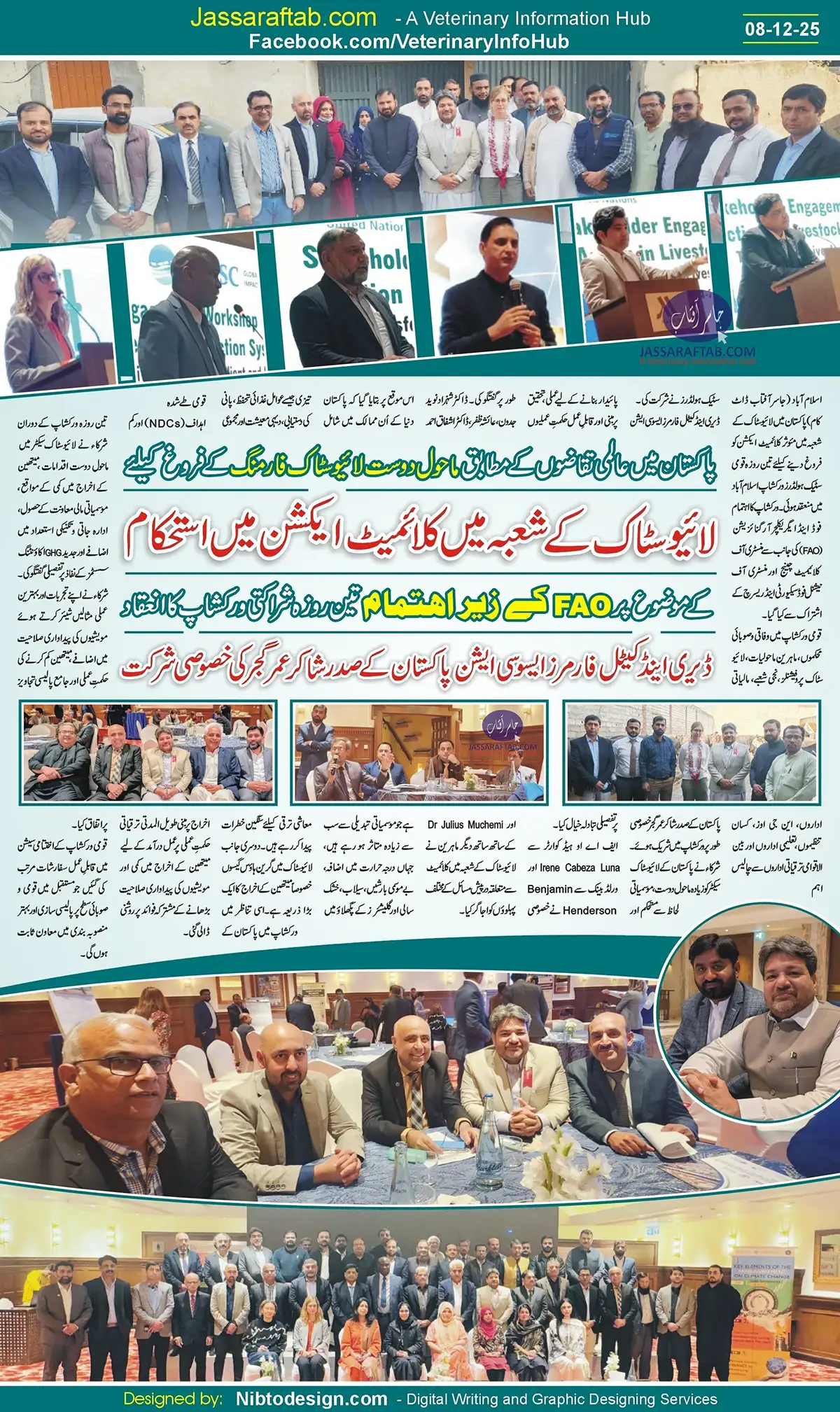
A three-day National Stakeholders Workshop on National Climate Action for Livestock Production Systems in Pakistan was held in Islamabad. The workshop was organized by the Food and Agriculture Organization (FAO) in collaboration with the Ministry of Climate Change and the Ministry of National Food Security and Research. Experts discussed various aspects of Climate Smart Livestock production in Pakistan.


Stakeholders and Experts
The workshop was attended by forty key stakeholders from federal and provincial departments, environmentalists, livestock professionals, the private sector, financial institutions, NGOs, farmer organizations, academic institutions and international development agencies. Shakir Umar Gujjar, President of the Dairy and Cattle Farmers Association of Pakistan, specially participated in the workshop. Participants discussed in detail practical, research-based and actionable strategies to make Pakistan’s livestock sector more environmentally friendly, climate resilient and sustainable.
Dairy and Cattle Farmers Association Pakistan – DCFA Pakistan

Irene Cabeza Luna from FAO Headquarters and Benjamin Henderson from the World Bank spoke specially. Dr. Shahzad Naveed Jadoon, Ayesha Zafar, Dr. Ashfaq Ahmed and Dr. Julius Muchemi, along with other experts, highlighted various aspects of climate-related issues faced by the livestock sector.
Scientific and Technical Understanding of Cow Cooling System and Evaporative Cooling of Dairy Cows
It was stated on the occasion that Pakistan is among the countries in the world that are most affected by climate change. Factors such as increasing temperatures, unseasonal rains, floods, droughts and accelerated melting of glaciers are posing serious threats to food security, water availability, rural economy and overall economic development.
Various Aspects of Climate Smart Livestock Production
On the other hand, livestock is a major source of greenhouse gas emissions, especially methane. In this context, the workshop highlighted the co-benefits of reducing methane emissions and increasing livestock productivity for the implementation of Pakistan’s Nationally Determined Contributions (NDCs) and low-emission long-term development strategy.
سمارٹ کلائیمیٹ لائیوسٹاک فارمنگ کے موضوع پر آلٹیک پاکستان کے زیر اہتمام سیمینار کا انعقاد
During the three-day workshop, participants discussed in detail the green initiatives in the livestock sector, opportunities for reducing methane emissions, accessing climate finance, enhancing institutional and technical capacity, and implementing modern GHG accounting systems. Participants shared their experiences and best practices and agreed on strategies and comprehensive policy proposals to increase livestock productivity, reduce methane emissions, and improve the efficiency of livestock production.
The concluding session of the national workshop on National Climate Action for Livestock Production Systems produced actionable recommendations for climate smart livestock production in Pakistan. This will help inform future policymaking and planning at the national and provincial levels.