


International Sloth Day | Sloths Conservation | Sloths vs Sloth Bears | What are Sloths?
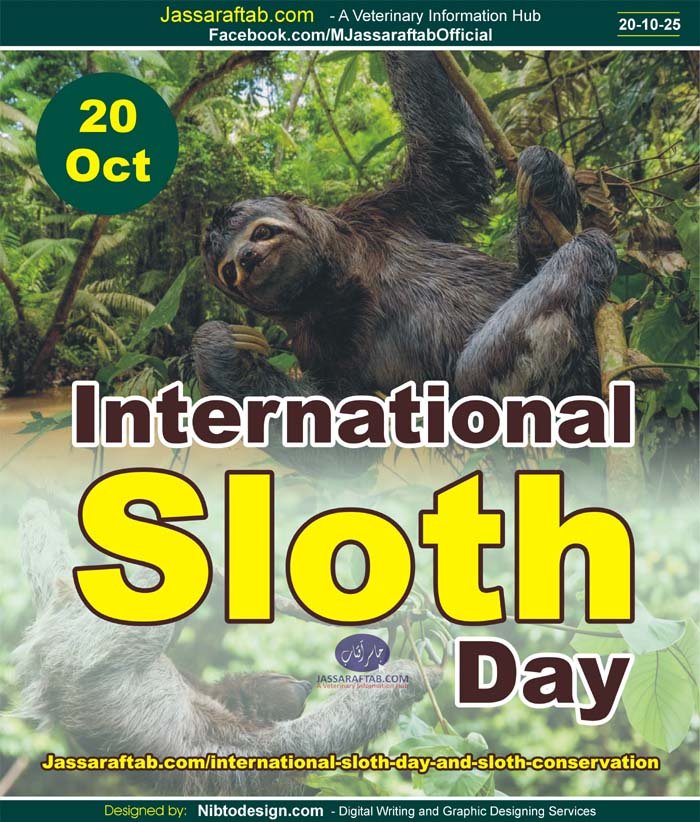
International Sloth Day is celebrated on October 20 every Year to raise awareness about endangered sloths and sloths conservation. The AIUNAU Foundation created the day to highlight the threats they are facing in the wild including habitat loss and illegal wildlife trade. Besides, all month of October is celebrated as SlothTober. ISD aims to raise awareness about this slowest moving mammal and protection of sloths habitats. Point to remember, there is a difference between Sloths and Sloth bears. In this article, we also highlight the difference in Sloths VS Sloth Bears.


History of International Sloth Day
The International Sloth Day was created in 2010 by the AIUNAU Foundation. Dr. Tinka Plese established the AIUNAU Foundation. This foundation works to protect wildlife. The first Sloth International Meeting about the Sloths Conservation and well being held in Medellin, Colombia, in November of 2010. In this meeting the day is created. Initially, Sarita Kendall and Dr. Tinka Plese organized this day.
They decided to celebrate it on the Saturday of the third week in October. This time also recognized as Children’s Month and Animal Month in Colombia. But, in first sloth international meeting they decided to celebrate it on every October 20.
The AIUNAU Foundation & Purpose of International Sloth Day
AIUNAU Foundation created this day to highlight about sloths and their importance in rainforests ecosystems. Sloths play an important role in rainforest ecosystem. Moreover, the foundation aims to highlight the threats of sloths, which include deforestation, illegal wildlife trade, and human encroachment. It also raises awareness about the various species of sloths.
Why Sloths Matters?
Sloths play a vital role in maintaining the health of tropical rainforests. Healthy rainforests are essential for global biodiversity and climate balance. Sloths live high in the forest canopy sunning, resting, or feeding on leaves. Therefore, they help disperse seeds and promote new plant growth, contributing to forest regeneration. They spend 90% of their time hanging upside down.
Additionally, algae and insects living in their fur create a tiny ecosystem, supporting biodiversity even on their bodies. Their slow lifestyle and unique adaptations remind us of the importance of balance, coexistence, and conservation in nature.
Most importantly, protecting sloths means protecting the rainforests they inhabit, which are crucial for the planet’s oxygen supply and climate regulation. Further, they serve as prey for iconic predators like harpy eagles, ocelots, and jaguars.
International Gibbon Day History – All about Gibbons
What are Sloths?
Sloths are slow-moving, tree-dwelling mammals. They belong to the order Pilosa, which also includes anteaters. There are six extant species of sloths. But, they are divided into two main groups Two-toed sloths and Three-toed sloths. Despite their names, all sloths have three toes on their hind limbs. However, the difference lies in the number of claws on their front limbs.
These unique animals live in the tropical rainforests of Central and South America, especially in Brazil, Costa Rica, Panama, Colombia, and Venezuela. They are famous for their extremely slow lifestyle. They spend most of their time hanging upside down from tree branches, where they eat, sleep, and even give birth.
Sloths have long limbs, curved claws, and dense fur that helps them blend with tree canopies. Their fur often grows greenish algae, providing camouflage and even nutrition. They have slow metabolisms and low body temperatures, perfectly suited for their relaxed way of life.
Surprisingly, sloths can swim up to three times faster than they can walk. Swimming helps them cross rivers and flooded forests safely in their rainforest habitats, especially during the wet season. Notably, they can hold their breath underwater for up to 40 minutes by slowing their heart rate.
Sloths Vs Sloth Bears
Mostly, people confuse sloths vs sloth bears. They confuse them because of their similar names, but sloths are completely different from sloth bears. Both belong to entirely different taxonomic orders and families with unique evolutionary histories. Sloths live in the rainforests of Central and South America, while sloth bears live in the forests and grasslands of the Indian subcontinent. Sloths spend almost their entire lives hanging upside down in trees, whereas sloth bears live on the ground and are active foragers.
Moreover, sloths are slow-moving, tree-dwelling herbivores that feed mainly on leaves, fruits, and shoots. On the other hand, sloth bears are omnivorous and eat insects, especially termites and ants, along with fruits and honey.
Additionally, sloths have long limbs and curved claws for gripping tree branches, while sloth bears have powerful claws and snouts adapted for digging. Despite their similar names, sloths and sloth bears are not related; rather, the name “sloth bear” came from the bear’s slow movements, which reminded early explorers of sloths. Thus, both animals differ greatly in behavior, habitat, diet, and evolution.
Sloths Conservation
Sloths are facing many threats in the wild. They play a vital role to maintain rainforests ecosystems. Therefore, sloths conservation is necessary. IUCN has listed the Pygmy three-toed sloth as Critically Endangered, Maned three-toed sloth as Vulnerable and Brown-throated sloth & the Linnaeus’s two-toed sloth as Least Concern. However despite this status, 40% species of sloths are now threatened with extinction globally. This status highlights the urgent need to protect sloths.
Many organizations are working on sloths conservation. These organizations include the Sloth Conservation Foundation and the AIUNAU Foundation. Both foundations work actively to rescue injured or orphaned sloths, conduct research, and raise awareness among local communities. Furthermore, they promote the creation of wildlife corridors, allowing sloths to move safely between forest patches.


