33 Veterinary Officers Complete Field Epidemiology Training Program FETP in Sindh
Sindh has strengthened its animal disease surveillance system by training 33 veterinary officers in field epidemiology. Veterinary Officers of Sindh completed the three-month Field Epidemiology Training Program (FETP) Frontline Course. This is a great achievement of the Sindh Livestock Dept. Moreover, the Field Epidemiology Training Program (FETP) supports the One Health approach by strengthening collaboration between human health, animal health, and other relevant sectors. Through field epidemiology training, veterinary and public health professionals develop skills in animal disease surveillance, outbreak investigation, data analysis, reporting, and rapid response.

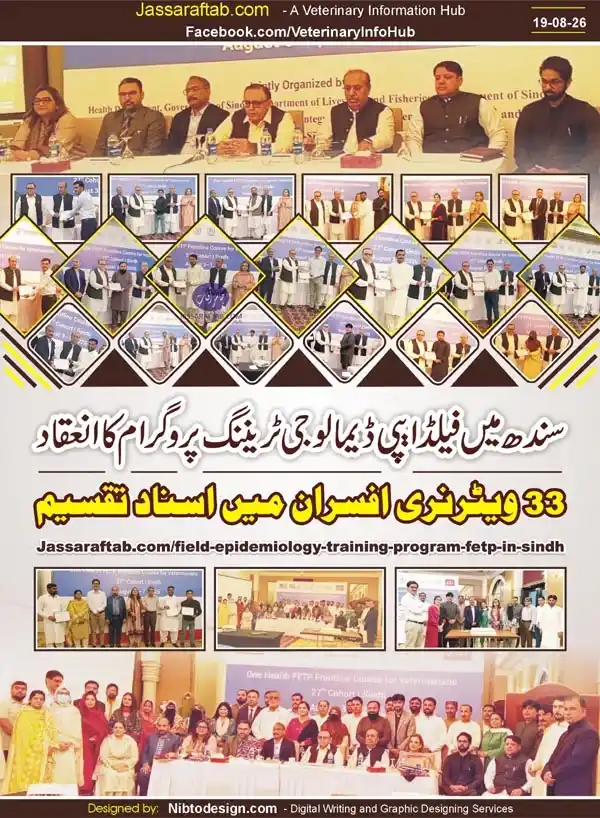
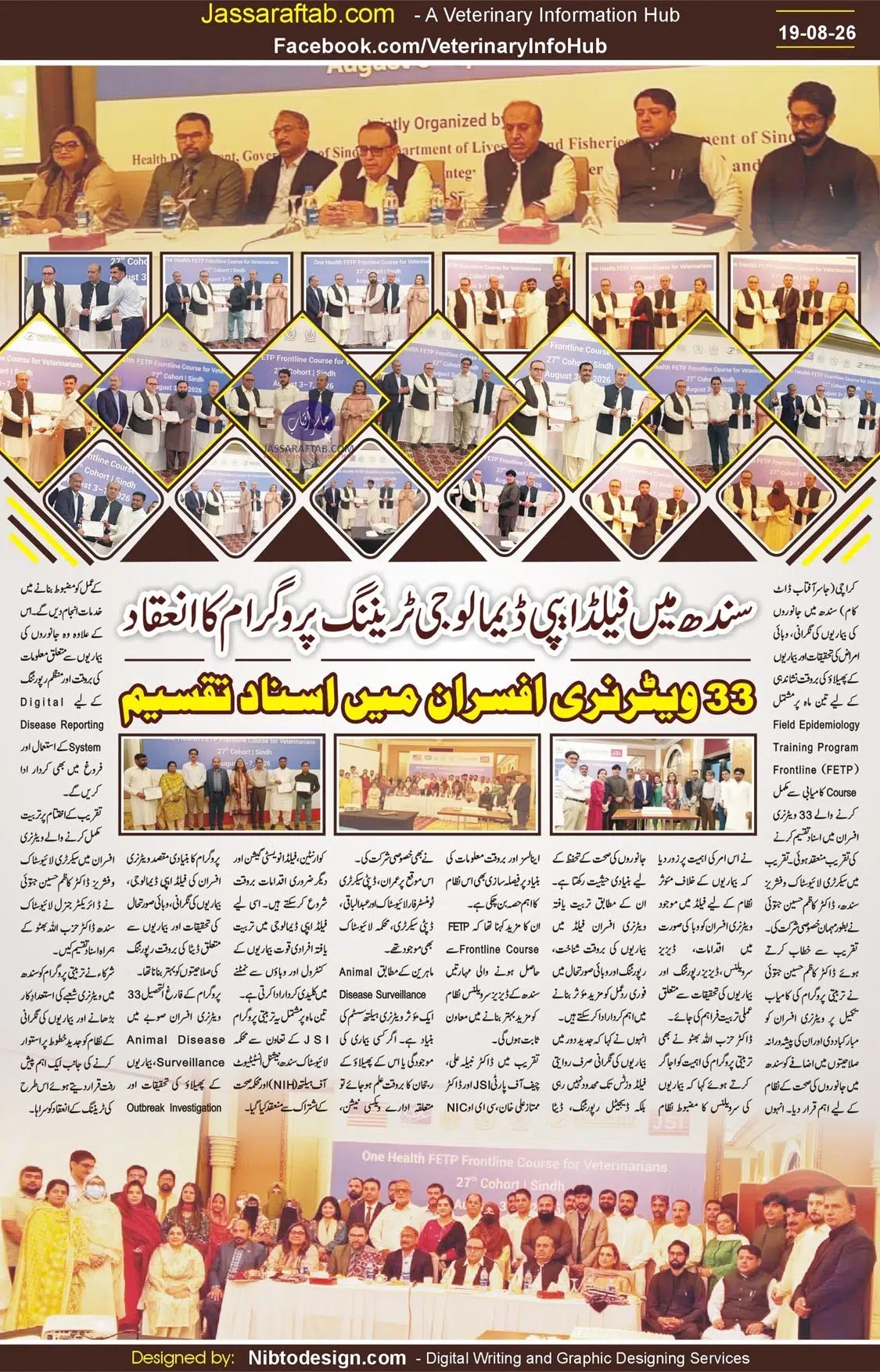
A certificate distribution ceremony was held in Karachi to mark the completion of the training. In this ceremony, Dr. Kazim Hussain Jatoi and Dr. Hizbullah Bhutto participated and distributed the certificates among veterinary officers.
Secretary Livestock Highlights Importance of
Field Epidemiology Training Program
Secretary Livestock and Fisheries Sindh Dr. Kazim Hussain Jatoi attended the ceremony as the chief guest. He congratulated the veterinary officers on completing the course.

Dr. Jatoi said the training would improve the professional skills of field veterinary officers. He also stressed the need for practical training in disease surveillance and outbreak response.
He said veterinary officers must identify diseases at an early stage. They must also report cases quickly and investigate outbreaks effectively. Therefore, field-based training can help strengthen the animal health system.
DG Livestock Stresses Strong Disease Surveillance
Director General Livestock Sindh Dr. Hizbullah Bhutto also highlighted the importance of the program. He said an effective disease surveillance system forms the foundation of animal health protection.
According to him, trained veterinary officers can detect diseases early. They can also improve disease reporting and support a faster response during outbreaks.
Moreover, Dr. Bhutto said modern disease surveillance goes beyond traditional field visits. It now includes digital reporting, data analysis, and timely decision-making.
He added that the FETP Frontline Course would help improve Sindh’s disease surveillance system. The trained officers would bring these skills into their field activities.
Officials Attend Certificate Distribution Ceremony
The ceremony also brought together representatives from health and development institutions. Dr. Nabeela Ali, Chief of Party, JSI, and Dr. Mumtaz Ali Khan, CEO, NIC, attended the event.
Imran, Deputy Secretary to the Minister for Livestock, and Abdul Baqi, Deputy Secretary, Livestock Department, were also present.
What is the Field Epidemiology Training Program (FETP)?
The Field Epidemiology Training Program (FETP) is a collaborative initiative of the National Institutes of Health (NIH), Pakistan, the Ministry of National Health Services, Regulations and Coordination, and the U.S. Centers for Disease Control and Prevention (CDC).
The program aims to strengthen Pakistan’s capacity to meet the International Health Regulations (IHR) core capacities. It develops a skilled workforce that can conduct real-time disease surveillance, detect and investigate outbreaks, and support effective public health responses.
FETP also focuses on public health emergency management and evidence-based decision-making. Through practical, field-based training, participants learn how to collect and analyze epidemiological data and use the findings to guide disease control measures.
The program has contributed to strengthening Pakistan’s national public health systems. It has also improved the use of data-driven decision-making during disease outbreaks and public health emergencies.
JSI Supports Three-Month Training Program
JSI supported the three-month training program. The Livestock Department Sindh organized it in collaboration with the National Institutes of Health (NIH) and the Health Department.
The program aimed to improve the field epidemiology skills of veterinary officers. It also focused on disease surveillance, outbreak investigation, and timely disease reporting.
In addition, the training provided officers with practical skills for investigating disease outbreaks. It also strengthened their ability to collect, analyze, and report disease-related information.
Graduates to Support Digital Disease Reporting
The 33 trained officers will now support animal disease surveillance across Sindh. They will investigate disease outbreaks and strengthen field reporting.
In addition, they will promote the use of the Digital Disease Reporting System. This will help improve the timely and organized reporting of animal diseases.
The trained officers will also contribute to early disease detection. Consequently, their field expertise can help authorities make faster and better decisions during disease outbreaks.
Certificates Distributed Among 33 Veterinary Officers
At the end of the ceremony, Dr. Kazim Hussain Jatoi and Dr. Hizbullah Bhutto distributed certificates among the successful trainees.
Participants described the training as an important step toward strengthening Sindh’s veterinary health system. They also welcomed the focus on modern disease surveillance, digital reporting, and rapid outbreak response.