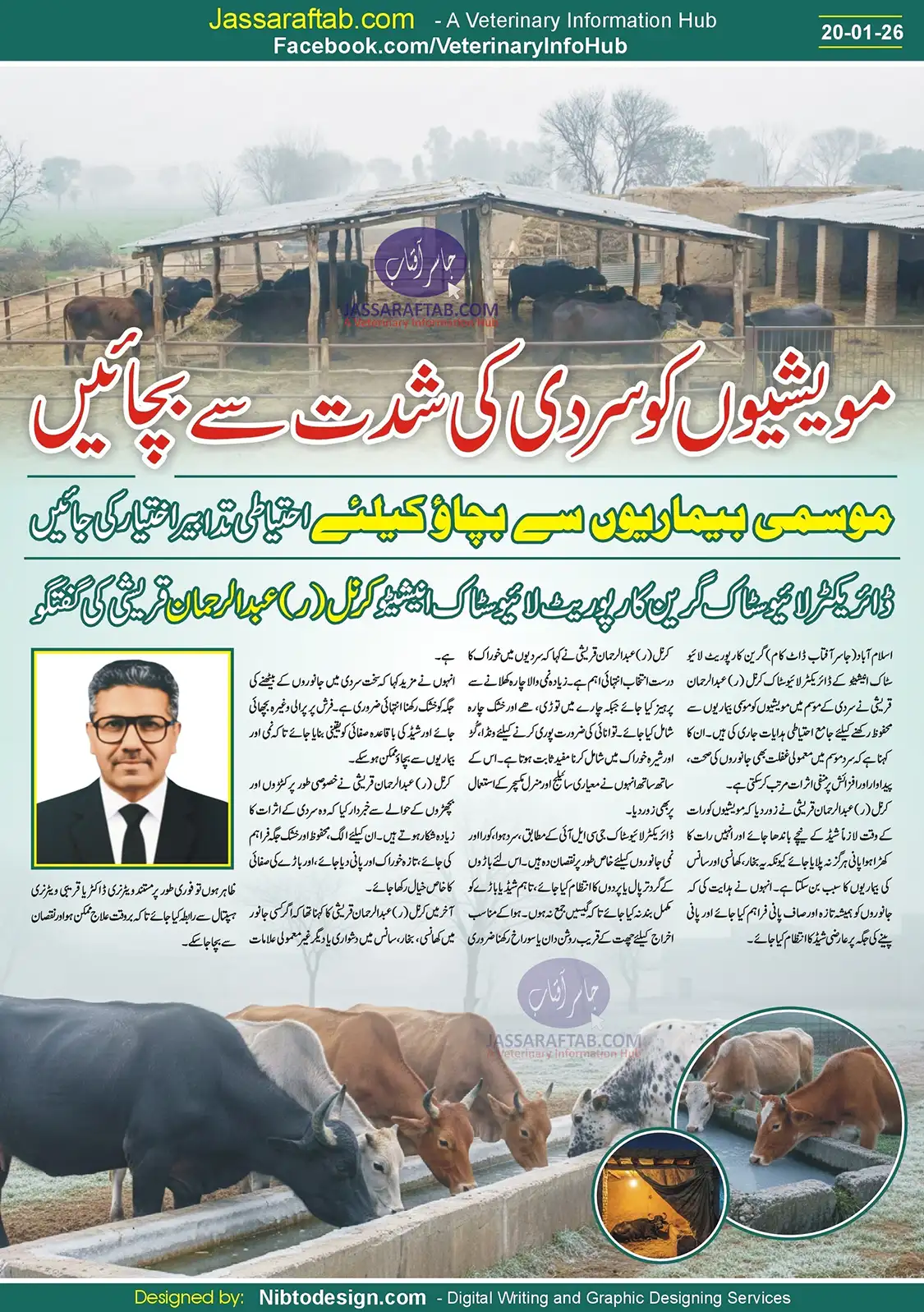
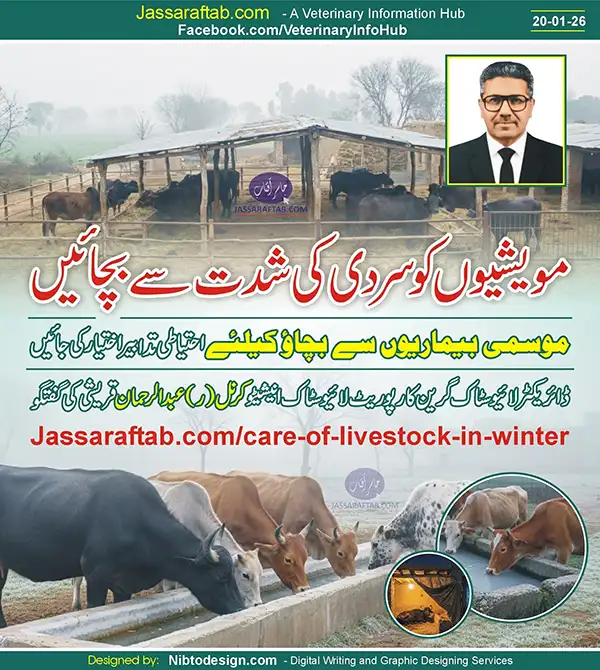
Care of Livestock in Winter is essential. Farmers should adopt precautionary Measures – Director Livestock GCLI Col (R) Abdul Rehman Qureshi
Director Livestock GCLI (Green Corporate Livestock Initiative), Col (R) Abdul Rehman Qureshi has issued comprehensive precautionary instructions to protect livestock from seasonal diseases during the cold season. He said that even slight negligence in care of livestock in winter season can have negative effects on the health, production, and reproduction of animals.

Feeding and Livestock Care in Winter
Col. (R) Abdul Rehman Qureshi stressed that livestock should be tied under a shed at night. Stagnant water should never be given to them as it can cause fever, cough and respiratory diseases. He directed that fresh and clean water should always be provided to the animals. Moreover, a temporary shed should be arranged at the drinking place.
Col. (R) Abdul Rehman Qureshi said that the right choice of feed is very important in winter. Feeding high-moisture fodder should be avoided while adding chopped, ground and dry fodder to the fodder. Adding Wanda, Jaggery and Shera to the diet is beneficial to meet the energy requirement. Along with this, he also emphasized the use of quality silage and mineral mixture.

Shed Management and Care of Livestock in Winter
According to the Director Livestock GCLI, cold air, cold and humidity are especially harmful to animals. Therefore, tarpaulin or curtains should be arranged around the enclosures, but the shed or enclosure should not be completely closed so that gases do not accumulate. It is necessary to keep a light or hole near the roof for proper air flow.
He added that it is very important to keep the place where the animals sit dry in severe winters. Straw should be laid on the floor, and regular cleaning of the shed should be ensured so that moisture and diseases can be prevented.
Care of Calves in Winter
Col. (retd) Abdul Rehman Qureshi warned specifically about calves and calves that they are more susceptible to the effects of cold. They should be provided with a separate, safe, and dry place, fresh food and water should be given, and special care should be taken to clean the enclosure.
Finally, Director Livestock GCLI Colonel (retd) Abdul Rehman Qureshi said that if an animal shows cough, fever, difficulty breathing or other unusual symptoms, it should immediately contact a qualified veterinarian or the nearest veterinary hospital so that timely treatment can be provided and harm can be avoided.