


International Cheetah Day | History | Importance of Cheetahs | Threats to Cheetahs | Global Cheetah Conservation Efforts
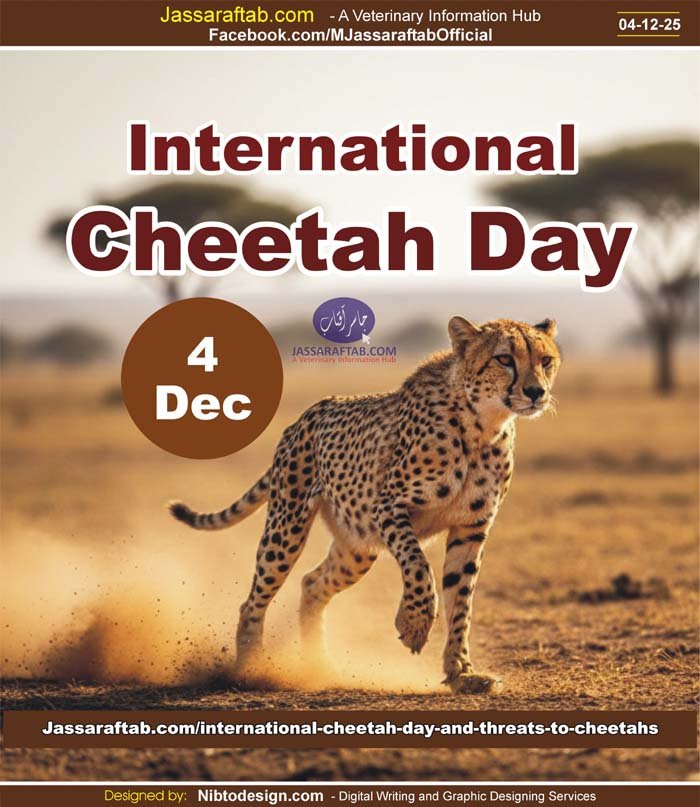
International Cheetah Day is observed every year on 4 December to highlight the urgent need to protect the world’s fastest land animal. Although cheetahs symbolize speed, grace, and wilderness, their populations continue to decline rapidly. Therefore, this day reminds us that strong cheetah conservation efforts are essential. The day also focuses on educating the public about the threats to cheetahs.

Moreover, it brings together governments, scientists, communities, and wildlife organizations to promote unified global action. Additionally, it promotes peaceful coexistence between local communities and cheetahs living in shared landscapes across Africa and Iran. In this article we also discuss about the difference between cheetah and Jaguar.
Origin and History of International Cheetah Day
World Cheetah Day was initiated in 2010 by the Cheetah Conservation Fund (CCF), founded by renowned wildlife conservationist Dr. Laurie Marker. The date honors the birthday of Khayam, a cheetah Dr. Marker raised from infancy at Wildlife Safari in Oregon. Khayam became part of a pioneering project: the world’s first attempt to train a captive-born cheetah for survival in the wild. In 1977, Dr. Marker took Khayam to Africa to conduct this groundbreaking rewilding research. Once the project concluded, Khayam was brought back to the United States.

During her work in Namibia, Dr. Marker discovered widespread killing of cheetahs by farmers who viewed them as threats to their livestock. This experience strengthened her resolve to protect the species, leading to the establishment of the Cheetah Conservation Fund in 1990. Today, CCF stands as a global authority on cheetah conservation and serves as the driving force behind World Cheetah Day.
Cheetah Day History – Characteristics, Habitat, Conservation and Population
Global Observance and Awareness
Since its creation, conservationists, educators, and wildlife supporters worldwide have embraced 4 December as a day to organize school programs, awareness campaigns, conservation workshops, and habitat protection activities. As a result, International Cheetah Day has become a powerful platform for global advocacy, raising awareness and promoting the conservation of this iconic species.
Why International Cheetah Day Matters
Cheetahs once roamed across vast landscapes stretching from Africa to India. However, their populations have declined by nearly 90%, and they now occupy only 9% of their historical range. Therefore, International Cheetah Day plays a crucial role in drawing attention to their shrinking numbers. Furthermore, it encourages urgent conservation measures, promotes science-based solutions, and helps communities understand the importance of coexistence.
Major Threats to Cheetahs
Although cheetahs are incredible hunters, they face multiple threats that continue to push them toward extinction. Below are the major challenges:
Habitat Loss and Fragmentation
Expanding agriculture, fencing, roads, and settlements destroy and fragment cheetah habitats. As a result, cheetahs lose the open grasslands they rely on for hunting and movement.
Human–Wildlife Conflict
Cheetahs sometimes prey on livestock, especially when wild prey declines. Consequently, farmers may retaliate by trapping or killing them, which severely impacts local populations.
Illegal Wildlife Trade
Cheetah cubs are frequently trafficked into the exotic pet trade, mainly to the Middle East. Tragically, most cubs die during capture or transport, creating a devastating impact on wild populations.
Decline of Natural Prey
Overhunting and competition with humans reduce populations of gazelles and other prey species. Therefore, cheetahs must travel longer distances for food, increasing their vulnerability.
Low Genetic Diversity
Cheetahs have extremely low genetic variation due to historical population bottlenecks. As a result, they are more susceptible to disease, infertility, and environmental stress.
Importance of Cheetahs in the Ecosystem
Cheetahs play a vital role in maintaining ecological balance. They act as apex predators in many landscapes, even though they are not the largest big cats. Their importance includes:
Regulating Prey Populations
Cheetahs help control herbivore numbers, which prevents overgrazing and protects grassland health.
Supporting Biodiversity
Healthy cheetah populations reflect a stable ecosystem. Therefore, protecting cheetahs indirectly protects numerous species sharing the same habitat.
Promoting Ecotourism
Cheetahs attract wildlife tourists from around the world. Consequently, they generate income for local communities and national economies.
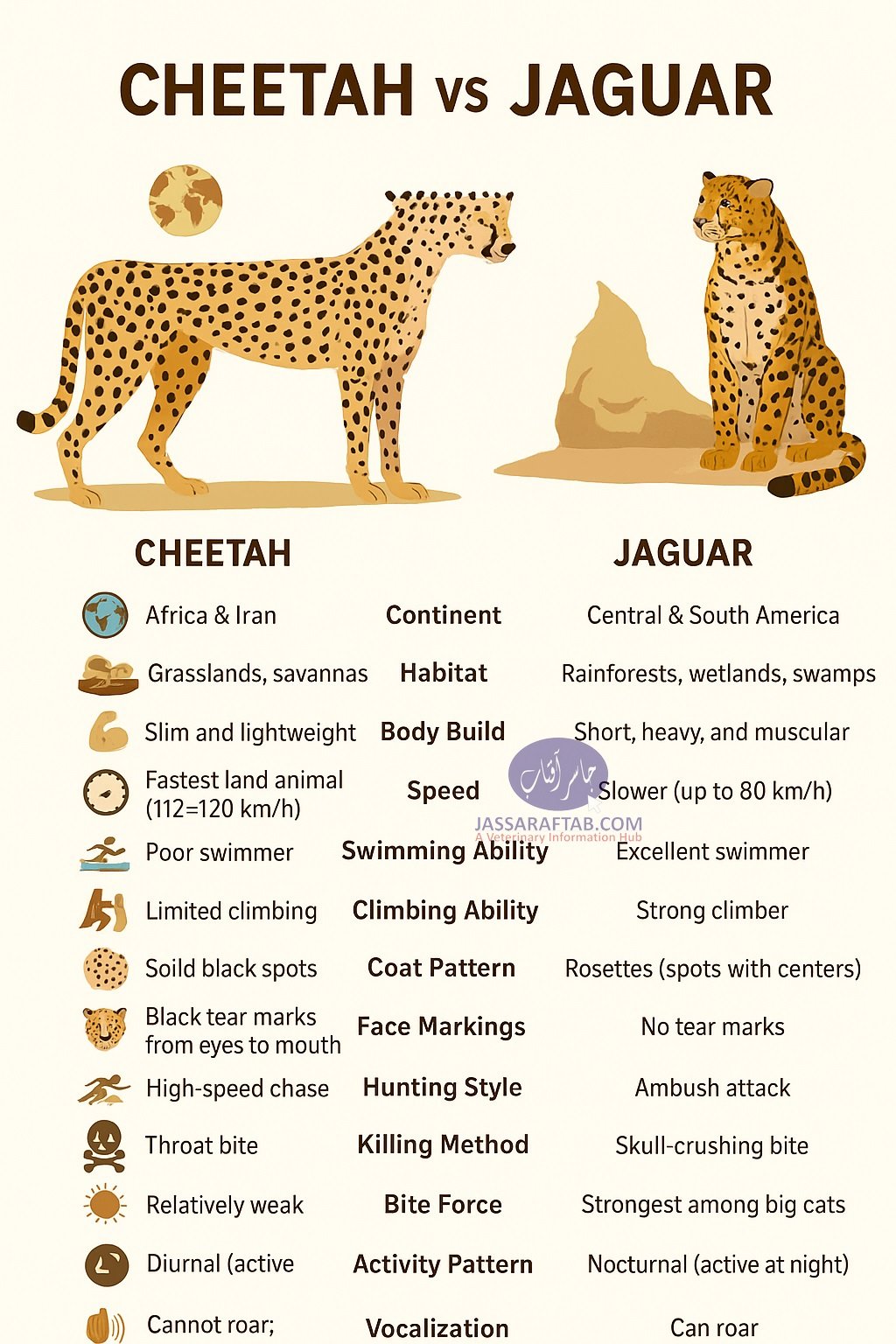
Difference Between Cheetah and Jaguar
| Feature | Cheetah | Jaguar |
| Continent | Africa & Iran | Central & South America |
| Habitat | Grasslands, savannas | Rainforests, wetlands, swamps |
| Body Build | Slim and lightweight | Short, heavy, and muscular |
| Speed | Fastest land animal (112–120 km/h) | Slower (up to 80 km/h) |
| Swimming Ability | Poor swimmer | Excellent swimmer |
| Climbing Ability | Limited climbing | Strong climber |
| Coat Pattern | Solid black spots | Rosettes (spots with centers) |
| Face Markings | Black tear marks from eyes to mouth | No tear marks |
| Hunting Style | High-speed chase | Ambush attack |
| Killing Method | Throat bite | Skull-crushing bite |
| Bite Force | Relatively weak | Strongest among big cats |
| Activity Pattern | Diurnal (active in daytime) | Nocturnal (active at night) |
| Vocalization | Cannot roar; purrs & chirps | Can roar |
| Average Weight | 34–54 kg | 56–96 kg |
| Predator Rank | Lower in hierarchy | Apex predator |
| Conservation Status | Vulnerable | Near Threatened |
International Cheetah Day & Global Cheetah Conservation Efforts
Global cheetah conservation efforts bring together international organizations, governments, scientists and local communities to protect the world’s fastest land animal.
The Cheetah Conservation Fund (CCF) leads global initiatives by conducting research, reducing human–wildlife conflict and strengthening community-based conservation programs. Moreover, groups like Panthera, the Wildlife Conservation Society and the African Wildlife Foundation work across Africa to secure habitats, monitor populations and support anti-poaching patrols.
At the same time, the Endangered Wildlife Trust in South Africa manages metapopulation programs that maintain genetic diversity through responsible relocation. Additionally, Iran’s Conservation of Asiatic Cheetah Project focuses on saving the critically endangered Asiatic cheetah, which survives only in small numbers.
Furthermore, conservationists worldwide use satellite tracking, camera traps and livestock-guarding dogs to reduce conflict and improve survival rates.
Together, these coordinated efforts aim to protect remaining cheetah populations, restore their habitats and raise global awareness, ensuring that future generations can still witness this remarkable species in the wild.


